Your Dispatch App Can’t Explain a Service Upgrade
Your Dispatch App Can’t Explain a Service Upgrade Dispatch software is excellent at moving trucks. It is not built to win approvals. That is the real gap for electrical contractors. Faster routing, arrival updates, and...
Your Dispatch App Can’t Explain a Service Upgrade
Dispatch software is excellent at moving trucks. It is not built to win approvals.
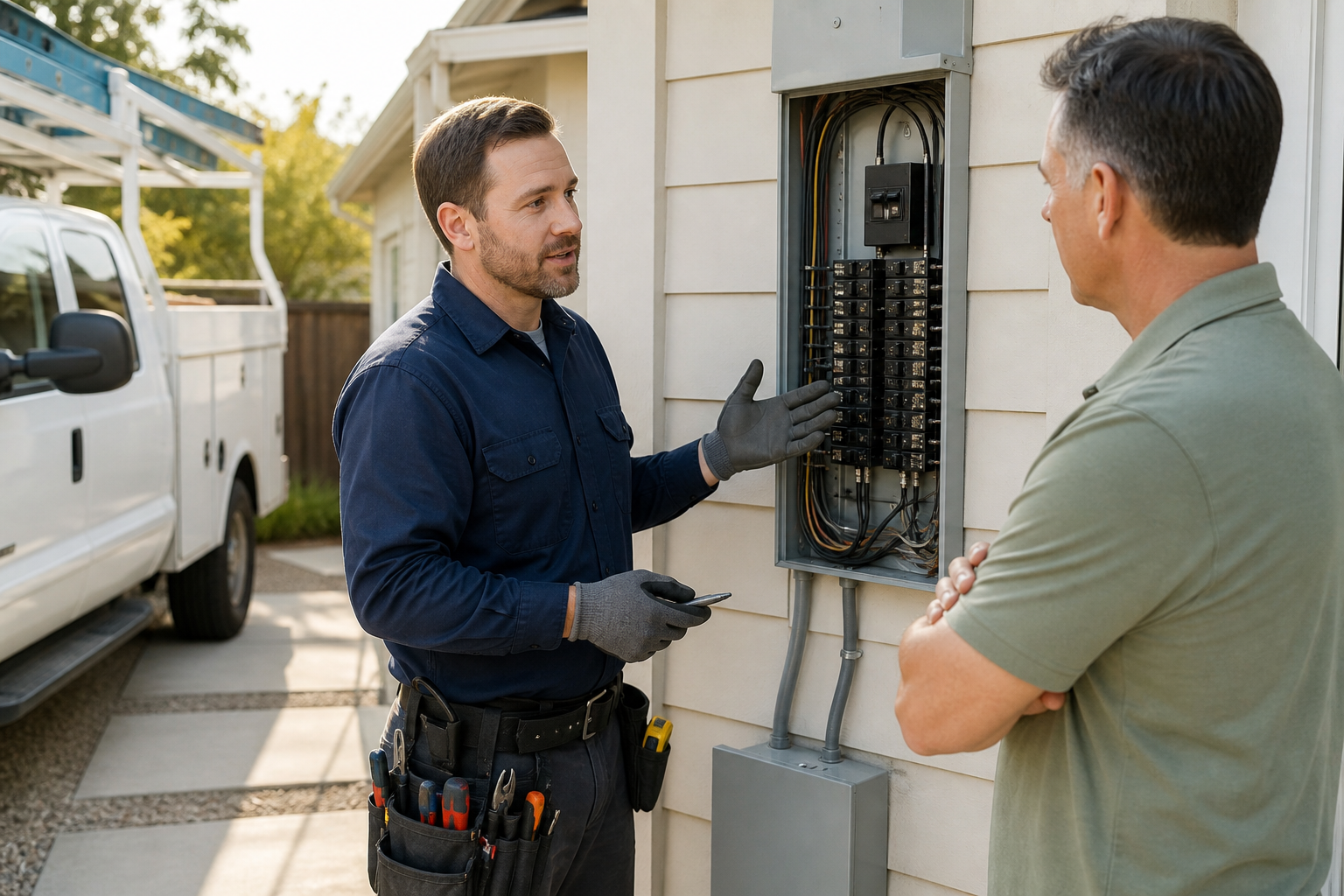
That is the real gap for electrical contractors. Faster routing, arrival updates, and job-status tracking help crews stay organized, but growth happens after the inspection—when an electrician has diagnosed the problem and needs to turn technical field findings into a clear, customer-facing quote. The customer needs to understand the work, sign the scope, and have an easy way to place a deposit before labor, materials, permits, and schedule time are committed.
That moment is where electrical businesses lose momentum. The technician understands exactly what the panel needs. The office sends a vague estimate full of shorthand. The customer sees a large number without a clear reason behind it, and the decision stalls.
In electrical work, clarity is not a nice extra. It is the difference between an approved upgrade and a job that dies in the inbox.
Dispatch Ends Where the Revenue Conversation Begins
A dispatch app is designed for logistics. It tells the office who is on the road, when they should arrive, and which appointment comes next. That information matters, especially on a packed service board.
But a customer does not approve a service upgrade because the truck arrived on time.
They approve it because they understand what was found, what the electrician recommends, what is included, what could change, and what they need to do next. A dispatch platform may preserve technician notes, but it cannot automatically turn “panel is full,” “service appears undersized,” or “dedicated circuit needed” into a proposal that a homeowner can confidently sign.
That gap creates expensive office work. The customer calls back to ask what “panel replacement” includes. The electrician has to reopen job notes. The office translates technical line items over the phone. A revision is sent days later, after the urgency of the original visit has faded.
Meanwhile, a competitor may send a cleaner proposal the same afternoon.
The best electrical contractors do not treat the estimate as paperwork that happens after the sale. They treat it as the second half of the sale. The inspection identifies the opportunity. The quote makes the opportunity understandable and actionable.
A Service Upgrade Must Be Written for the Homeowner
A 200-amp service upgrade is one of the clearest examples of why the quote matters as much as the diagnosis.
From the electrician’s perspective, the work may require load calculations, panel evaluation, breaker capacity planning, grounding and bonding updates, permit coordination, inspection planning, and possible utility-side involvement. The electrician is evaluating a system. The homeowner is trying to make a decision about safety, cost, timing, and the future of the property.
Those are not the same conversation.
A quote that says only “replace panel” leaves too much unanswered. Is the current panel unsafe? Is it simply out of room? Will the work support an upcoming heat-pump installation, workshop equipment, or an EV charger? Does the scope include permit coordination? Are there utility requirements that may require a separate step?
A stronger quote begins with the practical reason for the recommendation:
The existing electrical service has limited capacity for the home’s current and planned electrical demand. This upgrade will provide a modern panel with room for safe circuit additions and support future electrical improvements.
Then it turns that reason into a visible scope:
- Replace the existing service panel with a new 200-amp panel.
- Install and label approved breakers and circuits.
- Update grounding and bonding components as required by the approved scope.
- Coordinate permit and inspection steps where applicable.
- Identify utility-side work, concealed conditions, or site changes that require separate review.
That wording does not oversimplify the work. It proves the contractor has considered it carefully.
A homeowner does not need a lesson on busbars or load centers. They need to know why the current system is limiting the property, what will improve, and what happens once they approve the work.
That is the difference between a technician’s note and a customer-ready proposal.
An EV Charger Quote Should Answer Questions Before They Become Objections
EV charger work often begins with a deceptively simple request: “Can you install a charger in my garage?”
The homeowner sees a charger and a garage wall. The electrician sees service capacity, available panel space, circuit routing, wire distance, equipment selection, connection type, permits, and the possibility that a service upgrade may be needed before charging equipment can be added safely.
A thin estimate that says “install EV circuit” leaves every important question open. Does the price include the charger? Is the homeowner providing it? Is this a receptacle installation or a hardwired unit? Is the route from the panel included? What happens if the panel is full? Are permit costs and inspection coordination part of the scope?
A customer-facing PDF should answer those questions before they become objections.
For electrical contractors who need to turn site findings into a polished estimate while the details are still fresh, [Flash Quote Electrical](https://apps.apple.com/us/app/flash-quote-electrical/id6777300721) is built for that workflow. The goal is not merely sending a document faster. It is giving customers a professional explanation while the need, the recommendation, and the conversation are still current.
A clear EV charging scope might read:
Install one dedicated circuit for a residential EV charging setup, including approved wiring, overcurrent protection, connection at the designated garage location, and labeling. This quote reflects the visible site conditions reviewed during the assessment. Any concealed conditions, route changes, equipment changes, or required service upgrades will be presented for approval before additional work begins.
That language serves both sides. The customer knows what they are approving. The contractor has documented the boundaries of the work. The office has a scope it can use for scheduling and material planning without rebuilding the job from scattered notes.
The best proposal is not the most technical one. It is the one that makes the boundaries unmistakable.
Troubleshooting Quotes Need Room for What Is Not Known Yet
Recurring breaker trips are harder to quote because responsible electrical troubleshooting does not always reveal the final repair on the first visit.
A kitchen circuit may trip when several countertop appliances run. A bedroom breaker may open intermittently. A garage circuit may fail after a homeowner adds a freezer, tools, or charging equipment. In each case, the electrician may know where to begin, but the path to a repair can require multiple stages: diagnose, isolate, test, repair, and verify.
The quote should not pretend certainty that does not exist.
Instead, it should separate the work into clear phases:
Initial diagnostic scope Inspect the affected circuit, test accessible devices and connections, document likely causes, and identify the next recommended step.
Authorized repair scope Complete the specified repair if testing confirms that the cause falls within the approved repair allowance or defined scope.
Further-work trigger If testing reveals concealed damage, overload conditions, failed equipment, or a need for additional materials or circuits, provide a revised scope for customer approval before proceeding.
This approach protects the contractor from absorbing work that was never authorized. More importantly, it protects customer trust. Homeowners do not expect an electrician to guess. They do expect a professional to explain the process honestly.
A quote that can hold a question mark is often more credible than one that claims to have every answer too early.
Five Things a Strong Electrical Quote Does That Dispatch Never Will
Dispatch is about movement. A quote is about meaning.
On a busy day, that distinction is easy to overlook. The crew is on the road, the board is full, and the office needs updates. But the business grows only when a field visit becomes approved work. If the electrician solves the problem in person and the estimate arrives later in a format the customer cannot follow, the momentum disappears.
A strong electrical quote does five jobs at once.
1. It explains the recommendation in plain English
The customer should understand what was found and why the work is being proposed. “Insufficient capacity for planned electrical demand” is more useful than “service upgrade recommended” with no context.
2. It makes the scope visible
The quote should state what will be installed, replaced, repaired, tested, labeled, or coordinated. Clear scopes reduce callbacks and prevent the office from having to reconstruct the job later.
3. It draws honest boundaries around the work
Electrical projects can reveal concealed conditions, inaccessible routing issues, utility requirements, or equipment constraints. The proposal should identify what is included and state how changes will be handled.
4. It creates an obvious approval path
The customer should be able to see the total, approve the work, and understand what must happen before scheduling begins. Approval should not require a separate email chain, phone call, and payment chase.
5. It becomes a working record for the office
An approved proposal should help the team order materials, reserve labor, coordinate permits, and prepare for the job. It should not leave essential details buried in a technician’s notes.
That is why electrical estimate software is more than an administrative convenience. It is the bridge between field expertise and a repeatable sales process.
The Deposit Is a Scheduling Signal, Not an Afterthought
One of the most common workflow mistakes is treating the deposit as a separate task after the quote is accepted.
For a service upgrade, that delay can be costly. The job may require a panel, breakers, service equipment, a longer crew appointment, permit coordination, or utility communication. Until the customer approves the scope and commits financially, the contractor is carrying uncertainty.
A signed quote plus a deposit tells the business the job is real.
Consider the usual delay pattern: the technician visits Friday, the office builds an estimate Monday, the customer opens it Tuesday, questions arrive Wednesday, and a revised proposal goes out Thursday. By the time approval comes through, the schedule has moved, material lead times may have changed, and the customer’s urgency has cooled.
A customer-facing quote PDF can shorten that cycle by including a clear signature step and a quick Stripe payment option for the deposit. The customer can approve the work and pay without being sent to a second system or asked to call the office with card details.
For the contractor, that means less follow-up and stronger cash-flow visibility. For the office, it creates a cleaner handoff from sold work to scheduled work. For the customer, it feels organized: approve, pay, schedule.
A deposit does not complete the project. It confirms that the customer is ready for the contractor to begin it.
Three Jobs Where Clear Language Protects the Sale
Electrical contractors do not lose work because they lack technical expertise. They lose work when their expertise is not legible to the person making the decision.
Here are three familiar examples.
The panel replacement before a heat-pump installation
The homeowner wants a new heat pump, but the electrical assessment shows that the existing service has limited capacity. A large price tag alone can feel like an unexpected obstacle. A quote that connects the panel upgrade to the home’s planned electrical demand turns it into a logical enabling step rather than an unexplained add-on.
The EV charger installation before a new vehicle arrives
The customer has a delivery date for a new car and wants charging ready in the garage. A proposal that identifies the circuit, equipment assumptions, routing boundaries, and possible capacity limitations helps the family plan without assuming that every unknown is already included.
The small business with a breaker that trips when equipment starts
The owner wants a quick fix, but the electrician needs to determine whether the issue is a failing device, a circuit problem, or an overload condition. A staged diagnostic and repair quote sets expectations, authorizes the right first step, and prevents an awkward disagreement when the true cause requires additional work.
In every case, the customer feels the problem before they understand its technical source. The contractor’s job is to make the solution clear enough to approve.
The Quote Is Part of the Electrical Service
The strongest electrical businesses do not treat proposals as paperwork that follows the real work. They treat the proposal as part of the service experience.
A technician who can identify a capacity issue, explain a circuit addition, or diagnose a recurring fault has already created value. A company that can turn that explanation into a polished, signed, customer-ready PDF has built a repeatable system for capturing that value.
That system supports more than faster approvals. It makes material planning cleaner, reduces office callbacks, gives customers confidence, and makes deposits easier to collect before the schedule fills with work that has not truly been sold.
For more estimating and workflow ideas, explore the [Flash Quote blog](https://flashquoteapps.com/blog) and [Flash Quote](https://flashquoteapps.com).
A truck can reach the curb in minutes, but only a clear quote can carry the job across the finish line.