Winning the 4-Hour Decision Window: How Modern Plumbing Contractors Lock In High-Margin Jobs Before Competitors Even Call Back
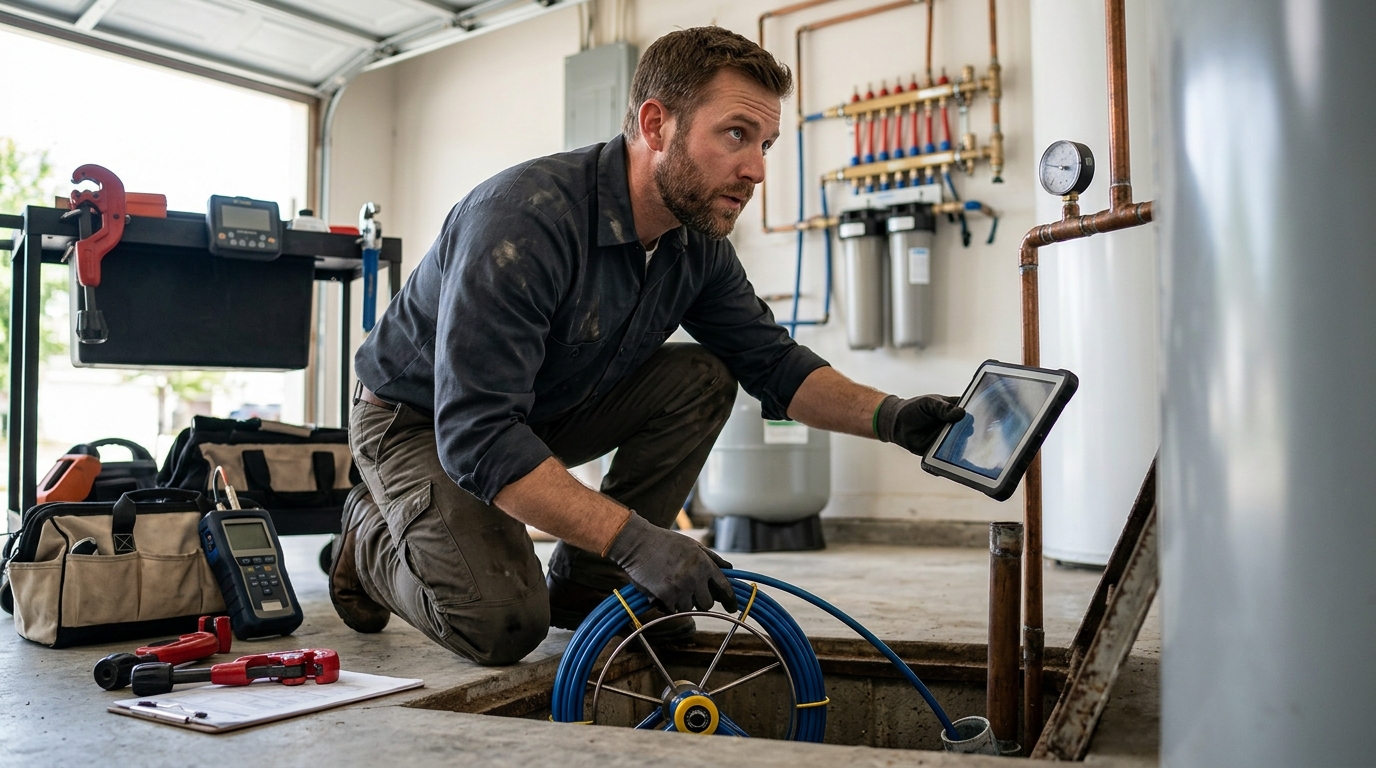
Winning the 4-Hour Decision Window: How Modern Plumbing Contractors Lock In High-Margin Jobs Before Competitors Even Call Back The landscape of professional plumbing is shifting faster than at any point in the last two...
Winning the 4-Hour Decision Window: How Modern Plumbing Contractors Lock In High-Margin Jobs Before Competitors Even Call Back
The landscape of professional plumbing is shifting faster than at any point in the last two decades. While master plumbers and field technicians have historically measured competitive advantage by craft skill, response time on the road, and local brand equity, the operational reality of 2026 has introduced a far harsher metric: speed to proposal.
When a residential homeowner suffers a main line rupture, notices severe pipe degradation, or seeks an urgent water heater replacement, their path to choosing a contractor is no longer a multi-day comparison shopping process. Recent industry data confirms that 54% of homeowners now research, select, and hire a plumbing contractor in under four hours. Furthermore, over 52% of mobile searches for local plumbing services result in a direct call or service dispatch within 24 hours. The contractor who arrives first on scene or delivers a comprehensive, professional quote to the customer’s inbox within minutes captures the vast majority of market share.
At the exact same time, macro-level market forces are driving an unprecedented volume of high-ticket residential and commercial plumbing opportunities. The Environmental Protection Agency’s $3 billion lead pipe replacement initiative, combined with state-level municipal utility overhauls, has triggered a surge in whole-home and commercial pipe replacement projects. Simultaneously, the Department of Energy’s updated commercial water heater standards—mandating a jump from 80% to 95% minimum thermal efficiency—are forcing commercial property owners, schools, and multi-family facilities into urgent equipment upgrades.
Yet, despite this record demand, thousands of plumbing shops are watching their net margins get squeezed. Rising material expenses, which have climbed over 30% in recent years, alongside a persistent trade labor shortage, mean that contractors cannot afford to let administrative inefficiency drain their profitability. The operational difference between a struggling plumbing shop sitting at a 3% net margin and a top-performing business generating a 25% net margin rarely comes down to pipe-fitting technique. It comes down to administrative speed, field quote delivery, and frictionless financial workflows.
To capitalize on current demand spikes and protect hard-earned profit margins, modern plumbing businesses must replace slow, paper-based estimating with instant, mobile-first proposal generation. The contractor who can generate a detailed quote, secure an e-signature, and collect a deposit via Stripe directly from the service truck will consistently beat out competitors who spend their evenings typing up estimates at home.
---
The 4-Hour Decision Window and the Speed-to-Lead Imperative
In service trades, "speed-to-lead" was once viewed as a sales department metric reserved for national enterprises. Today, for a local plumbing contractor running three to twenty service vans, speed-to-lead is the single greatest determinant of conversion rates and average job ticket value.
When a customer faces a plumbing issue, their psychological state is defined by urgency and uncertainty. Whether they are dealing with an active slab leak or planning an overdue bathroom renovation, the moment they submit an inquiry form or accept an initial diagnostic visit, the clock starts ticking. If a plumber finishes the initial site inspection, tells the customer, "I’ll go back to the office tonight, work up the numbers, and email you a quote by tomorrow evening," they are actively surrendering the contract.
During that 24-to-48-hour administrative delay: The customer continues searching Google for alternate options. A competing contractor with a modern mobile setup inspects the property, hands the customer an iPad or texts a link, secures an e-signature on the spot, and collects a deposit. The original customer loses confidence in the contractor’s organizational ability, assuming slow quoting equals slow job completion.
When you examine the behavior of high-converting trade businesses, their field technicians do not treat estimation as a separate, off-site project. They treat the initial diagnostic assessment and the proposal delivery as a single, unified interaction. By leveraging a dedicated [plumbing quote app](https://flashquoteapps.com/plumbing), service technicians can transform raw field measurements into a detailed, formatted proposal while still standing in the customer’s driveway or living room.
When an estimate is presented immediately following the diagnostic walkthrough, the value of the service is fresh in the homeowner's mind. Questions regarding material selections, scope of work, warranty coverage, and timelines can be answered face-to-face. Rather than entering a long email thread where scope details get misconstrued, the contractor establishes trust, demonstrates modern operational efficiency, and closes the job before the homeowner ever opens a search engine to find a second estimate.
---
Eliminating "Evening Admin Drag": Protecting Margins and Labor Hours
For owner-operators and small crew leaders, administrative work usually happens during unpaid overtime. After putting in ten hours on job sites, turning wrenches, pulling permits, and managing field technicians, business owners return home only to face two to three hours of paperwork. They must draft quotes, construct line-item estimates, draft itemized bills, and chase down past-due invoices.
This phenomenon—known across the trades as Evening Admin Drag—is not merely a lifestyle issue; it is a major financial drain that damages contractor profitability in three direct ways:
- Delayed Quote Submission: Estimates drafted late at night when fatigue sets in are frequently delayed by days or sent out with miscalculated material prices and inaccurate labor estimates.
- Unbilled Overhead and Missed Line Items: Exhausted contractors often forget to include auxiliary service items, permit fees, disposal costs, or specialized tool surcharges, eroding net margins on complex installations.
- Severe Cash Flow Bottlenecks: When invoicing is delayed until the end of the week or month, payment collection cycles stretch out to 30, 60, or 90 days, forcing contractors to float material costs out of their own bank accounts.
TRADITIONAL PAPERWORK WORKFLOW: [ On-Site Visit ] -- [ Drive Home ] -- [ Late-Night Admin ] -- [ Delayed Quote Sent ] -- [ Customer Already Hired Competitor ]
MODERN MOBILE WORKFLOW: [ On-Site Visit ] -- [ Mobile Quote Created ] -- [ On-Site E-Sign & Stripe Deposit ] -- [ Job Scheduled Immediately ]
To break this cycle, forward-thinking plumbing companies are restructuring their field workflows around immediate execution. When a technician finishes diagnosing a mainline blockage or designing a water heater bypass system, they open their field software on a phone or tablet. They select pre-configured line items, customize labor rates, input required parts, and instantly render a polished document.
Using specialized [contractor quote software](https://flashquoteapps.com), the technician creates a clear, comprehensive bid without needing a desktop computer or manual accounting templates. By shifting administrative tasks to the exact moment work is evaluated, the business eliminates unpaid evening administrative work, standardizes pricing across all field units, and ensures every proposal includes accurate profit margins.
---
Navigating 2026 Industry Tailwinds: EPA Pipeline Initiatives and DOE Standards
The plumbing sector in 2026 is experiencing structural shifts driven by federal regulations, infrastructure spending, and environmental mandates. Plumbing contractors who adapt their operational workflows to these shifts stand to gain massive market share, while those relying on outdated methods risk getting overwhelmed by administrative complexity.
1. The EPA Lead Pipe Replacement Wave
With over $4 billion in federal funding deployed toward lead service line identification and replacement across municipal and private properties, millions of property owners are actively seeking contractors to replace aging lead and galvanized service lines.
These jobs require clear scope outlines. Homeowners need to see precisely what is included: excavation, pipe pulling, main line connection, utility marking, backfilling, and landscape restoration. If a contractor hands a customer a handwritten line item on a carbon copy sheet reading "Replace main line - $6,500," the homeowner will hesitate.
Conversely, when the contractor provides a structured digital document detailing the material specifications, local permit allowances, site restoration parameters, and warranty terms, the perceived value jumps immediately. Modern property owners expect the same level of digital transparency from their plumbing contractor that they receive from top-tier service enterprises.
2. The DOE Commercial Water Heater Efficiency Mandate
The Department of Energy’s mandatory 95% thermal efficiency standard for commercial gas water heaters represents one of the largest replacement cycles in commercial plumbing history. Commercial facilities—including restaurants, hotels, apartment complexes, medical clinics, and office parks—are being forced to replace legacy 80% atmospheric units with high-efficiency condensing equipment.
These projects are high-ticket, high-complexity sales. A commercial water heater overhaul often involves power-venting upgrades, condensate drain installation, electrical supply modifications, and gas line resizing.
To win these competitive commercial contracts, plumbing sales representatives and estimators must present bids that project professionalism and speed. Decision-makers in commercial settings—such as property managers, facility directors, and HOA boards—do not accept informal verbal estimates. They require formal proposals complete with full technical scope, structural breakdown, terms of agreement, and clear payment schedules.
By executing these proposals through a mobile workflow, commercial plumbing estimators can walk a mechanical room, input equipment models and piping line items, generate an itemized PDF bid, and send it directly to the property manager’s inbox before leaving the parking lot.
---
The Financial Mechanics of Speed: Deposits, E-Signatures, and Frictionless Invoicing
Winning the bid is only half the battle; locking in the job and maintaining positive cash flow is what keeps a plumbing company healthy. Historically, the pipeline between sending a quote and securing a billable job was filled with unnecessary friction:
- The contractor emailed a static PDF proposal to the client.
- The client had to print the document, sign it by hand, scan it, and email it back.
- The contractor then had to request a paper check or wait for an bank transfer before ordering specialized materials.
- Material orders sat on hold while payment cleared, delaying the project start date by days or weeks.
In modern field operations, every step of that legacy process is eliminated. Speed from initial job detail to a signed, payable agreement is the core operational advantage that separates market leaders from stalled businesses.
LEGACY CONVERSION PROCESS (5-10 Days): [ Send Manual Quote ] -- [ Client Prints & Scans ] -- [ Mail Paper Check ] -- [ Check Clears ] -- [ Order Parts ]
MODERN INSTANT WORKFLOW (5 Minutes): [ Mobile Proposal Delivered ] -- [ E-Sign on Mobile Device ] -- [ Stripe Deposit Paid ] -- [ Materials Ordered On-Site ]
Integrated E-Signatures Remove Decision Friction
When a customer receives a proposal directly on their phone or laptop, they should be able to approve it instantly. Integrated e-signatures eliminate the physical burden of printing or scanning documents. By tapping a signature line directly inside the digital document, the client legally binds the agreement in seconds.
This immediate sign-off locks in customer intent. When a homeowner e-signs a contract on site, they cease shopping around for other plumbers, effectively taking themselves off the market and securing your schedule.
Securing Capital with On-Site Stripe Deposit Payments
In high-ticket residential and commercial plumbing—such as re-piping, sewer line excavation, or boiler replacement—contractors cannot afford to purchase thousands of dollars in wholesale piping, fixtures, and machinery out-of-pocket without securing a deposit.
By utilizing built-in credit card processing through [Stripe proposal software](https://flashquoteapps.com/freelance), contractors can require a pre-set deposit (e.g., 30% or 50% down) at the exact moment the client signs the contract. The customer inputs their credit card, debit card, or mobile wallet payment directly inside the proposal.
This workflow provides critical operational benefits: Immediate Working Capital: Funds settle directly into the business bank account, supplying immediate cash flow to purchase job materials from suppliers without drawing on credit lines. Elimination of Bad Debt: A customer who has paid a digital deposit is fully committed to the project schedule, drastically reducing last-minute cancellations. Streamlined Field Collection: Field technicians do not need to carry physical checkbooks, process cash, or run credit cards through separate, clunky card swipers.
Automatic PDF Invoicing and Rapid Final Settlement
Once the plumbing installation or emergency repair is completed, the final step is collecting the remaining balance. Leaving a job site without issuing a final invoice invites payment delays. Homeowners forget, property managers put bills into long accounts payable queues, and the business ends up spending administrative hours chasing collections.
With a dedicated [PDF invoice app](https://flashquoteapps.com/blog), the original approved proposal translates into a final, itemized PDF invoice with a single tap. The technician reviews completed line items, adds any authorized change orders, and sends the final invoice to the client's email or phone before starting the truck engine. The client receives a clean, professional invoice containing a direct link to pay the remaining balance via credit card or digital transfer.
---
Building a Standardized Estimating Catalog for Your Plumbing Shop
To make mobile quoting fast across your entire crew, a plumbing business must standardize its pricing and scope parameters. Relying on technicians to calculate material costs and labor margins from memory on every job leads to inconsistent pricing, reduced profit margins, and administrative errors.
Here is how modern plumbing business owners build an efficient, standardized mobile estimating catalog:
1. Group Common Plumbing Services into Flat-Rate Packages
Rather than forcing technicians to search through thousands of individual fittings, elbows, and nipples during an estimate, build pre-set service packages for high-frequency jobs: 50-Gallon Gas Water Heater Replacement Package: Includes unit, expansion tank, gas flex line, copper transitions, discharge pipe, disposal fee, and standard labor allowance. Whole-House Drain Jetting & Camera Inspection Package: Includes diagnostic line inspection, high-pressure jetting up to 150 feet, video recording export, and cleanout access reset. Standard Sewer Line Spot Repair: Includes excavation allowance up to 6 feet deep, 10 feet of Schedule 40 PVC, two rubber couplings, backfill, and site stabilization.
2. Establish Clear Tiered Pricing (Good / Better / Best)
When presenting proposals to residential clients, offering a single price choice often leads to comparison shopping. Providing three clear service tiers allows customers to select the budget level that best fits their needs while keeping the business in control of the project scope:
When presented with this layout in a digital quote format, over 60% of property owners select the middle or top tier, immediately increasing your average order value without high-pressure sales tactics.
3. Update Wholesale Material Margins Monthly
With copper, PVC, gas flex lines, and water heating units subject to supply chain price fluctuations, contractors must maintain strict margin guardrails. Update your catalog pricing monthly inside your central estimating tool. When material costs rise by 8%, your field technicians’ quotes automatically adjust to preserve your required net profit margin.
---
Field Implementation: Training Your Crew for Maximum Speed
Adopting modern proposal and invoicing software requires minimal changes to your team's day-to-day work habits. The goal is to make the tool an effortless extension of your field service routine.
Step 1: Equip Technicians with Cellular Tablets or Smart Devices
Ensure every van lead has a reliable mobile device loaded with your estimating software. A dedicated screen allows technicians to present proposals cleanly to homeowners, guiding them through options side-by-side.
Step 2: Set the "Driveway Rule"
Establish a clear company policy across all service units: No van leaves a customer’s driveway after an initial diagnostic or service call without an approved signature or a sent digital proposal. Enforcing this habit eliminates forgotten quotes and ensures that 100% of field leads receive immediate follow-up.
Step 3: Track Key Field Conversion Metrics
Monitor core operational metrics weekly across your team: Average Time to Quote: Target under 15 minutes from completion of physical inspection. Proposal Conversion Rate: Target 65% on residential service calls and 40% on complex pipe replacements. Deposit Capture Rate: Target 100% deposit collection on all jobs with job values exceeding $1,000.
By measuring these operational metrics, plumbing business owners can identify high-performing field technicians, train struggling crew members, and maintain consistent revenue growth.
---
Winning the Future of Professional Plumbing
The plumbing industry will always demand exceptional trade expertise, deep operational knowledge, and hard physical labor. However, the business management systems that determine which contractors thrive, scale, and maintain healthy profit margins have fundamentally evolved.
Customers no longer accept long administrative delays, handwritten bids, or convoluted paper invoicing. They favor companies that provide clear, professional, digital interactions from the initial site visit through final payment.
By adopting lightweight, mobile-first estimating tools, plumbing contractors can eliminate late-night administrative work, capture high-ticket EPA pipe replacement and commercial water heater upgrade projects, secure instant deposits, and lock in higher net profit margins.
When you control your administrative speed, you control your market. The contractor who delivers a clear, professional proposal first is the contractor who secures the contract, gets paid faster, and builds a sustainable, profitable business for years to come.
Speed from first job detail to signed, payable proposal is the ultimate operational moat—and the plumbing contractors who master that workflow today will lead the trade tomorrow.