Winning the 2026 Reroofing Surge: How Speed-to-Estimate Protects Roofing Margins in a High-Volume Market
Winning the 2026 Reroofing Surge: How Speed-to-Estimate Protects Roofing Margins in a High-Volume Market A major shift is under way across residential roofing. According to a landmark TAMKO homeowner survey released in...
Winning the 2026 Reroofing Surge: How Speed-to-Estimate Protects Roofing Margins in a High-Volume Market
A major shift is under way across residential roofing. According to a landmark TAMKO homeowner survey released in March 2026, 23% of American homeowners plan to replace their roof this year. More importantly for residential contractors, nearly one-third of these active leads report that they have already reached out to contractors, ordered material samples, or finalized initial project timelines. Homeowners are not merely window shopping; they are entering the market educated, capitalized, and eager to sign contracts without delay.
Yet, despite this flood of demand, many roofing companies are losing deals they should easily win. The traditional routine—climbing down off a ladder, scribbling notes on a pad, driving back to the shop, spending two hours in a desktop spreadsheet late at night, and emailing a static quote two days later—is failing. In 2026, speed-to-estimate is not just a customer service metric; it is the single greatest lever for securing high-margin roofing contracts before administrative delay erodes profitability.
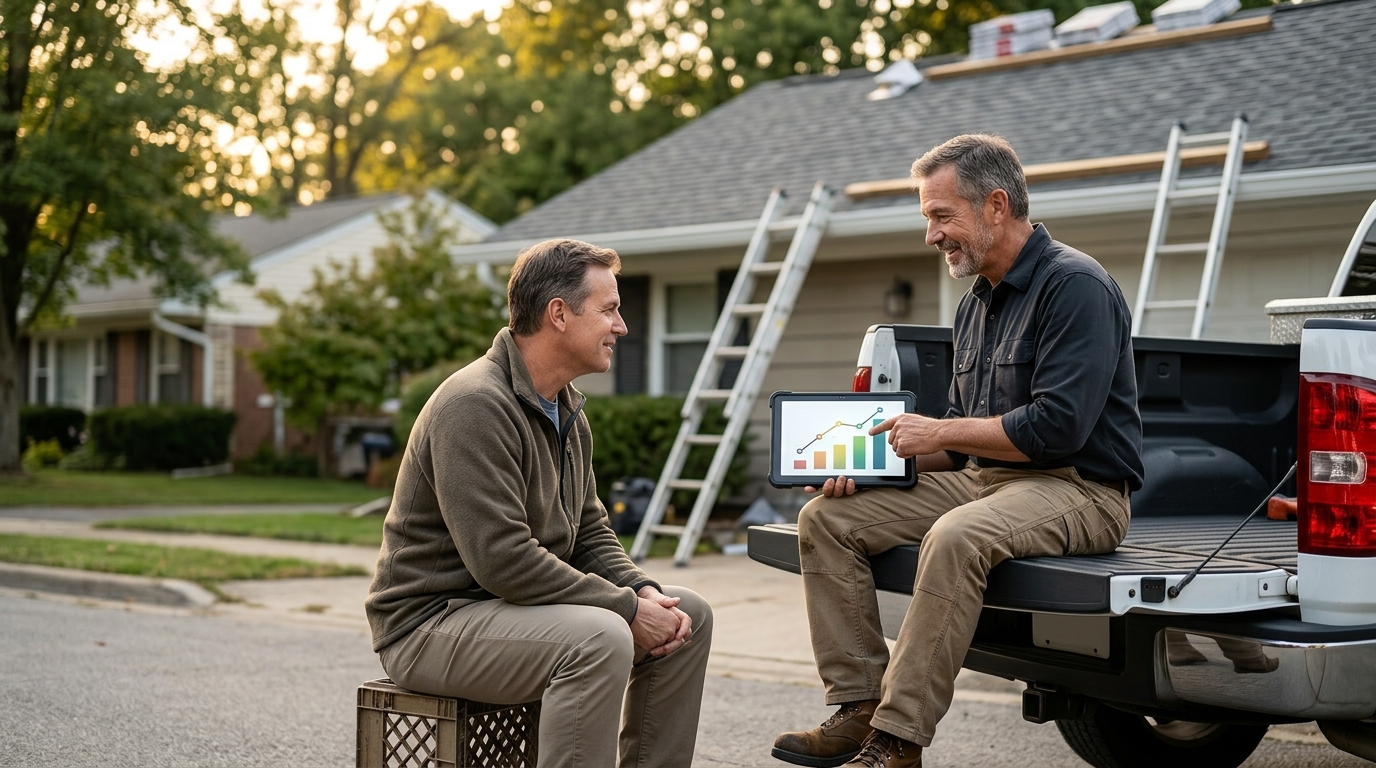
When a homeowner requests an inspection after noticing missing architectural shingles or interior water staining, the clock starts immediately. The contractor who turns a driveway ladder inspection into a fully itemized, e-signed proposal with an integrated deposit before starting the engine to leave the property is the contractor who secures the work. Eliminating the delay between inspection and agreement transforms trade business cash flow, protects profit margins, and captures the current reroofing wave.
---
The 2026 Speed-to-Lead Bottleneck
The 2026 Peak Performance Report, published in March by the Roofing Success Podcast, highlighted a glaring operational gap in the industry: speed to lead remains the single largest operational bottleneck for residential exterior contractors. While marketing campaigns and digital lead channels generate consistent inquiries, poor communication and delayed proposal turnarounds drive the vast majority of negative customer reviews and abandoned bids.
When a homeowner decides to replace a roof, they rarely call a single company. They call three. The first contractor to deliver a comprehensive, professionally styled estimate sets the benchmark for pricing, scope clarity, and trust. Every hour that passes after an inspection increases the probability that a homeowner will sign with a competitor who provided a prompt response.
Relying on manual paper estimates or delayed evening office work creates severe sales friction:
- Momentum Loss: The emotional urgency felt by a homeowner during an active roof leak or scheduled replacement dissipates rapidly once the contractor leaves the driveway.
- Comparison Shopping Window: A 48-hour delay gives homeowners time to solicit lower bids from uninsured operators or budget contractors who trade low margins for quick volume.
- Administrative Fatigue: Estimators and project managers spend their evenings re-keying physical notes into computer software rather than following up on high-value commercial bids or managing job site logistics.
Adopting a specialized [roofing estimate app](https://flashquoteapps.com/roofing) allows field estimators to build standardized, tier-based options—such as standard architectural shingles versus high-wind or impact-resistant options—directly on a smartphone or tablet while standing on the property. Delivering options in real time converts homeowner curiosity into an immediate buying decision.
---
The Margin Squeeze Paradox: Volume vs. Real Profitability
Industry benchmark data from ServiceTitan’s 2026 residential service report revealed an intriguing contradiction: while almost 70% of roofing and exterior contractors project top-line revenue growth this year, roughly one-third are actively struggling with shrinking EBITDA and margin compression.
How can a roofing company take on more job volume while making less real profit? The answer lies in administrative friction, inaccurate material quoting, and delayed cash collection cycle dynamics.
When project scope details are calculated by hand or transferred across fragmented systems, margin leakage occurs in several predictable areas:
- Missed Accessories and Line Items: Forgetting to calculate ice and water shield square footage, ridge vent length, starter strip bundles, or pipe boot replacements erodes net profit margins.
- Delayed Material Ordering: In an environment where distributor material pricing fluctuates, waiting five days to secure a deposit means paying updated supplier rates that slice directly into net margins.
- Uncompensated Office Labor: Managing back-and-forth emails, resending lost attachments, and manually creating paper invoices adds substantial overhead costs that do not build roofs.
To defeat margin compression, high-performing roofers rely on purpose-built [contractor quote software](https://flashquoteapps.com/blog) that locks in pre-set component formulas, labor rates, and waste factors. When field estimators select the surface square footage and pitch multiplier, the software automatically builds an accurate cost baseline that preserves operating margins before the proposal ever reaches the homeowner.
---
The In-Driveway Sales Framework
To capitalize on 2026 reroofing demand, top exterior teams are replacing slow office quoting with an in-driveway sales process. This operational framework compresses an administrative cycle that used to take days into a single 20-minute field interaction.
Step 1: Rapid Surface Measurement & Scope Entry After completing a physical inspection or drone roof measurement, the estimator inputs primary dimensions—total square footage, roof pitch, tear-off layers, linear feet of eaves and valleys, and penetration counts—directly into a mobile device.
Step 2: Tiered Proposal Generation Instead of presenting a single flat figure, modern estimating software instantly generates three distinct execution options: Option A (Standard Replacement): 30-year architectural shingle, standard felt, ridge ventilation, basic drip edge. Option B (Performance Upgrade): Synthetic underlayment, starter shingles, ice and water shield in all valleys and penetrations, upgraded ridge capping. Option C (Premium System): Class 4 impact-resistant shingles, complete high-wind warranty package, replacement seamless aluminum gutters, integrated skylight flashing kits.
Offering clear options increases average contract value. Homeowners appreciate transparency and frequently select middle or premium packages when value differences are laid out clearly.
Step 3: Instant Digital E-Signatures Once the homeowner selects their preferred package, the contract must be executed without delay. Requesting that a client print, scan, or return a physical document creates unnecessary friction.
Integrating native [e-signature proposals](https://flashquoteapps.com/roofing) allows the customer to review line items, approve scope disclosures, and sign directly on the estimator's tablet or phone in the driveway. Legally binding digital signatures eliminate approval delays and establish an immediate binding agreement.
Step 4: Frictionless Deposit Collection A signed contract is only as solid as the deposit securing it. Traditional contractors often wait days or weeks for a physical check to arrive in the mail before scheduling production or placing orders with distributors.
Using [Stripe proposal software](https://flashquoteapps.com/roofing) integrations, roofing estimators can accept secure credit card or ACH payments directly through the proposal interface the moment the contract is signed. Securing a 20% to 50% deposit on site locks the job into the master production schedule immediately and protects working capital.
---
Field Workflow Comparison: Legacy vs. Modern Execution
To understand the real-world impact of workflow modernization, consider how two different roofing contractors handle the exact same 30-square residential tear-off inquiry:
| Workflow Stage | Legacy Manual Operator | Modern Digital Contractor | | :--- | :--- | :--- | | Initial Inspection | Notes measurements on paper pad; takes photos on personal phone camera. | Inputs square footage, pitch, and valley length directly into mobile app. | | Estimate Build | Drives home; re-enters measurements into desktop spreadsheet after dinner. | Mobile app auto-populates exact material counts, waste factors, and labor rates instantly. | | Delivery Time | Sends static PDF via email 24 to 48 hours post-inspection. | Presents full professional digital quote in driveway within 15 minutes of stepping off the ladder. | | Customer Choice | Single price point; updates require phone calls and re-drafting. | Good/Better/Best interactive choices allow instant package selection. | | Contract Execution | Customer prints, hand-signs, scans, and emails back document. | Customer signs on screen via touch interface on site. | | Deposit Collection | Waits 5 to 7 business days for mailed check to clear. | Collects instant deposit via integrated card processing before leaving property. | | Total Turnaround | 3 to 7 Days | 20 Minutes |
The contrast is clear: the modern digital contractor eliminates admin waste, captures high customer intent, and protects profit margins before the legacy operator finishes their spreadsheet calculations.
---
Streamlining Post-Job Billing and Collection
Speed-to-estimate is critical for winning projects, but speed-to-invoice is equally important for maintaining healthy business cash flow. A common issue for growing contractors is letting completed jobs sit unbilled for days while crews move on to the next installation.
When a tear-off and installation crew finishes a job, cleanup is verified, and the final walkthrough is complete, final payment collection should happen automatically.
Transitioning from initial contract to final settlement requires an integrated workflow:
- One-Click Invoice Conversion: The initial signed estimate should instantly convert into a formal final statement without requiring duplicate manual entry.
- Instant PDF Delivery: Generating a clear, itemized invoice using a fast [PDF invoice app](https://flashquoteapps.com/roofing) ensures the homeowner receives an easy-to-read document detailing completed work, credits for initial deposits, and remaining balances.
- Flexible Digital Payment Options: Providing direct payment links allows homeowners to clear balances using preferred cards or bank transfers from their smartphones, eliminating the hassle of mailing physical checks.
Automating invoicing eliminates administrative delays, reduces outstanding accounts receivable balances, and keeps working capital liquid to support ongoing material purchases and field payroll.
---
Operational Action Plan for Roofing Business Owners
Transitioning your residential roofing operation to a high-speed, digital-first model does not require weeks of software setup or expensive IT consulting. Implementing a few core operational habits will streamline field performance:
1. Standardize Material Packages & Line Items Pre-configure your core system assemblies inside your mobile estimating app: Define standard cost parameters for shingles, underlayments, drip edges, starter strips, ridge caps, and leak barriers per square. Lock in preset labor rates for tear-off layers, steep pitch charges (e.g., 8/12 and above), two-story staging fees, and decking replacement per sheet. Set standard waste factor calculations (e.g., 10% standard gable, 15% complex hip roofs) to ensure consistent, reliable margins across all sales representatives.
2. Establish a "Driveway Delivery" Rule Hold sales representatives and field estimators accountable to a clear operational standard: no proposal should be emailed after the fact when an in-person delivery is possible.
Require estimators to complete calculations, select appropriate options, and present the proposal directly to the homeowner while still on site. This simple operational rule dramatically improves conversion rates and reduces total sales pipeline drag.
3. Equip Field Teams with Mobile Payment Infrastructure Ensure every estimator has mobile software equipped with integrated e-signatures and credit card capabilities. Removing physical payment obstacles ensures contract execution happens the moment the homeowner agrees to proceed.
---
Sustaining Growth in a Competitive Market
As the 2026 reroofing boom continues, top residential roofing contractors will distinguish themselves not by offering cheap estimates, but by delivering faster, clearer, and more professional service than the competition.
Homeowners planning major roofing improvements are looking for responsive communication and seamless digital experiences. Contractors who cling to slow paper processes and delayed estimates will struggle with administrative costs and missed opportunities. Modernizing the estimating workflow turns response speed into a reliable competitive advantage.
By equipping field estimators with instant digital quoting, integrated e-signatures, real-time card processing, and automated PDF invoicing, roofing business owners can capture growing market demand, optimize business cash flow, and lock in maximum profitability on every square installed.
In 2026, speed-to-estimate is not just a customer service metric; it is the single greatest lever for securing high-margin roofing contracts before administrative delay erodes profitability.