The Roofing Quote Is No Longer Paperwork—It’s the First Test of How You Run the Job
The Roofing Quote Is No Longer Paperwork—It’s the First Test of How You Run the Job A roofing estimate used to be the form that came before the real work. Now it is often the first proof that the company behind the work...
The Roofing Quote Is No Longer Paperwork—It’s the First Test of How You Run the Job
A roofing estimate used to be the form that came before the real work. Now it is often the first proof that the company behind the work is organized enough to be trusted with a homeowner’s roof.
Customers do not see a quote as a simple price sheet. They read it as a signal: Does this contractor communicate clearly? Is the scope complete? Can I approve this without a dozen follow-up calls? If I say yes, will the next step be obvious?
In a market where customers expect faster, more connected payment experiences, roofing companies should treat every estimate as an operational handoff. A clear scope, confident options, e-signature, and—when appropriate—a quick Stripe payment option attached to the customer-facing PDF turn a proposal into a path forward. The roofer who makes the next step obvious earns trust before the crew ever arrives.
The Quote Is Where a Homeowner Decides Whether You’re Organized
A roofing company may view inspection, proposal, approval, deposit, and scheduling as separate stages. The homeowner experiences one continuous problem.
They may be dealing with a leak after a storm, an adjuster appointment, a spouse with questions, and a workday already crowded with obligations. They do not want to become the project manager for their own roof. They want to know what is happening, what they are choosing, and what the company needs from them next.
That is why the quote carries more weight than many contractors realize.
A vague PDF with one bottom-line number creates uncertainty. A proposal full of abbreviations, broad allowances, or hidden assumptions makes the operation feel difficult to work with. Even a skilled roofer can look disorganized when the document leaves the customer guessing.
A strong estimate does the opposite. It gives the homeowner confidence that someone has considered the details. It identifies the roofing system, names the work included, makes exclusions visible, and lays out the route from approval to scheduling.
That is the practical value of [Flash Quote Roofing](https://apps.apple.com/us/app/flash-quote-roofing/id6772379864): not just generating a proposal quickly, but giving the customer a clearer experience at the moment clarity matters most.
The best estimate does more than answer, “What does this cost?” It answers the questions homeowners are often too overwhelmed to ask:
- What exactly is included in this job?
- What am I choosing between?
- Which items could change the final scope?
- What happens after I approve the proposal?
- What do you need from me to reserve the work?
- Who owns the next step?
The old process treated the estimate as the end of the sales conversation: send it, wait, then follow up repeatedly. A better process treats it as the beginning of a coordinated move from interest to action. The homeowner gets clarity, the office gets fewer loose ends, and the crew arrives at a job that is truly ready to begin.
A Good Roofing Quote Removes Friction Before It Creates Revenue
The best estimates do more than help win work. They reduce the ordinary friction that can slow a job before materials are ordered or a crew is dispatched.
That friction is rarely dramatic. It is a homeowner trying to compare options across three text messages. It is a signed agreement sitting in an inbox while someone waits for a separate invoice. It is a deposit request sent days later without enough context. It is a scope written in contractor shorthand that the customer cannot confidently explain to a spouse or insurance representative.
Each snag adds a little uncertainty. Enough uncertainty turns a committed homeowner into a delayed decision.
Storm-Damage Estimates Must Be Useful, Not Just Complete
Storm damage is where clear communication matters most.
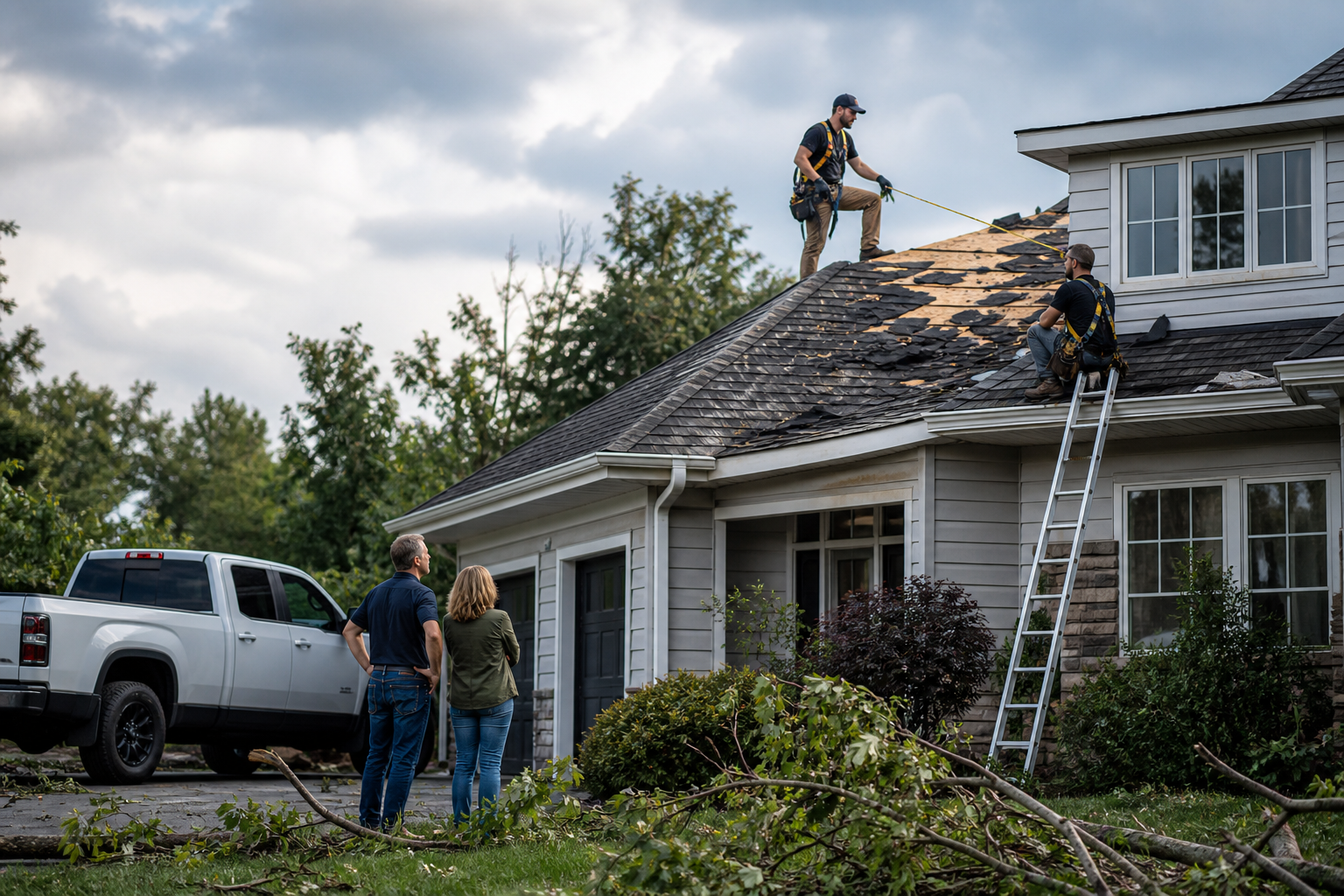
A homeowner calls after hail or wind has damaged the roof. They may have a claim number, a tarp over a vulnerable area, and little confidence in the sequence of events ahead. They are trying to understand insurance language, contractor language, and the pressure of making a major decision quickly.
This is not the moment for a generic line item labeled “roof replacement.”
The proposal should make the major components easy to understand: tear-off, underlayment, shingle system, flashing, ventilation, debris removal, and any repairs or exclusions that could affect the scope. If a portion of the work depends on what is discovered after tear-off, explain that plainly. If the homeowner needs to compare the estimate with an insurer’s paperwork, make the estimate readable enough to support that conversation.
A clear digital estimate does not replace the insurance process. It makes the contractor’s portion of the process legible.
That has practical consequences. The homeowner is better prepared when an adjuster asks what the contractor found. The office spends less time repeating basic details over the phone. And the customer feels less as though all the coordination has been handed back to them.
Options Should Help Customers Decide, Not Give Them Homework
Consider a common replacement job: the homeowner needs a new roof but is weighing a standard architectural shingle against an impact-resistant upgrade.
Many proposals accidentally create a decision trap. The base option appears in one PDF. The upgrade is explained in a text message. The price difference comes up later in a call. The customer has to assemble the comparison themselves.
That is not a lack of interest. It is unnecessary work.
A stronger proposal presents the choices side by side in the same customer-facing document. What changes? What remains the same? What is the price difference? What practical benefit does the upgrade offer for this home, this neighborhood, or this customer’s priorities?
The goal is not aggressive upselling. It is respectful decision-making.
A homeowner should not have to decode roofing vocabulary to choose between two valid paths. When choices are organized clearly, the customer can ask better questions and move forward with more confidence. When choices are scattered across channels, they are more likely to wait.
A Signature Is Progress—But It Is Not Always the Handoff
One of the most expensive forms of friction is the kind that looks like a completed sale.
The homeowner signs. The sales representative marks the job as won. Then the process stalls because the deposit has not been collected, the scheduling team never received a clear signal, or the payment request must be sent through a separate system.
The customer thought they had finished their part. The company thought the job was moving. Neither assumption was entirely true.
A signature matters, but it is not always the finish line. The proposal needs to make the next action clear.
For a job that requires a deposit, a customer-facing quote PDF can include an e-signature step and, when it fits the company’s process, Stripe payment collection so the homeowner can pay quickly from the quote. Instead of being bounced among attachments, inboxes, portals, and phone calls, they can review the scope, approve it, and complete the required payment in a connected experience.
The advantage is not simply speed. It is continuity.
The homeowner does not have to wonder what happens after approval. The office does not have to chase a payment that should have been part of the same handoff. Scheduling can work from a cleaner picture of which jobs are genuinely ready to move.
Just as important, the quote should explain what the payment is for. If it is a deposit, say so. If it reserves materials, supports permit preparation, or secures a scheduling window, explain that too. Customers generally do not object to a clear payment step. They object to ambiguity, especially when the request arrives without context after they thought they had already completed the process.
Homeowners Trust the Quote Before They Can Trust the Crew
Before installation begins, customers cannot inspect the quality of the finished roof. They do not yet know whether the crew will protect landscaping, keep the site clean, handle unexpected conditions professionally, or communicate well during the work.
So they use proxies.
They notice whether the proposal is easy to follow. They notice whether the scope is specific. They notice whether they must repeat information they already gave the company. They notice whether the next step is explained before they have to ask. They notice whether the process feels intentional or improvised.
Those details become evidence.
A polished quote cannot replace craftsmanship, honest communication, reliable crews, or sound jobsite practices. But it can make those qualities believable. The estimate is a small promise about the larger project: this company understands the work, owns the details, and knows how to keep a job moving.
That is why estimating software is no longer merely an administrative convenience. It is part of the customer experience and part of operational discipline.
For roofing businesses building a more connected front end, the guidance on the [Flash Quote roofing page](https://flashquoteapps.com/roofing) and the broader [Flash Quote blog](https://flashquoteapps.com/blog) reflects the same principle: clarity at the start prevents avoidable confusion later.
The Best Quotes Make the Next Step Unmistakable
The strongest roofing estimates do not rely on charm, pressure, or a mountain of paperwork. They make the customer’s decision easier and the company’s next move clearer.
They tend to do three things well.
They Define the Scope in Plain Language
The customer can see what is included without translating contractor shorthand. The document names the roofing system, outlines the work, and identifies meaningful exclusions or contingencies. It does not promise certainty where a roof deck has not yet been opened, but it does explain what will happen if hidden conditions are found.
They Present Options Without Creating Confusion
The difference between standard and upgraded work is visible rather than buried. Customers can compare materials, price, and practical implications in one place. A clean comparison protects the salesperson from repetitive explanations and protects the customer from feeling pushed into a decision they do not understand.
They Connect Approval to Action
E-signature, payment, and scheduling should not feel like unrelated events. A homeowner who is ready to say yes should know exactly what happens after the signature, whether a deposit is needed, and when they can expect the next communication.
That is what makes a quote feel professional. Not jargon. Not visual clutter. Not a stack of forms. A deliberate path from “I’m interested” to “Let’s do it.”
In practice, that can be the difference between a homeowner who delays and one who moves. It can be the difference between an office that spends the week chasing missing details and one that can focus on jobs ready for production. It can be the difference between a sales process that feels fragmented and one that feels engineered.
A quote is not just a sales tool. It is the first operational test a customer can actually see.
The Real Test Is Whether the Customer Has to Chase You
Every roofing company says it values professionalism. The quote is where homeowners begin deciding whether that claim is real.
If they have to search their inbox for attachments, ask for the same explanation twice, or wait for a separate payment link after they have already approved the work, they start to anticipate future delays. The roof has not been installed yet, but the customer is already learning how it may feel to work with the company.
When the estimate is clear, the options are organized, the approval path is simple, and payment can happen from the customer-facing PDF when appropriate, the company feels easier to trust. The business has demonstrated how it will manage the job before a ladder reaches the roofline.
The quote is not what comes before the job—it is the first piece of the job.