The Roofing Change Order That Never Becomes an Invoice Is a Profit Leak
The Roofing Change Order That Never Becomes an Invoice Is a Profit Leak Roofing margins disappear between approval and paperwork Roofing contractors do not usually lose money because they forgot how to price shingles....
The Roofing Change Order That Never Becomes an Invoice Is a Profit Leak
Roofing margins disappear between approval and paperwork
Roofing contractors do not usually lose money because they forgot how to price shingles. They lose money because the job changes after the contract is signed, the change gets approved in the field, and nobody turns that approval into a billable record.
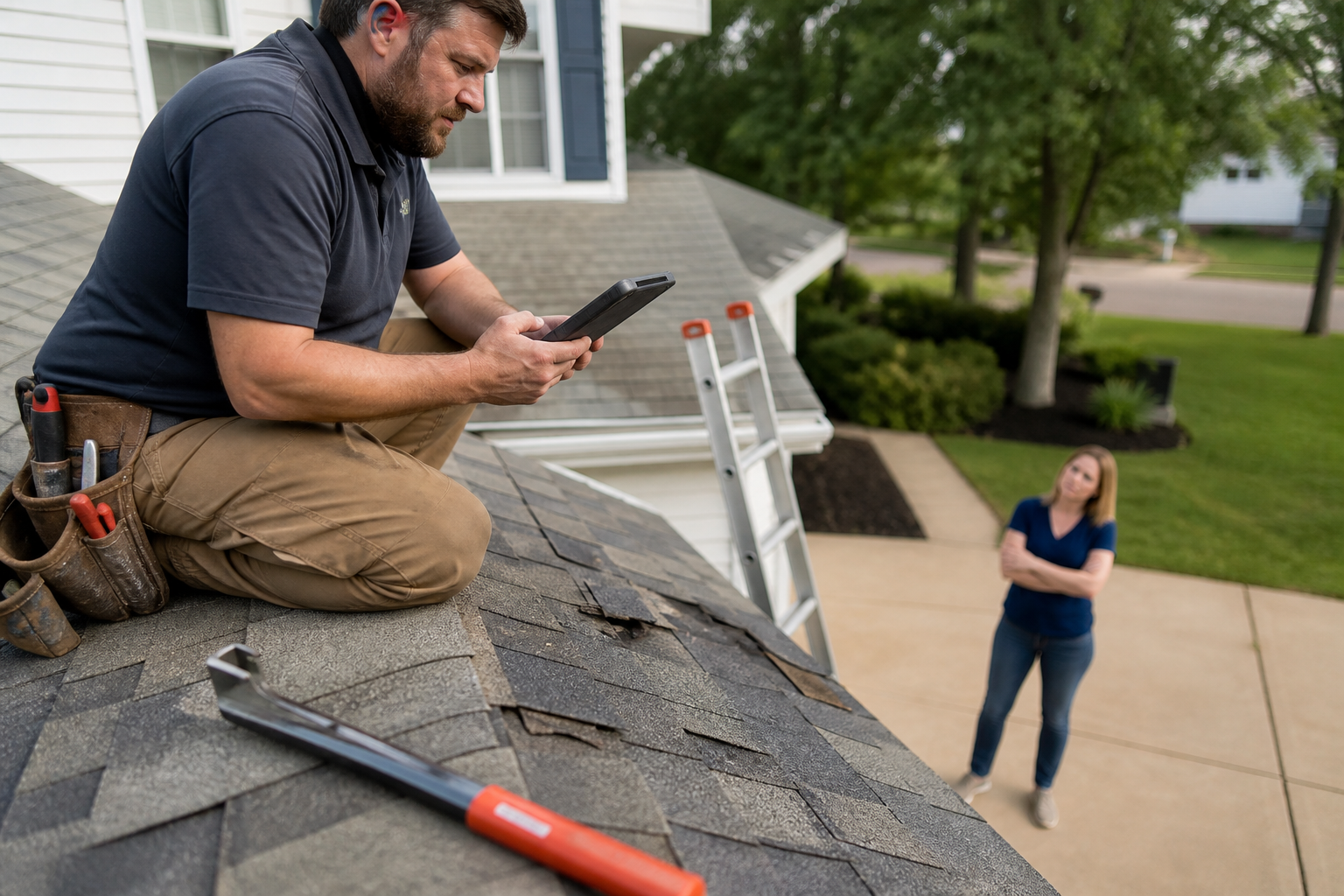
A deck repair gets approved in a driveway. An insurance supplement reveals omitted scope. A homeowner upgrades shingles after seeing samples in person. The labor is real, the materials are ordered, and the crew does the work. But the approval lives in a text thread, a phone call, or a note on a work order.
That is not a change-order process. It is a profit leak.
Every approved scope change should move through a clear quote, signature, and payment trail while the issue is visible and before the crew closes the roof back up. If added work matters enough to perform, it matters enough to document and bill.
Why roofing changes are never just “small adjustments”
Roofing projects can change shape the moment demolition begins.
A crew tears off an old roof and finds soft decking around a valley. An adjuster’s estimate leaves out flashing, drip edge, ventilation, or code-related work. A homeowner who chose a standard architectural shingle decides they want a premium color or upgraded underlayment after seeing the options on-site.
These are ordinary roofing realities, not rare exceptions.
The problem is that contractors often handle legitimate changes in the least durable way possible: “We found a problem. Can we fix it?” The homeowner says yes, the crew keeps moving, and the office tries to reconstruct the agreement later.
“Go ahead” is not a scope document.
It may be sincere, and it may be the right decision in the moment. A roof cannot sit exposed while everyone waits for a long administrative process. But the answer is not to abandon documentation. The answer is to make the documentation fast enough for the field.
A proper change order keeps one version of the job in front of everyone: the crew, the homeowner, the project manager, and the person sending the invoice.
Rotten decking is unavoidable work, not automatic revenue
The classic example is damaged decking.
A project starts as a standard replacement. The shingles come off, and the crew finds soft sheathing near a chimney, wall intersection, valley, or old leak area. Nobody should nail new roofing over compromised wood. The repair needs to happen.
But necessary work does not become billable simply because it was necessary.
Too many companies handle this with a quick call: “We found bad decking. Can we replace it?” The customer agrees. The crew replaces several sheets, uses additional fasteners and materials, and keeps production moving. Days later, the office is left asking how many sheets were replaced, where they were installed, who approved the cost, and whether the customer understood the added balance.
That uncertainty is expensive.
A useful change quote should state:
- What the crew found
- Where it was found
- The exact added work
- The material and labor price
- Any schedule impact
- The customer’s approval before work proceeds
A photo is valuable evidence and helps the homeowner understand the problem. It is not the approval itself. The approval is the signed record that says what the homeowner accepted and what it costs.
“Replace four sheets of damaged decking at the rear slope” is clear. “Additional wood” is not.
Insurance supplements need a billing trail of their own
Insurance work creates a more complicated version of the same issue.
A roofing contractor identifies missing line items, code-related work, omitted flashing, or other gaps in the carrier’s original scope. A supplement is submitted. The homeowner wants the roof completed, and the crew is ready to work. Meanwhile, the contractor is carrying labor, materials, production risk, and uncertainty about what the carrier will ultimately approve.
That is where informal promises start to pile up.
“The insurance should cover it.”
“We’ll settle up later.”
“Let’s get the roof finished first.”
Those phrases keep the conversation moving, but they do not establish a payment plan. A supplement is not proof that the additional work will be collected. It is only one step in the process.
The homeowner should understand the added scope before the work is performed, including what the carrier has approved, what remains pending, and what may be the homeowner’s responsibility. That clarity is not confrontational. It is professional.
For roofers who need a faster field-to-office workflow, [Flash Quote Roofing](https://apps.apple.com/us/app/flash-quote-roofing/id6772379864) can turn job details into a customer-facing PDF, collect an e-signature, and attach Stripe payment collection so an approved change does not become an unbilled follow-up.
The key is timing. Document the discovered work when the customer can see the problem, not after the roof is complete and the details have been buried under a new roofing system.
A casual upgrade can become a disputed invoice
Not every change order starts with damage or insurance. Some start with an opportunity.
A homeowner may decide they want a premium shingle line instead of the original selection. They may choose a different color, upgraded ridge ventilation, a higher-end underlayment package, or a cleaner finish around penetrations. These can be good decisions for the roof and strong revenue opportunities for the contractor.
They also create new costs.
A product change may affect material pricing, lead time, tax, labor, manufacturer requirements, and warranty documentation. If the agreement lives only in a conversation, the office later has to ask uncomfortable questions:
Which product was selected? Which color? Was the price difference explained? Did the homeowner approve the revised total? Was the added amount due before installation, at completion, or after insurance payment?
Those are pre-work questions, not end-of-job questions.
A customer should receive a revised quote that makes the choice simple: here is the original selection, here is the upgrade, here is the price difference, and here is what approval means. That protects the customer from surprise and protects the contractor from delivering an upgrade that gets treated like a free favor.
Small repairs become a large annual write-off
The most overlooked changes are usually the smallest ones.
A flashing detail needs correction. Several pieces of step flashing need replacement. A chimney saddle requires more labor than expected. A vent opening needs adjustment. The crew spends another hour making the roof right, and someone decides the amount is too small to put in front of the homeowner.
That decision may feel generous in the moment. Repeated across a season, it becomes a habit of giving away labor and materials.
Small change orders are exactly the changes that should be easiest to document. A quick, specific quote and signature process gives the field team a reliable option other than hoping the office remembers later.
More importantly, it builds discipline. A company that documents a modest decking repair is more likely to document a larger supplement, product upgrade, or commercial scope correction. The process becomes normal rather than something the team tries to invent under pressure.
Texts and verbal approvals cannot run the back office
Texting has a place in roofing. It is fast, useful for photos, and often the best way to get a homeowner’s attention while the crew is on-site.
It is not a complete commercial record.
A text thread can contain arrival updates, weather delays, photos, questions, compliments, and half-finished approvals all mixed together. The person who wrote “yes” may not be the person responsible for payment. The project manager may remember one version of the conversation while the homeowner remembers another.
Verbal approvals are even weaker because they depend on memory after a complicated project is complete.
The practical issue is not whether a contractor can eventually prove that work occurred. The issue is operational. Informal approval forces the company to recreate the deal after the fact by comparing crew notes, supplier receipts, photos, texts, and the original estimate.
That is expensive administrative work that should not exist.
A signed change quote does three things at once:
- It explains the added scope in customer language.
- It confirms the price before the work disappears into the job.
- It gives the office a clean billing record instead of a puzzle.
The best process does not replace field communication. It turns field communication into an organized record.
The best change order happens while the roof is open
Change orders should not feel like paperwork drag. They should feel like part of production.
When a project manager discovers an issue, the company should be able to take photos, write a precise description, create a customer-facing quote, collect approval, and connect that approval to payment without delaying the crew unnecessarily.
The closer the documentation is to the discovery, the fewer details get lost.
That is especially important for deductible-related balances, homeowner upgrades, and repairs outside the original scope. A customer-facing PDF with a quick payment option can make the next step obvious: approve the added work, sign the change, and pay the required amount without waiting for a separate invoice chase.
The crew gets a clear version of what it is authorized to build. The homeowner gets a clear version of what they agreed to buy. The office gets a record it can invoice confidently.
For more practical workflow and estimating ideas, visit the [Flash Quote blog](https://flashquoteapps.com/blog). Roofing companies can also explore the broader [Flash Quote platform](https://flashquoteapps.com) for tools designed to make proposals, signatures, invoices, and payments move faster.
One job needs one version and one number
A documented change order does more than protect revenue. It keeps the entire project aligned.
Picture a suburban reroof where the crew finds water damage at a dormer. The foreman sends photos, the homeowner approves a clearly priced deck repair, and the office sees that approval immediately. The crew closes the roof knowing the work is authorized, and the final invoice reflects the actual job.
Now compare that with a small commercial reroof where extra metal work and ventilation corrections are discovered after tear-off. If everyone says, “We’ll sort it out later,” later arrives with a completed roof, scattered notes, and no clean path to collect for the added work.
The difference is not the roofing skill. It is whether the company has a reliable path from discovery to quote, signature, and payment.
The crew knows what it is allowed to build. The homeowner knows what they approved. The office knows what to invoice. The owner sees the true job total instead of an underreported contract value.
A roofing change order is not paperwork after the work—it is the moment profit becomes real.