The Repair-First Roofing Market Is Here. Fast Quotes Will Decide Who Profits
The Repair-First Roofing Market Is Here. Fast Quotes Will Decide Who Profits A homeowner calls about a leak, but the conversation no longer starts with, “How soon can you replace the roof?” It starts with, “Can you fix...
The Repair-First Roofing Market Is Here. Fast Quotes Will Decide Who Profits
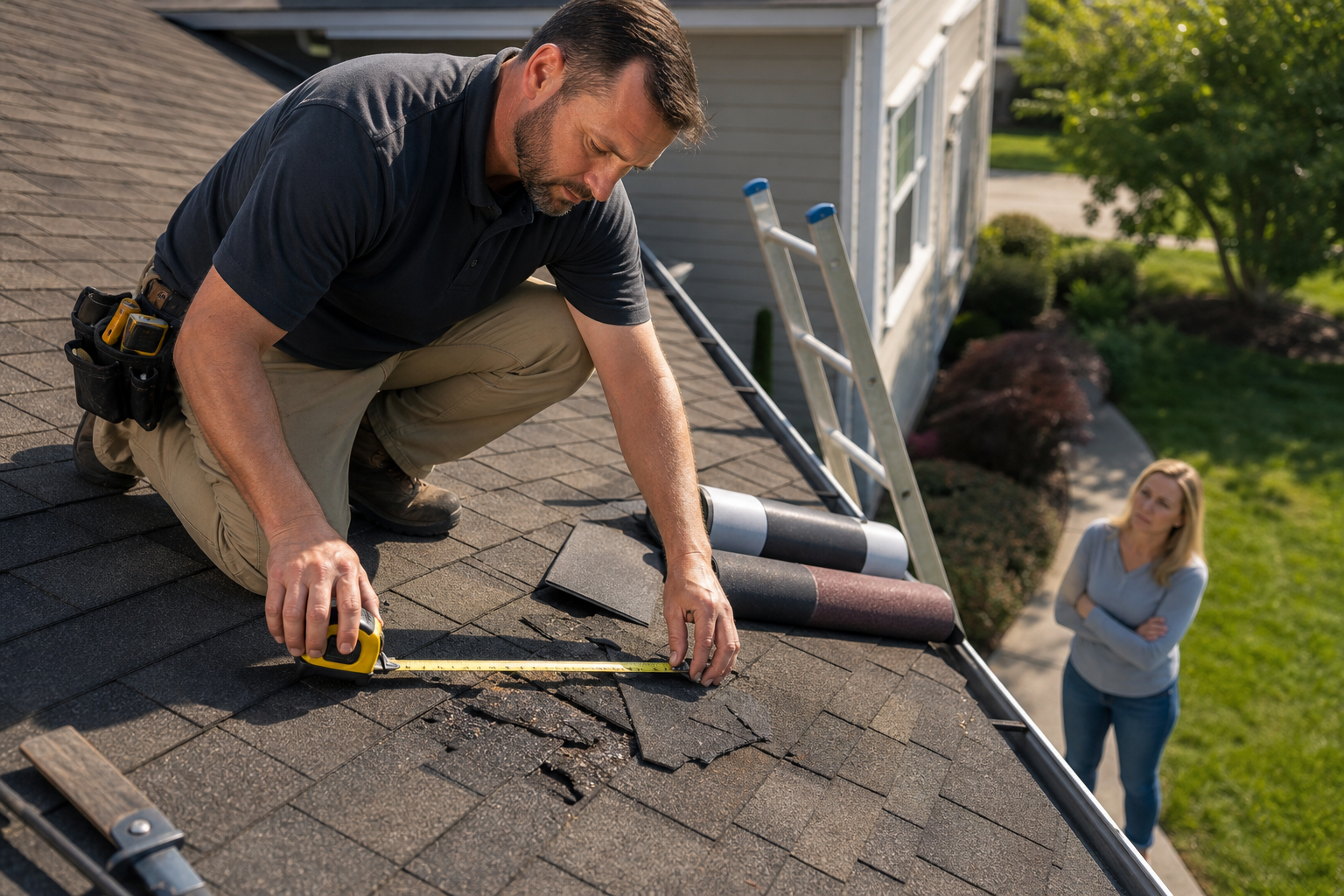
A homeowner calls about a leak, but the conversation no longer starts with, “How soon can you replace the roof?” It starts with, “Can you fix this one spot, and what will it cost?” As insurance pressure and homeowner cost sensitivity push more roofing demand toward smaller repairs, contractors will not protect their margins by chasing every full replacement or cutting prices. The winners will be roofers who can turn leaks, shingle patches, flashing fixes, and minor storm damage into same-visit digital proposals with clear scope, e-signatures, and payment-ready PDFs.
That does not mean every roof should be patched. Some roofs are past saving. Some damage is too widespread for a responsible repair. But when a repair is the right job, the business process around it has to fit the size of the opportunity.
A roofer can diagnose the problem correctly, price the work fairly, and still lose money if the quote waits until tomorrow.
The Repair-First Shift Is Not a Slow Season Problem
Roofing companies have long preferred replacements because the economics are easy to understand. A full roof creates a larger ticket, a clearer material order, a more predictable crew schedule, and enough gross profit to absorb sales time, office work, and follow-up.
Repairs are different. They are smaller, messier, and easier to mishandle. A pipe boot leak, a loose ridge cap, a lifted flashing detail, or a few missing shingles after a wind event may be profitable on paper. But if the contractor processes that small job through the same system used for a full replacement, the margin can disappear before the crew ever arrives.
The market is forcing roofers to take those jobs seriously. Homeowners are more cautious with cash. Insurance approvals are more scrutinized. Deductibles and out-of-pocket gaps can make a replacement feel impossible even when the roof has real issues. Many owners are no longer asking, “Can I get a new roof?” They are asking, “Can I buy time?”
That shift changes the sales conversation. The contractor who only knows how to sell a replacement may walk away frustrated. The contractor who can explain a bounded repair, price it clearly, get it signed, and collect quickly can turn those smaller calls into steady revenue.
Repair work is not a nuisance when the workflow is built for it. It becomes a cash-flow engine.
The Hidden Bleed: When a $750 Repair Enters a $20,000 Pipeline
Consider a common job: a homeowner has a ceiling stain near a bathroom vent. The estimator drives to the property, sets the ladder, climbs the roof, identifies a cracked pipe boot, takes photos, and explains the issue in the driveway. The repair itself is simple. The business process is where the money gets lost.
In a slow workflow, the estimator says, “I’ll write this up and send it over.”
Now the clock starts working against the contractor.
The notes sit in the truck while the estimator heads to another appointment. Later, someone has to translate the photos and measurements into a proposal. The office formats the estimate, emails it, waits for the homeowner to respond, follows up, schedules the job, sends an invoice, and chases payment after completion.
That may be acceptable on a larger project. On a small repair, it is a leak in the business model.
Every extra administrative touch weakens the job: - The homeowner’s urgency fades. - A handyman or competitor may offer a faster answer. - The estimator forgets small details from the inspection. - The office spends too much time formatting a low-ticket proposal. - Payment collection becomes another separate task.
The physical repair may only require a short crew visit. But the paperwork can stretch across days.
That is why the repair-first roofing market rewards speed, not in the sense of sloppy inspections, but in the sense of closing the loop while the facts are fresh. The contractor who can inspect, explain, quote, sign, and prepare payment in one visit has a structural advantage over the contractor who turns every small repair into a back-office project.
The Driveway Close Is Becoming the New Roofing Advantage
The best time to sell a legitimate repair is immediately after the homeowner understands the problem.
They have seen the photos. They know where the water is entering. They are standing in front of the person who can fix it. Waiting twenty-four or forty-eight hours to send a quote does not make the contractor look more professional. It often makes the homeowner wonder if the job is too small to matter.
This is where [Flash Quote Roofing](https://apps.apple.com/us/app/flash-quote-roofing/id6772379864) fits naturally into the field workflow. A roofer can build a clean customer-facing proposal from the driveway, define the scope, present the price, capture an e-signature, and generate a professional PDF before leaving the property.
Picture a wind call after a storm. Five shingles are missing from the rear slope. The decking is sound. The surrounding shingles are serviceable. The homeowner does not need a dramatic sales presentation. They need a written repair plan that says what will be replaced, where the work will happen, what materials will be used, and what the price includes.
That proposal should not be a text message that says, “Shingle repair: $650.”
It should be a real document.
A strong same-visit proposal might say the contractor will remove damaged tabs on the rear-facing slope, install matching architectural shingles where available, reseal exposed nail heads, inspect adjacent courses for lifted fasteners, and clean debris from the work area. It should include photos from the inspection and a clear explanation of what is not included.
When the homeowner can review that scope immediately and sign it on the spot, the contractor is no longer selling a vague repair. They are selling clarity.
And clarity closes.
Small Roof Repairs Need Boundaries, Not Handshakes
Repair work becomes dangerous when the scope is loose. A homeowner may remember the conversation differently weeks later, especially if another leak appears in a different area of the roof.
The contractor thought they were hired to reseal a chimney flashing. The homeowner remembers paying to “fix the roof leak.” After the next heavy rain, water appears near a valley on the opposite side of the house. Without a detailed written scope, the dispute becomes emotional fast.
A repair-first business has to be disciplined about boundaries.
Name the Exact Location
A proposal should identify the specific roof area being repaired. “Repair flashing” is too vague. “Repair the step flashing on the left side of the brick chimney on the rear slope” is better.
If the job is limited to one penetration, say so. If the repair applies only to the south-facing slope, say so. If no work is being performed on adjacent valleys, skylights, ridge vents, gutters, or wall transitions, say so.
Specificity protects both sides. The homeowner knows what they are buying. The contractor knows what they are responsible for delivering.
Describe the Materials in Plain Language
Small repairs still deserve professional material descriptions. That does not mean overwhelming the customer with jargon. It means explaining enough to justify the price and set expectations.
For a pipe boot replacement, the proposal might specify removal of the failed boot, installation of a new compatible boot around the plumbing penetration, resealing of exposed fasteners, and inspection of the surrounding shingles for immediate failure points.
For a flashing repair, it might mention underlayment, step flashing, counterflashing, sealant, and any matching considerations.
The homeowner does not need a roofing textbook. They need confidence that the quote is not a guess.
Include Clear Exclusions
Exclusions are not negative. They are honest.
A repair proposal should explain what is not included: unrelated roof areas, hidden rotten decking, interior drywall repair, mold remediation, gutter replacement, chimney masonry work, or future leaks from areas outside the defined scope.
That language matters most when homeowners are paying out of pocket. They may be stretching to solve the urgent problem and avoid a larger project. A clear exclusion helps them make an informed decision without assuming the repair is a whole-roof guarantee.
Prepare for Hidden Damage
Roofing repairs often reveal surprises. A small soft spot becomes rotten decking. A flashing detail hides decayed sheathing. A previous repair used excessive sealant that must be removed before new work can be done correctly.
The proposal should explain that concealed damage may require a change order before additional work proceeds. That sentence can prevent a small repair from becoming an unpaid argument.
A bounded scope is not just legal protection. It is margin protection.
The Repair Quote Should Also Prepare the Payment
A roofing company can win the job, complete the work, and still weaken the margin if payment collection becomes a separate chase.
Small repairs do not have room for drawn-out accounts receivable. Sending an invoice days later, waiting for a check, calling the homeowner twice, and asking the office to resend the PDF can turn a profitable job into a nuisance. The customer may have been ready to pay when the leak was top of mind. The contractor delayed the easiest moment to collect.
The better workflow connects the proposal, signature, invoice, and payment path from the beginning.
Flash Quote can attach Stripe payment collection to the customer-facing PDF, allowing the homeowner to pay a deposit or balance quickly from the quote. That matters because a repair job is often an urgency purchase. The homeowner wants the issue resolved, the contractor wants authorization, and both sides benefit when the paperwork and payment are not scattered across separate systems.
Think about a Saturday morning leak call. The roofer inspects a failed vent flashing and explains that the repair can be done Monday. The homeowner signs the proposal immediately and pays the deposit from the PDF before the contractor leaves. The job is now authorized, the schedule is protected, and the contractor has reduced the risk of cancellation.
After completion, the crew can document the finished repair with photos and send the final invoice promptly. The customer sees proof, reviews the balance, and pays without hunting for a checkbook.
That is how small jobs stay small operationally.
For contractors building more disciplined proposal and payment workflows, the [Flash Quote Blog](https://flashquoteapps.com/blog) offers related business guidance, and the broader [Flash Quote platform](https://flashquoteapps.com) shows how fast quoting supports field service teams across multiple trades.
Repair-First Roofing Requires a Different Scoreboard
Many roofing owners say they do not like repairs because the tickets are too small. But ticket size is only one measurement. A repair-first strategy needs a different scoreboard.
Instead of only asking, “How big is the job?” contractors should ask: - How quickly can we inspect and quote it? - Can we close it during the first visit? - Is the scope tight enough to prevent disputes? - Can we collect a deposit or payment without follow-up? - Can this repair customer become a future replacement customer?
A homeowner who hires a roofer for a $700 repair today may become a $17,000 replacement customer in three years. They may also refer neighbors after the next storm. But that only happens if the initial repair experience feels professional, fast, and honest.
The repair is not just revenue. It is a trust deposit.
Roofing companies that ignore repair work may protect their average ticket for a while, but they risk losing the customer relationship at the earliest moment of need. Another contractor will answer the small call, solve the immediate problem, and own the next conversation.
That is why the driveway proposal matters. It gives the roofer a way to treat small work with large-job professionalism without burying the job under large-job overhead.
The Roofers Who Win Will Sell Certainty
The repair-first market will not reward the cheapest contractor. It will reward the clearest contractor.
Homeowners dealing with leaks are already stressed. They do not want vague promises, slow estimates, or confusing invoices. They want someone to show them the problem, define the fix, explain the limits, give them a fair price, and make the next step easy.
For roofers, that means the quote is no longer a back-office document. It is part of the service experience. It is the moment where inspection becomes trust, trust becomes authorization, and authorization becomes cash flow.
Fast quotes will not save a bad repair. But for good roofers doing honest work, they will protect margin, reduce friction, and turn smaller jobs into a serious competitive advantage.
In the repair-first roofing market, the contractor who leaves with a signed scope leaves with the profit.