The Margin-Protection Playbook: Why Professional Proposal Workflows Are the Ultimate 2026 Contractor Growth Engine
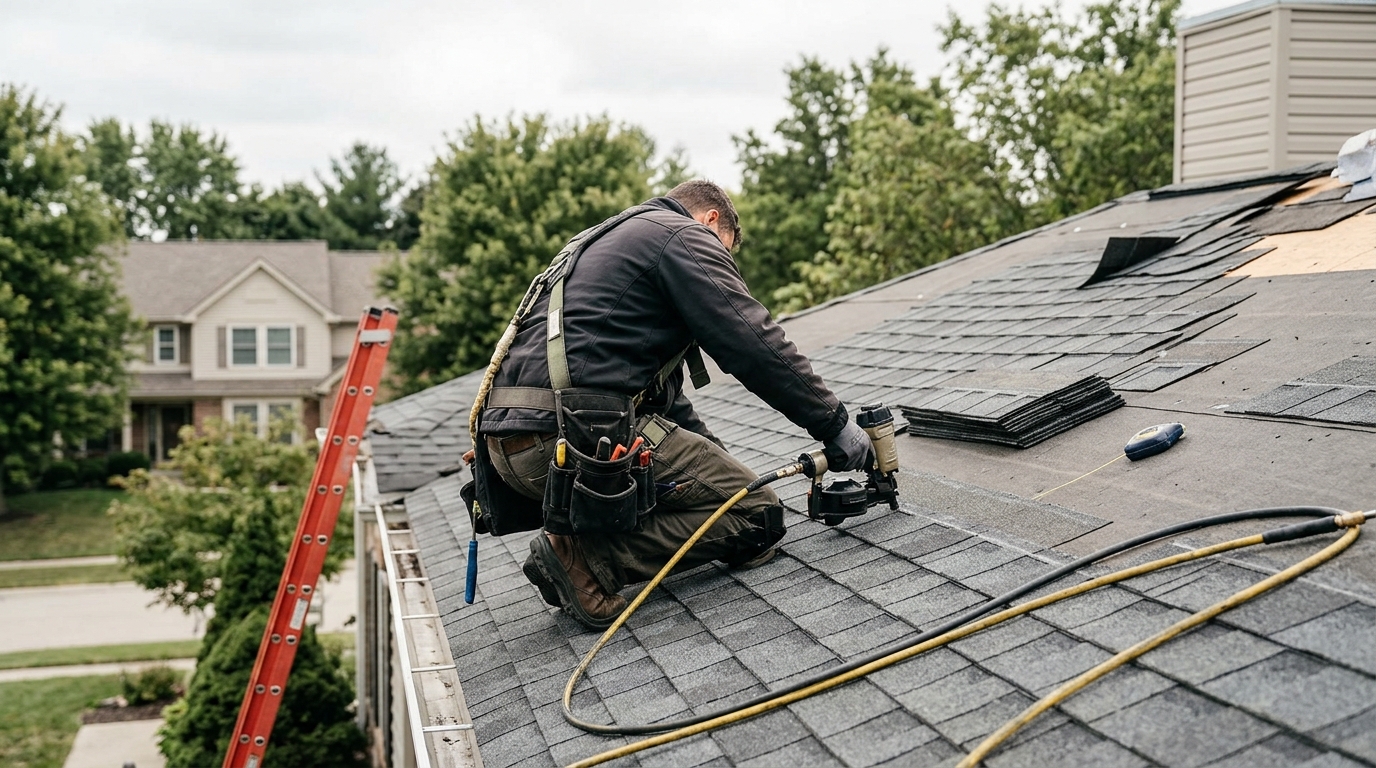
The Margin-Protection Playbook: Why Professional Proposal Workflows Are the Ultimate 2026 Contractor Growth Engine The modern contracting landscape is undergoing a quiet, brutal shift. While many business owners believe...
The Margin-Protection Playbook: Why Professional Proposal Workflows Are the Ultimate 2026 Contractor Growth Engine
The modern contracting landscape is undergoing a quiet, brutal shift. While many business owners believe the key to survival is simply pouring more money into the marketing funnel, they are missing the systemic leak right in front of them. For specialty contractors in 2026, true business growth is no longer just about generating more leads; it requires replacing slow, manual estimating with a professionalized, rapid proposal workflow that secures e-signatures and high-margin projects before the competition can even reply. When homeowners and commercial clients demand instant answers, the speed of your sales cycle dictates the health of your bottom line. Relying on outdated methods is no longer just an administrative hassle—it is a direct threat to your profitability.
In an era defined by volatile material costs, hyper-connected consumers, and intense local competition, the traditional "I'll get back to you by Friday" approach is an existential liability. Homeowners do not wait; they move on to the next search result. To bridge this gap, forward-thinking operators are turning to modern tools like [Flash Quote](https://flashquoteapps.com) to automate their quoting process, turning what used to be a multi-day ordeal into a frictionless, five-minute task. By professionalizing the client onboarding experience, contractors can capture intent when it is at its highest, protecting their margins from being eroded by delay, indecision, and competitor undercutting.
---
The Lead-Generation Trap vs. The Conversion Reality
Many specialty trade business owners fall into a common trap: they treat revenue growth as a pure volume game. They pour thousands of dollars monthly into Google Local Services Ads, Facebook campaigns, and lead-generation platforms, celebrating when the phone rings or the inbox fills up. Yet, their net profit margins remain stubbornly flat.
The reason is simple. A lead is not revenue; it is merely an opportunity. If your operational back-end requires a technician to take field notes on a clipboard, drive back to the office, manually input dimensions into an outdated spreadsheet, and draft a static PDF proposal late at night, your conversion rate will plummet.
In the modern marketplace, customer acquisition cost (CAC) is at an all-time high. When you pay $150 for a qualified lead but lose the job because your proposal took forty-eight hours to arrive, you are not just losing the project—you are actively subsidizing your competitors' growth. True operational efficiency is built on the understanding that speed to estimate is the single highest-leverage variable in your entire sales pipeline. By accelerating the transition from initial contact to signed agreement, you protect your marketing investment and maximize the yield of every single lead.
---
Anatomy of the Leak: Three Operational Bottlenecks Bleeding Contractor Margins
To understand why speed is the ultimate differentiator, we must look at the operational bottlenecks that quietly drain profits from specialty trades every day. These are not theoretical problems; they are the daily realities of running a field service business without modern digital systems.
The "Three-Day PDF" and the Cost of Lost Momentum
Consider a typical scenario in high-ticket trades like HVAC. Mark, a residential comfort specialist running an independent heating and cooling company in Atlanta, receives a call for an emergency AC replacement during a record-breaking July heatwave. The outdoor temperature is a stifling 98 degrees, and the homeowner's indoor air quality is rapidly deteriorating. Mark drives out, diagnoses a dead compressor on a fifteen-year-old system, measures the ductwork, and promises a formal quote "by tomorrow morning."
But Mark's afternoon is consumed by three more emergency service calls, a broken-down service van, and an administrative backlog. By the time he sits down at his home office on Thursday night to draft the PDF proposal, the homeowner has already signed an agreement with a competitor.
That competitor didn't win on price; they won on speed. Their technician arrived on Wednesday morning, utilized the [Flash Quote HVAC App](https://apps.apple.com/us/app/flash-quote-hvac/id6774519518) to build, price, and present a tiered proposal right there in the living room, and secured an e-signature on the spot. Mark didn't just lose a $12,000 installation; he lost the lifetime value of that customer, their biannual maintenance agreements, and any potential neighborhood referrals. In 2026, the contractor who quotes first and makes the buying process effortless almost always wins the contract, leaving slower competitors to fight over the low-margin scraps.
The Manual Calculation Trap and the Volatility of Supply Chains
In trades requiring precise material takeoffs, such as plumbing or electrical work, relying on back-of-the-napkin math or disjointed spreadsheets is a recipe for financial disaster. Consider an electrical contractor bidding on a commercial warehouse LED retrofit and subpanel upgrade. The project requires running hundreds of feet of conduit, installing specialized subpanels, and accounting for volatile copper pricing.
Working late at night on a spreadsheet, the contractor accidentally references an outdated material price sheet from eighteen months prior—or worse, misses a zero on a line item for heavy-duty circuit breakers. The bid is submitted, accepted, and signed. Mid-way through the rough-in phase, the contractor realizes the material costs are $4,500 higher than estimated.
They are forced into a painful corner: absorb the loss and watch their profit margin vanish, or present the client with an unexpected change order that damages their professional reputation and kills any chance of future work. Manual estimating processes lack the built-in safeguards needed to ensure every quote accounts for current material costs, labor rates, and overhead. Without automated calculations, human error becomes a silent profit killer.
The Friction Barrier: Why "Print, Sign, and Scan" is a Sales Killer
Even when a contractor delivers an accurate quote quickly, the final step is often riddled with friction. Sending an estimate that requires the client to print, sign, scan, and email it back introduces a massive psychological barrier.
Every step in that manual chain is an opportunity for the client to second-guess the price, shop around for a cheaper alternative, or simply forget about the project altogether. In a digital-first world, any physical friction in the signing process is an open invitation for competitors to step in and steal the business. If securing a signature takes more than a single tap on a screen, your conversion rates will suffer.
---
The Psychology of the 2026 Buyer: Speed as a Trust Signal
Modern consumers are conditioned by instant-gratification ecosystems. They order groceries with a tap, track their rides in real-time, and expect immediate communication. When they interact with a home service provider, those expectations do not change.
To a modern homeowner or property manager, operational speed is the ultimate proxy for quality. If a contractor takes four days to deliver a basic estimate, the client naturally assumes that their communication during the project will be equally sluggish, their cleanup will be sloppy, and their project management will be disorganized.
Conversely, a contractor who can walk through a property, discuss the project parameters, and immediately hand the client a tablet displaying a polished, branded, comprehensive proposal signals a high level of professionalism. It demonstrates that the business is organized, technologically competent, and respectful of the client's time. This visual professionalism shifts the sales conversation away from "how cheap can you do this?" to "how quickly can we get started?" It positions the contractor as a premium service provider, justifying a higher price point and protecting the project's margin from the very beginning.
---
The Blueprint for a High-Margin Proposal Engine
Overcoming these bottlenecks requires a fundamental shift in how contractors view their sales process. Estimating should no longer be treated as a slow, back-office administrative chore. Instead, it must be transformed into a rapid, client-facing onboarding experience. By utilizing dedicated contractor quote software, businesses can standardize their pricing structures, eliminate calculation errors, and instantly elevate their brand image.
1. Systematized Price Books and the Death of "Gut-Feeling" Pricing
Instead of building every estimate from scratch, successful contractors use pre-configured templates that automatically calculate costs based on standardized inputs. This ensures consistency across all quotes, regardless of which technician is in the field, and prevents "salesperson bias" where technicians discount prices out of fear of rejection. When pricing is systematized, your margins are protected from emotional discounting.
2. Real-Time On-Site Modifications
When a client requests a change—such as upgrading a fixture, choosing a premium material, or adding an extended warranty—the contractor must be able to update the proposal instantly on a tablet or smartphone, rather than heading back to the office to draft a new version. This transparency builds immediate trust, showing the client exactly how modifications impact the final investment without delaying the decision-making process.
3. Good-Better-Best Tiered Options
One of the most powerful psychological tools in professional sales is the presentation of choices. When you present a single price, the client's internal question is: "Should I buy this or not?" When you present three options (such as a standard repair, a system replacement, or a premium high-efficiency upgrade), the question shifts to: "Which of these options is best for my home?"
This tiered approach naturally guides customers toward mid-range and premium solutions, increasing your average ticket size without requiring high-pressure sales tactics.
---
Securing the Margin: Speed, E-Signatures, and Instant Deposits
The psychological impact of speed in the sales cycle cannot be overstated. When a contractor can generate an estimate on-site and hand a tablet to the client, the close rate skyrockets. This is where modern sales technology becomes a direct margin-protection tool.
By leveraging e-signature proposals, contractors legally bind agreements instantly, locking in the project while the client’s purchasing intent is at its peak. There is no "cooling-off" period where buyer's remorse can set in. The agreement is signed, sealed, and secured before the contractor even leaves the driveway.
Furthermore, transitioning to a mobile-friendly proposal system with integrated payment processing completely changes the cash flow dynamic. Rather than waiting weeks for a check to clear or chasing down late payments, contractors can collect deposits immediately upon signature.
With Flash Quote, you can attach secure payment collection directly to the customer-facing PDF. This allows clients to authorize their deposit via credit card or bank transfer through Stripe the moment they sign the contract. This instant capitalization ensures that materials can be ordered immediately, protecting the contractor against sudden price hikes and securing the project's profitability from day one.
---
Operational Leverage: Scaling Revenue Without Bloating Overhead
For many local service business owners, the prospect of scaling is terrifying because they associate growth with increased administrative overhead. They assume that doubling their project volume means doubling the time spent on paperwork, scheduling, and billing.
However, true business growth is achieved not by working harder, but by working smarter. By automating the administrative burden of quoting and invoicing, contractors can reclaim 5 to 10 hours per week. This saved time can be reinvested into high-margin project delivery, strategic hiring, or local marketing efforts.
To explore deeper operational strategies and learn how to optimize your business for sustainable expansion, visit the [Flash Quote blog](https://flashquoteapps.com/blog). Ultimately, scaling your business is about building systems that run independently of your constant physical presence, allowing you to increase revenue without sacrificing your weekends to administrative burnout.
---
The Ultimate 2026 Growth Engine
For more practical estimating guidance, read the [contractor estimating blog](https://flashquoteapps.com/blog).
Ultimately, the contractors who dominate 2026 will not be those who buy the most leads, but those who respect their own time and their customers' urgency. In a hyper-competitive market, speed is not just an operational metric—it is the ultimate form of margin protection.