The Heat-Pump Sale Is Won on Paperwork Before Installation Day
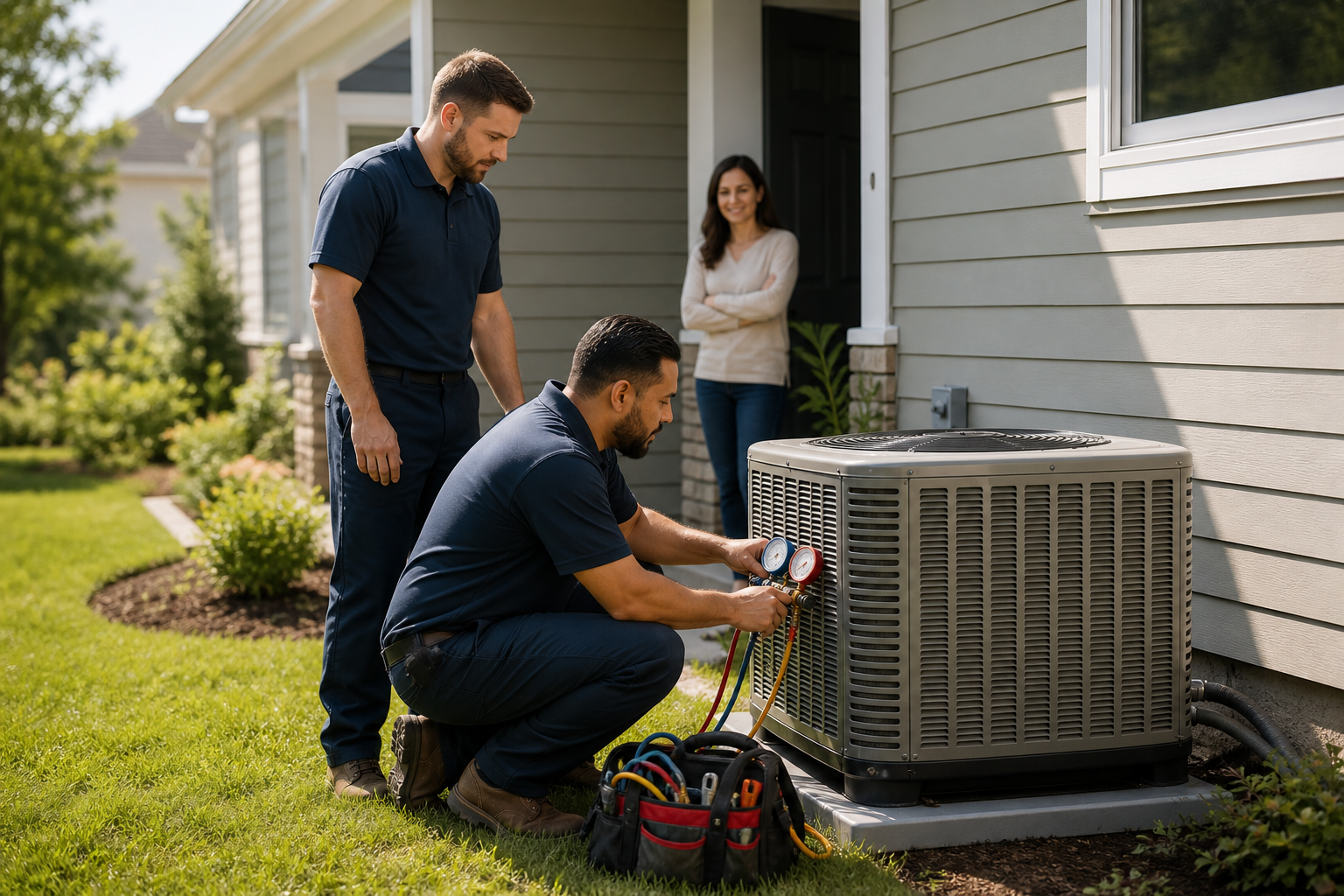
The Heat-Pump Sale Is Won on Paperwork Before Installation Day A heat-pump sale is often decided before the installation truck ever pulls up. Homeowners are not simply buying equipment; they are buying confidence that...
The Heat-Pump Sale Is Won on Paperwork Before Installation Day
A heat-pump sale is often decided before the installation truck ever pulls up. Homeowners are not simply buying equipment; they are buying confidence that the scope is clear, the price is honest, and the project will not unravel into surprises after they sign.
In today’s HVAC market, the contractor who wins is not necessarily the one with the lowest price. It is the one who delivers a fast, organized proposal that makes the equipment decision, customer responsibilities, and next steps easy to understand—without overstating tax-credit eligibility or promising what the contractor cannot control.
That makes the quote more than an administrative task. It is part of the product. A vague proposal creates risk in the customer’s mind. A complete one makes the next step feel manageable.
The Proposal Is the First Proof That You Know the Job
A homeowner replacing a furnace and air conditioner with a heat pump usually has more questions than they say out loud.
Will the existing ductwork handle the new system? Is the thermostat included? Does the electrical panel need work? What happens if the crew finds a damaged line set, inadequate drainage, or limited attic access after the old equipment comes out?
Those are not side questions. They are often the sale.
A one-line estimate that says, “Install new heat-pump system — $14,800,” may look clean, but it leaves the customer to guess at nearly everything that matters. Does the price include labor and materials? Which equipment is being installed? Are permits included? Is a thermostat part of the package? What would trigger an additional charge?
A strong proposal does the opposite. It identifies the equipment, explains the scope, notes relevant assumptions, clarifies exclusions, and gives the homeowner a direct path from approval to scheduling. That is how a contractor turns uncertainty into forward motion.
Speed matters, too. The company that can present a complete quote while the kitchen-table conversation is still fresh often looks more professional than the company that says, “We’ll get something over to you next week.” In residential HVAC, delay gives doubt room to grow.
Using an HVAC-specific quoting workflow such as [Flash Quote HVAC](https://apps.apple.com/us/app/flash-quote-hvac/id6774519518) can help a team turn site notes into a customer-ready proposal before details get lost between the sales visit, office, and installation calendar.
Homeowners Buy Comfort First, Then Judge the Paper Trail
Most customers are not shopping for model numbers. They are shopping for a result: even temperatures, dependable cooling, lower stress, and a contractor who seems prepared.
The proposal has to translate technical work into a customer experience that feels understandable. A homeowner does not need a sales pitch filled with jargon. They need to see what they are receiving, what they need to do, and what happens after they approve the work.
A useful heat-pump proposal makes these points obvious at a glance:
- The manufacturer, system type, and equipment model numbers
- Included labor, materials, accessories, and permit assumptions
- Exclusions or conditions that could require a documented change order
- Homeowner responsibilities before installation day
- The approval, deposit, scheduling, and communication process
- Warranty information and the records the homeowner should retain
- A clear boundary between equipment documentation and tax advice
Consider a homeowner comparing two bids on a Friday evening. One PDF is a bare price sheet. The other identifies the equipment, shows the scope of work, includes warranty notes, explains installation assumptions, and makes the approval process clear. Even if the total is slightly higher, the second proposal is easier to trust. It is easier to forward to a spouse, easier to compare with another bid, and easier to sign.
The same paper trail protects the installation team. Heat-pump jobs can involve line-set condition, condensate routing, breaker capacity, outdoor-unit placement, attic access, permits, and equipment availability. If those details are not captured before the job is sold, they tend to return later as delayed schedules, awkward change orders, or callbacks.
Hard Questions Belong in the Quote, Not in a Post-Sale Phone Call
One of the fastest ways to lose momentum is to leave difficult questions for later.
What if the panel is too small? What if the ductwork needs modification? What if the outdoor unit location requires a pad change, longer run, or special access equipment? What if the homeowner expects a thermostat, filtration upgrade, or disconnect replacement that was never included?
A disciplined proposal process gives the contractor a way to answer honestly: here is what is included today, here are the job conditions assumed in this price, and here is how we will handle anything materially different we uncover.
That transparency is not a weakness. It prevents the contractor from being trapped by assumptions that were never written down.
Every HVAC business recognizes familiar versions of this problem. A sales representative quotes a straightforward replacement in a suburban ranch home, while the homeowner assumes the disconnect, whip, and thermostat are all included. A clear proposal identifies those items rather than leaving them to memory.
Or consider a heat-pump installation with a cramped attic air handler. The comfort advisor may know access is difficult, but the installation coordinator needs that fact in the job documentation. A note about attic conditions, likely labor requirements, and scheduling considerations can prevent a rushed crew from discovering the challenge at 8 a.m. on installation day.
In an older home, a customer may ask whether a heat pump requires an electrical-panel upgrade. The contractor should avoid guessing. The proposal can separate the base HVAC scope from potential electrical work, explain the condition that needs verification, and state how any necessary additional work would be presented. That protects the homeowner from confusion and protects the company from an unprofitable promise.
The goal is not to make the sale feel complicated. It is to remove ambiguity before it costs trust.
Tax-Credit Language Needs Precision, Not Hype
Heat-pump proposals often sit beside questions about tax credits, rebates, and energy-efficiency documentation. That is exactly where contractors need disciplined language.
It may feel tempting to reassure a homeowner by saying, “This will qualify,” or “You’ll get the credit.” But a contractor does not control a homeowner’s tax return, filing status, income, timing, or interpretation of applicable requirements. A promise made casually during a sale can become a serious credibility problem later.
The stronger approach is simple: document the equipment clearly, provide the product information the homeowner may need for their records, and avoid guaranteeing a tax outcome.
A proposal can use language such as:
Equipment information is provided to support the homeowner’s records. Tax-credit eligibility depends on applicable requirements and the homeowner’s individual circumstances. The homeowner should consult a qualified tax professional regarding eligibility and filing.
That language does not weaken the sale. It signals professionalism. It tells the customer that the company understands its role: specify and install the system correctly, provide accurate equipment and job documentation, and avoid acting as the homeowner’s tax adviser.
The practical benefit is substantial. When a customer asks about potential tax treatment after installation, a well-organized file gives them useful records: model numbers, manufacturer information, invoice details, and proof of the work completed. The contractor is helping the homeowner stay organized without turning a sales conversation into a tax guarantee.
A Signature Is Better When Payment Can Follow Immediately
A proposal should do more than earn a yes. It should help move the job into production.
Too many HVAC sales stall after the customer agrees. The quote is approved, then the office has to generate a separate invoice, email a payment link, wait for a deposit, and chase a response before scheduling can begin. Each extra step creates friction.
A cleaner workflow allows the customer to review the quote, approve it with an e-signature, and make a deposit from the customer-facing PDF. When Stripe payment collection is attached to the quote, the customer can pay quickly while the decision is still fresh.
That is not merely an office convenience. It changes the customer experience.
The homeowner who signs a proposal at 8:30 p.m. does not want three more administrative steps waiting the next morning. The office does not want to reserve equipment or book labor against a verbal commitment. The installation coordinator does not want to treat “yes, we’re ready” as a confirmed job until the approval and deposit are complete.
For heat-pump work, where equipment availability and scheduling windows can matter, a signed and funded proposal gives the contractor a more reliable handoff from sale to installation.
Standardized Quotes Prevent the Forgotten-Detail Tax
The costliest mistakes in HVAC sales are often not dramatic technical failures. They are administrative omissions.
Someone forgets a model number. Someone assumes the thermostat is in scope. Someone describes tax paperwork as “handled” without explaining what the homeowner still needs to retain. Someone records the system size but not the accessory package. By the time the office catches the gap, equipment may be ordered and crews may be scheduled.
That is how a routine replacement becomes a chain of calls, credits, and frustrated expectations.
Templates and repeatable proposal structures solve this problem because they reduce dependence on memory. A dependable process prompts the salesperson to document the information that must travel from the first visit to the office, the install crew, and the customer file.
A heat-pump proposal template should consistently account for the system being proposed, site conditions, installation assumptions, exclusions, accessory notes, warranty information, homeowner preparation, and the next step after approval. It should also keep tax-related documentation separate from tax-related promises.
For more ideas about connecting estimating, payment, and customer communication, [Flash Quote’s blog](https://flashquoteapps.com/blog) offers practical perspective for service businesses. The broader [Flash Quote platform](https://flashquoteapps.com) is built around the same principle: a quote should not be a dead-end document; it should help carry the customer relationship forward.
Three Everyday Moments When Better Paperwork Wins
The heat-pump quote wins or loses in ordinary moments every contractor knows.
A homeowner has two proposals open on a tablet. One is vague, with a total price and little else. The other shows the equipment, scope, warranty notes, installation assumptions, and next steps. The clearer proposal is the one that gets forwarded to the spouse with, “This company seems like they have it together.”
A crew arrives at a house with a tight attic and an aging electrical panel. The proposal that documented the access issue, flagged potential electrical review, and listed the installation assumptions prevents a morning argument about why the job may take longer than expected.
A customer asks about a tax credit after the estimate is signed. The contractor who provided clear equipment facts and avoided a guarantee looks organized and trustworthy. The contractor who said, “Don’t worry, you’ll get it,” now has to defend a promise that was never theirs to make.
These are not abstract marketing lessons. They are the daily moments where work gets won, delayed, or lost.
The Customer Remembers How Easy You Made the Yes
When a homeowner signs a heat-pump proposal, they are not simply selecting equipment. They are deciding whether the contractor feels organized enough to trust with their home.
They remember the quote that made the choice easy to explain. They remember the proposal that showed what was included and what was not. They remember the company that documented the system carefully without overpromising on tax credits. And they remember whether approval, payment, and scheduling felt simple or disjointed.
That is why paperwork matters before installation day. A clean proposal lowers doubt, protects the job, and gives the customer confidence before the first tool comes off the truck.
“In a heat-pump sale, the paperwork is not what follows trust—it is what earns it.”