The Electrical Upgrade Quote That Makes Homeowners Say Yes
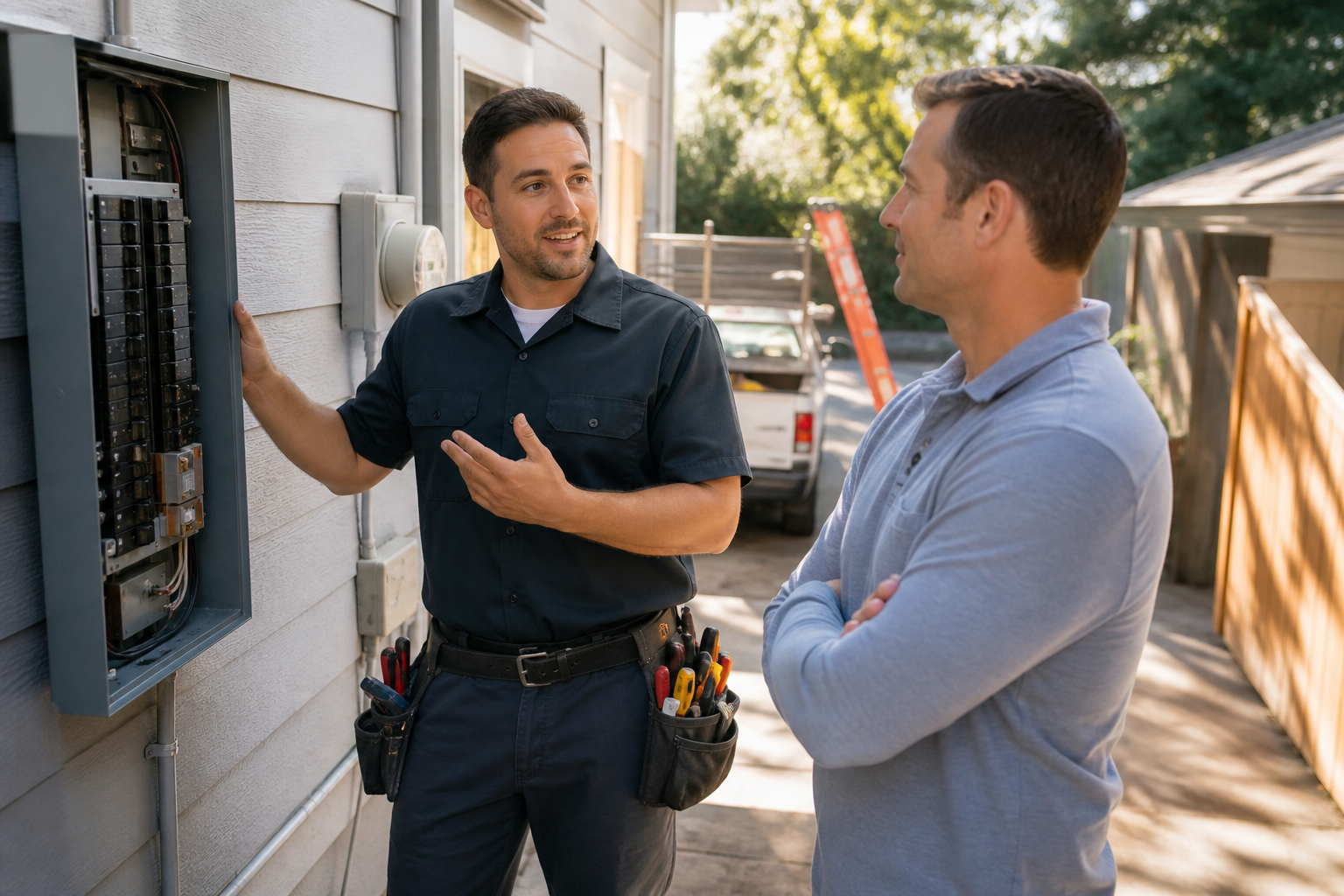
The Electrical Upgrade Quote That Makes Homeowners Say Yes Electrical contractors close more panel and service-upgrade work when their quotes do more than list a price. A strong proposal translates the jobsite finding...
The Electrical Upgrade Quote That Makes Homeowners Say Yes
Electrical contractors close more panel and service-upgrade work when their quotes do more than list a price. A strong proposal translates the jobsite finding into a clear scope, shows the homeowner what is—and is not—included, secures documented approval, and makes payment simple while urgency and trust are still high.
A homeowner rarely calls because they are excited to replace a panel. They call because something else is already underway: an EV charger installation, a kitchen remodel, a new heat pump, a finished basement, recurring breaker trips, or an inspection concern. The electrical upgrade is the work that makes the larger plan possible.
That makes the quote more than paperwork. It is the document that turns a technical recommendation into a decision a homeowner can confidently make.
A Panel Upgrade Is a Trust Conversation Before It Is a Price Conversation
When a contractor writes “panel upgrade — $X,” the customer is left to fill in the most important blanks:
- Why is this necessary now?
- What problem does it solve?
- What exactly will be replaced or installed?
- Does the price include permits, inspections, or utility coordination?
- What happens if the existing house reveals a hidden issue?
- What do we need to do to get on the schedule?
Those unanswered questions create hesitation. They also invite the homeowner to compare a thoughtful recommendation against another contractor’s lower, thinner number without understanding the difference.
A better quote starts with the finding from the visit. It does not need to be dramatic or overloaded with code language. It needs to be clear.
For example, an electrician who finds a full panel during an EV charger visit might explain that the existing equipment and available capacity were evaluated against the requested charging installation. The proposal can then state that the listed work is intended to provide the equipment, capacity, and circuiting needed to support the planned charger, subject to applicable local requirements and visible site conditions.
That gives the customer a reason before it gives them a price.
The homeowner may not remember every part of the walkthrough, but they will remember whether the proposal made the issue understandable. A photo of a crowded breaker panel, a note about limited available spaces, or a simple description of the intended equipment location can reinforce what they saw in person.
A clear proposal says, in effect: We saw this. We understand what it means. Here is the organized path forward.
The EV Charger Call Often Reveals the Real Job
An EV charger request is one of the most common examples of a smaller electrical project exposing a larger need.
The customer may expect a dedicated circuit and a charger connection. During the visit, you may find insufficient panel capacity, no practical breaker space, outdated equipment, damaged components, or a service configuration that does not support the requested load. The contractor now has to explain why the project changed without sounding like they are inflating the job.
The difference is in the scope.
Avoid vague language such as “upgrade panel as needed.” It is too open-ended for the customer and too risky for the contractor. Instead, divide the work into clear components that reflect the actual site condition.
Depending on the project, that may include:
- Removal and replacement of existing panel equipment
- Installation of a new load center or service equipment
- Circuit reorganization and updated labeling
- Installation of the dedicated EV charging circuit
- Grounding and bonding work within the defined scope
- Required testing and startup verification
- Permit handling or inspection coordination, when included
- Utility coordination, if applicable to the stated work
The scope does not need to read like a code book. It should read like a homeowner can follow it and a field team can perform it.
This is where a proposal workflow built for electricians earns its place. [Flash Quote Electrical](https://apps.apple.com/us/app/flash-quote-electrical/id6777300721) helps contractors turn an on-site assessment into a polished, customer-facing quote while the walkthrough is still fresh. Instead of trying to recreate the conversation later from handwritten notes, the contractor can present the recommendation with clear line items, approval terms, and a professional PDF.
Speed matters—but only when the speed preserves clarity.
Separate What Is Required From What Is Future-Ready
Many electrical upgrade jobs have more than one valid path. That is not a reason to make the quote more complicated. It is a reason to organize it better.
Consider a homeowner who wants a 240-volt circuit for an EV charger. The immediate project may require a panel replacement and the new circuit. At the same time, the contractor may see an opportunity to add capacity or provisions for a future heat pump, a hot tub, a workshop, or a second EV.
Those are not necessarily the same recommendation.
A good quote distinguishes between the work required to complete today’s project and work that may be valuable later. That distinction helps the homeowner make an informed choice without feeling pressured.
Use categories such as:
Required scope The work needed to complete the approved installation safely and in line with the observed conditions and local requirements.
Optional future-ready scope Additional capacity, circuits, equipment provisions, or related upgrades that may support anticipated future electrical demand.
This separation is especially useful when a homeowner is budget-conscious. They may approve the required upgrade now and postpone the optional work. That is still a successful outcome because the customer understands what they are choosing.
Bundling everything into one opaque price often produces the opposite result. The customer asks for “just the basic option,” shops the lowest number, or delays the decision entirely because they cannot tell which pieces are essential.
People do not object to choices. They object to confusion.
“Included” Must Have a Clear Boundary
Service upgrades connected to remodels are where scope assumptions can become expensive.
A kitchen renovation may require panel work, new circuits, appliance connections, and coordination with a general contractor. A basement finish can involve framing changes, drywall removal, access issues, low-voltage work, and fixtures supplied by another party. An exterior service upgrade may affect siding, landscaping, masonry, or utility equipment.
If the quote simply says “service upgrade included,” many homeowners will assume the contractor is responsible for restoring every surface touched by the project.
That assumption can turn a well-priced job into a strained final conversation.
A professional proposal should state both what the electrical contractor will do and where the contractor’s responsibility ends. Common clarifications include:
- Drywall repair and painting are excluded unless specifically listed.
- Finish carpentry, siding, masonry, landscaping, and decorative surface restoration are excluded unless specifically listed.
- Work by plumbers, HVAC contractors, general contractors, or other trades is not included.
- Utility-side work and scheduling remain subject to the utility’s requirements and timelines.
- Equipment upgrades, fixture selections, or additional circuits requested after approval require written authorization.
- Conditions not visible or reasonably identifiable during the site visit may require a change order.
This is not defensive language. It is useful language.
A homeowner who understands the boundary before work begins is less likely to feel surprised later. Your field team also benefits because they are not asked to solve a finish-repair issue that was never part of the electrical scope.
For broader ideas on building quotes that create fewer surprises, the [Flash Quote blog](https://flashquoteapps.com/blog) offers practical guidance for service businesses that need to move from site visit to signed work without unnecessary delay.
Be Honest About Unknowns in Existing Homes
Older homes often contain conditions that cannot be confirmed until work begins. A panel may have hidden damage. Conductors may be deteriorated or improperly routed. A wall opening may reveal an access problem. Existing equipment may not match what was visible during the walkthrough.
The right answer is not to bury those unknowns in a vague line item called “miscellaneous.”
If the project includes a legitimate allowance, define it. If additional work may be needed, explain the condition that would trigger it. If the price could change, describe how that change will be documented and approved.
For example:
This proposal is based on conditions visible at the time of inspection. Concealed damage, unanticipated access limitations, or electrical conditions not reasonably identifiable during the site visit are excluded from the base scope. Any additional work will be presented for written approval before proceeding whenever practical.
That language does not make a customer less likely to approve. In many cases, it makes approval easier because it signals honesty.
Homeowners understand that old houses can hold surprises. What they dislike is discovering after the fact that the price they accepted was never meant to cover the full situation.
A quote earns trust when it is specific about certainty and equally specific about uncertainty.
Permits, Utilities, and Scheduling Need Straight Talk
Electrical upgrades can involve moving parts outside the contractor’s direct control. Permit processing, inspections, utility disconnects, meter work, equipment availability, and property access can all affect the schedule.
The proposal should acknowledge that reality without making vague excuses.
If permitting is included, say so. If the contractor will coordinate a utility request, explain that the timeline depends on the utility’s response. If the work cannot be fully completed until inspection approval or utility release, set that expectation before the homeowner signs.
A straightforward sequence might look like this:
- Proposal approval and deposit, if required
- Permit application or required coordination
- Material ordering and scheduling
- Electrical installation
- Inspection and utility-related steps, where applicable
- Final testing, labeling, and project closeout
A homeowner does not need a promise that every outside party will move on a perfect schedule. They need a contractor who explains what happens next and communicates when an outside dependency affects timing.
That is a better customer experience than false certainty followed by disappointment.
For electrical contractors who regularly quote panel replacements, charger circuits, and service-related work, the [Flash Quote Electrical page](https://flashquoteapps.com/electrical) reflects the kind of fast, organized proposal process that helps keep those decisions moving.
Change Orders Should Be Defined Before the Surprise Arrives
A clean change-order process protects more than profit. It protects the relationship.
Imagine an electrician opening a wall for a planned circuit run and finding damaged conductors that must be addressed before the new work can safely continue. Or imagine a homeowner deciding midway through the project that they also want a garage subpanel, a surge protector, or another dedicated appliance circuit.
Those may be reasonable additions. They are still additions.
The quote should establish that work outside the approved scope will be documented before it proceeds whenever practical. The change authorization should identify the new condition or customer request, added labor and materials, price adjustment, and any likely schedule effect.
This prevents the most frustrating kind of disagreement: one party remembers an informal conversation, while the other believes the work was included in the original price.
A documented change does not make a project feel rigid. It makes it orderly. The homeowner sees what changed and chooses whether to proceed. The contractor protects time, materials, and margin. Everyone stays aligned.
Approval and Payment Should Be Easy While Trust Is High
The best time to secure approval is when the homeowner clearly understands the problem and the solution.
If a contractor leaves the site saying, “I’ll send something over later,” the job can quickly lose momentum. The spouse who was not present has questions. Another estimate gets requested. The urgency fades. The customer forgets the details that made the recommendation make sense.
A complete proposal keeps the conversation intact. It should include the project address, scope, exclusions, payment terms, approval language, and a plain next step.
Digital approval closes the gap between “that sounds good” and a documented commitment. It gives the homeowner a professional document to review and sign without printing, scanning, or chasing paperwork.
Payment should be just as direct. If the job requires a deposit to order equipment or reserve time on the schedule, the quote should make that clear. If progress payments apply, list the trigger. If final payment is due upon substantial completion, inspection, or another defined milestone, state it plainly.
When it fits the job, Flash Quote can attach Stripe payment collection to the customer-facing PDF, allowing the homeowner to make a quick payment after approving the proposal. That convenience is not about pressuring a customer. It is about removing unnecessary steps once they have decided to move forward.
A good payment process makes the next action obvious:
- Review the defined scope
- Approve the proposal electronically
- Pay the stated deposit, if applicable
- Confirm scheduling and next steps
Every unnecessary handoff adds friction. Every clear step builds confidence.
The Quote Carries the Decision Long After You Leave
A panel or service-upgrade proposal is the customer’s record of what you saw, what you recommended, and what you promised to do. It has to work even when you are no longer standing in front of the panel explaining the issue.
Before sending it, ask whether the quote does all of the following:
- Explains why the upgrade is connected to the homeowner’s immediate goal
- Defines the electrical work in plain, specific language
- Separates required work from optional future-ready improvements
- States meaningful inclusions, exclusions, and allowances
- Addresses permits, utility coordination, and scheduling realities
- Defines how additional work will be approved
- Includes clear signature and payment terms
- Gives the homeowner an easy path from decision to scheduled job
The strongest electrical quote does not simply ask a homeowner to accept a price. It makes the right decision feel clear, documented, and easy to act on.
When the scope earns trust, the signature is no longer a leap—it is the natural next step.