The 2026 Plumbing Code Trap: How to Quote Mandatory Upgrades Without Losing Customer Trust
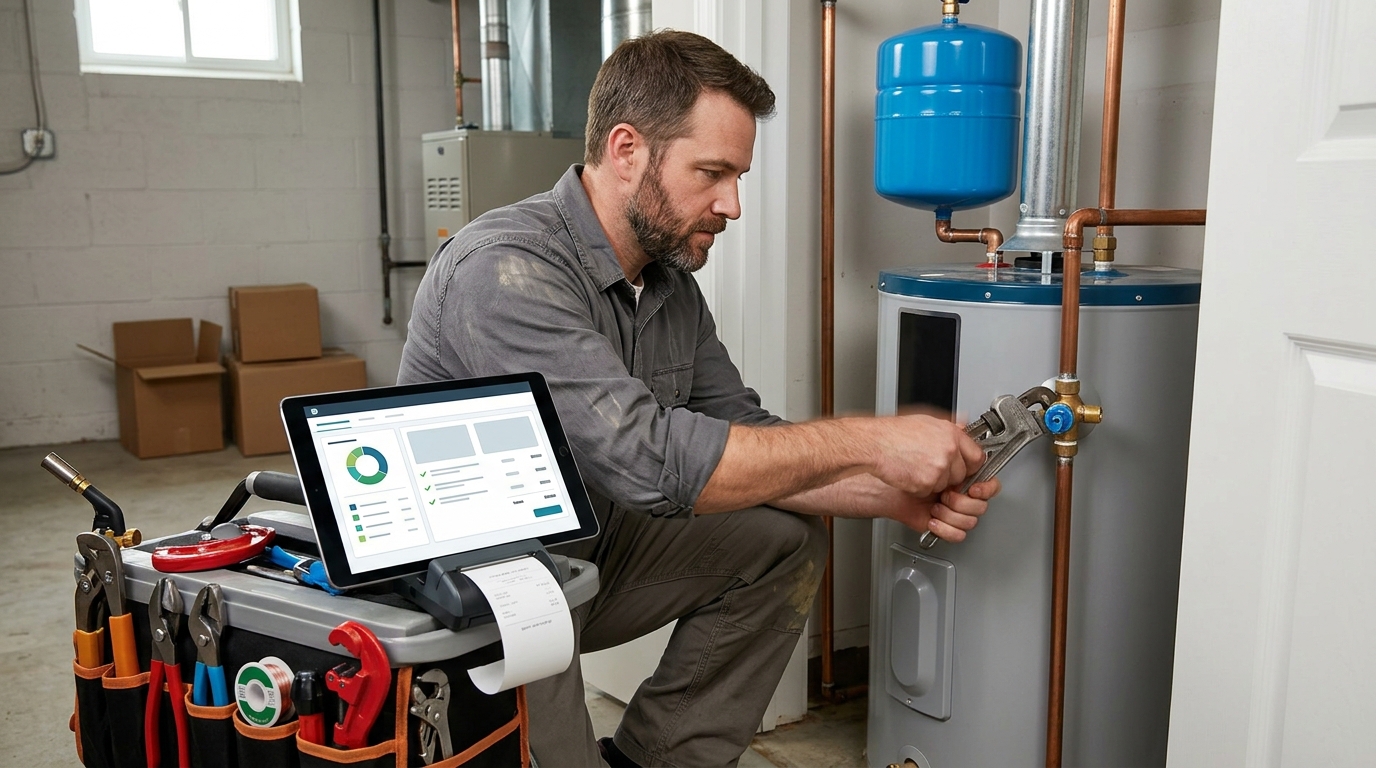
The 2026 Plumbing Code Trap: How to Quote Mandatory Upgrades Without Losing Customer Trust !/images/library/fq-plumbing-digital-quote-water-heater.jpg For residential plumbing contractors, the sales conversation at the...
The 2026 Plumbing Code Trap: How to Quote Mandatory Upgrades Without Losing Customer Trust

For residential plumbing contractors, the sales conversation at the kitchen table has suddenly become a battlefield. As stricter 2026 plumbing codes (like mandatory mixing valves and expansion tanks) double the cost of standard water heater swaps, contractors must abandon vague verbal estimates and use transparent, itemized on-site digital quotes to justify compliance costs, protect their margins, and build instant homeowner trust.
The days of quoting a flat-rate water heater replacement over the phone are officially over. The regulatory landscape has shifted dramatically. With the rollout of the 2026 plumbing code updates, what used to be a straightforward swap now requires mandatory thermostatic mixing valves, thermal expansion tanks, and comprehensive system adjustments to comply with the latest EPA Lead & Copper Rule revisions.
To the homeowner, these updates look like unnecessary upsells. To the contractor, they are legal and safety requirements. When a customer expects a standard $1,200 swap and receives a $2,400 bill, the resulting sticker shock can destroy a relationship before the tools even leave the truck. Navigating this shift requires a professional, modern approach to field sales. By utilizing the [Flash Quote Plumbing](https://apps.apple.com/us/app/flash-quote-plumbing/id6775365155) iOS app, contractors can instantly generate clear, compliant quotes on-site, turning regulatory headaches into transparent business wins.
---
The Physics of Compliance: Why the 2026 Codes Are Non-Negotiable
To effectively sell these mandatory upgrades, technicians must understand the science and safety behind them. Homeowners are far more likely to accept a price increase when they realize it protects their family's health and their home's infrastructure.
The first major shift involves thermal expansion. In the past, municipal water systems were open, allowing expanding hot water to backflow into the city main. Today, backflow preventers and pressure-reducing valves have turned residential plumbing into closed systems. When water heats up, it expands. Without a thermal expansion tank to absorb this extra volume, the pressure spike stresses the water heater tank, weakens pipe joints, and causes premature system failure.
The second critical update is the mandatory installation of thermostatic mixing valves (specifically ASSE 1017 or ASSE 1070 compliant valves). To prevent the growth of deadly Legionella bacteria, modern plumbing standards dictate that water must be stored inside the tank at a minimum of 140°F. However, water at this temperature can cause third-degree burns in less than three seconds. A thermostatic mixing valve solves this by blending cold water with the hot water right at the outlet, delivering a safe, consistent 120°F to the home's fixtures while keeping the tank hot enough to kill bacteria.
Additionally, the EPA's updated Lead and Copper Rule mandates stricter service line inventories and replacements. If a technician uncovers legacy lead or galvanized piping during a standard water heater swap, they cannot simply ignore it. These code requirements are non-negotiable legal obligations. When a technician explains these concepts clearly, they transition from a salesperson to a safety expert.
---
The Death of the Hand-Shaken Deal: Why Vague Verbal Estimates Kill Your Margins
Consider a scenario that plays out in driveways across the country every single day. Mike, a seasoned technician in Ohio, finishes inspecting an aging 40-gallon gas water heater in a suburban basement. The homeowner, Sarah, expects a quick price. Mike, accustomed to old-school operations, clears his throat and says, "Well, it's going to be about twenty-four hundred dollars because we have to add some extra valves and a tank to bring it up to code."
Sarah’s face drops. She immediately suspects she is being taken advantage of. To her, a water heater is a metal cylinder that heats water; she has no idea what a thermal expansion tank is or why she suddenly needs one. Because Mike delivered a vague verbal estimate, Sarah politely tells him she needs to "think about it" and immediately calls a trunk-slammer competitor who quotes her $1,100 over the phone.
This uncertified competitor has no intention of pulling permits, installing thermostatic mixing valves, or putting in an expansion tank. By ignoring local codes, they undercut compliant contractors, steal high-ticket jobs, and leave homeowners with hazardous, non-compliant systems.
When you rely on verbal pricing or handwritten carbon-copy estimates, you fail to justify your material markups and labor rates. You look like you are making up prices on the fly. To protect your average ticket size and maintain healthy margins, you must treat code compliance as an educational opportunity rather than an awkward obstacle. Vague estimates invite suspicion, whereas itemized clarity establishes professionalism.
---
The 4-Hour Decision Window: Why Speed-to-Quote Wins the Job
In the modern home services landscape, speed is no longer just an advantage—it is the ultimate margin protector. Recent industry data shows that 54% of homeowners research and hire a plumber in under four hours. They do not wait days for a polished proposal to arrive via email from a back-office administrator. They hire the first professional who responds with a clear, authoritative, and actionable price.
If your technician has to drive back to the office, draft a proposal on a desktop computer, and email it later that evening, you have already lost the race. The homeowner has likely already signed a contract with a competitor who provided an on-site estimate.
To capture this fast-moving demand, plumbing contractors must leverage a mobile-first [plumbing quote app](https://flashquoteapps.com/plumbing). When a technician can open an app on their phone or tablet, select a pre-configured water heater replacement package, add the necessary local code compliance items, and present a finished PDF proposal within minutes of completing the inspection, they capitalize on the homeowner's immediate intent. Speed-to-quote eliminates the friction of waiting, leaving no room for the customer to shop around or settle for a non-compliant, low-ball bid.
---
The Anatomy of a High-Converting, Itemized On-Site Quote
To overcome customer skepticism, your pricing presentation must be visual, professional, and indisputable. Homeowners do not want to argue with local laws; they just want to know they are paying for real value. The most effective way to disarm sticker shock is to use a dedicated [contractor quote software](https://flashquoteapps.com/plumbing) to build an itemized, multi-option proposal directly on your mobile device.
An elite, high-converting on-site quote should be structured with deliberate psychological separation:
- The Base Equipment & Labor: Clearly list the price of the replacement water heater and the standard labor required to install it. Keep this competitive with market rates so the customer sees you are fair on the basics.
- Mandatory Code Compliance Items: Create a separate, dedicated section labeled "Required Local Code Compliance." This is where you list the thermal expansion tanks, thermostatic mixing valves, and any required gas line or venting upgrades.
- Educational Descriptions: Under each compliance item, include a brief, plain-English explanation of why it is there. For example: \"Thermostatic Mixing Valve: Mandatory under 2026 safety codes to prevent third-degree burns by regulating output temperature while allowing the tank to store water at bacteria-killing temperatures.\"
| Proposal Section | Line Item Description | Investment | | :--- | :--- | :--- | | 1. Base Installation | 40-Gallon Gas Water Heater (6-Yr Warranty) | $1,250.00 | | | Standard Installation Labor | $450.00 | | 2. Required Code Compliance | Thermal Expansion Tank (Prevents closed-system pressure spikes) | $250.00 | | | Thermostatic Mixing Valve (Scald prevention & bacteria control) | $300.00 | | | Municipal Permit & Inspection Fees | $150.00 | | Total Investment | Fully Compliant, Permitted Installation | $2,400.00 |
By separating these costs, you shift the blame from your business to the regulatory authority. You are not artificially inflating your prices; you are simply presenting the legal reality of performing safe, permitted work in their municipality. Utilizing professional contractor quote software allows your technicians to build these itemized proposals in seconds, ensuring consistency across your entire service team.
---
Never Leave the Driveway Empty-Handed: Closing the Job with E-Signatures
The moment a technician walks away from a home without a signed agreement, the closing probability drops by more than fifty percent. Once you leave, the homeowner is exposed to Google searches, family opinions, and cheaper, non-compliant bids. They lose the sense of urgency, and your hard-earned sales opportunity cools down.
To lock in high-ticket jobs before trust erodes, your team must be equipped to secure [e-signature proposals](https://flashquoteapps.com/plumbing) right there at the kitchen table.
When you present a digital proposal on a tablet or phone, you provide a clear, professional path to immediate action. The customer can review the itemized breakdown, read your terms of service, and sign the screen with their finger. This action transitions the interaction from an informal sales pitch to an official, binding project.
Generating a clean, professional PDF proposal on-site does more than just secure the signature. It provides the homeowner with an instant digital copy for their records, proving that your plumbing business operates with the highest level of professionalism. It eliminates misunderstandings about what was included in the scope of work, protecting your business from scope creep and post-job disputes.
---
Securing Deposits and Payments On-Site via Stripe
A signed agreement is a massive win, but a job is not truly secure until money changes hands. With the rising cost of materials—especially when purchasing high-end mixing valves, expansion tanks, and specialized fittings—contractors cannot afford to finance projects out of their own pockets. You need to secure a deposit before your truck leaves the driveway to pick up materials.
Modern consumers expect frictionless payment options. Asking them to write a physical check or call the office to read credit card numbers over the phone feels outdated and insecure.
By utilizing a professional [PDF invoice app](https://flashquoteapps.com/plumbing) that functions as a robust [Stripe proposal software](https://flashquoteapps.com/plumbing), you can embed secure payment links directly into your digital proposals. Flash Quote can attach payment collection directly to the customer-facing PDF, allowing the customer to pay their deposit instantly using their credit card, debit card, or mobile wallet.
Consider the workflow of Dave, a service plumber in Virginia. After presenting a compliant, itemized quote on his tablet, the customer signs the screen. Instantly, a secure Stripe payment portal opens. The customer taps their phone to pay a 50% deposit via Apple Pay. Dave's app registers the payment, updates the office, and generates a receipt. Dave drives to the supply house knowing the job is fully funded and locked in.
This immediate cash flow covers your material markups and initial labor costs, ensuring your business remains cash-flow positive on every single service call. It also validates the customer's commitment, virtually eliminating the risk of last-minute cancellations.
---
Protecting Your Margins Against Material Inflation
Beyond code compliance, plumbing contractors in 2026 are facing unprecedented material cost inflation—up over 30% since 2020. When material prices fluctuate weekly, relying on static, printed price books is a recipe for margin erosion. If your technicians are quoting based on last quarter's copper or PVC prices, you are actively losing money on every job.
By utilizing a dynamic digital quoting platform, you can update your material markups and base pricing instantly across your entire team. When a manufacturer raises prices on water heaters or expansion tanks, you update the master price list once, and every technician in the field is immediately quoting with accurate, profitable margins. This level of agility is what separates highly profitable plumbing firms—which maintain 20% to 35% net profit margins—from the industry median of just 2% to 8%.
---
Turning Compliance into a Competitive Advantage
The 2026 plumbing code updates do not have to be a threat to your close rates. In fact, for forward-thinking contractors, they represent one of the greatest opportunities to scale average ticket sizes and push out low-cost, uncertified competitors who refuse to play by the rules.
When you lead with transparency, education, and professional digital systems, you position your plumbing company as the premium, trustworthy choice in your local market. You protect your hard-earned margins, insulate your business from liability, and build lifelong relationships with homeowners who value safety and quality craftsmanship.
Stop losing sleep over rising material costs and regulatory changes. Equip your team with the tools they need to quote accurately, sign instantly, and collect payments effortlessly on-site.
To discover more strategies for growing your trade business, optimizing your estimating processes, and staying ahead of industry shifts, explore our comprehensive collection of [estimating and invoicing resources](https://flashquoteapps.com/blog) or visit our homepage at [Flash Quote](https://flashquoteapps.com).
"The contractors who win in 2026 won't be the ones with the lowest prices, but the ones who make compliance look like the ultimate standard of care."