The 2026 HVAC Quote Reset: How to Sell Replacement Options Without Confusing Homeowners
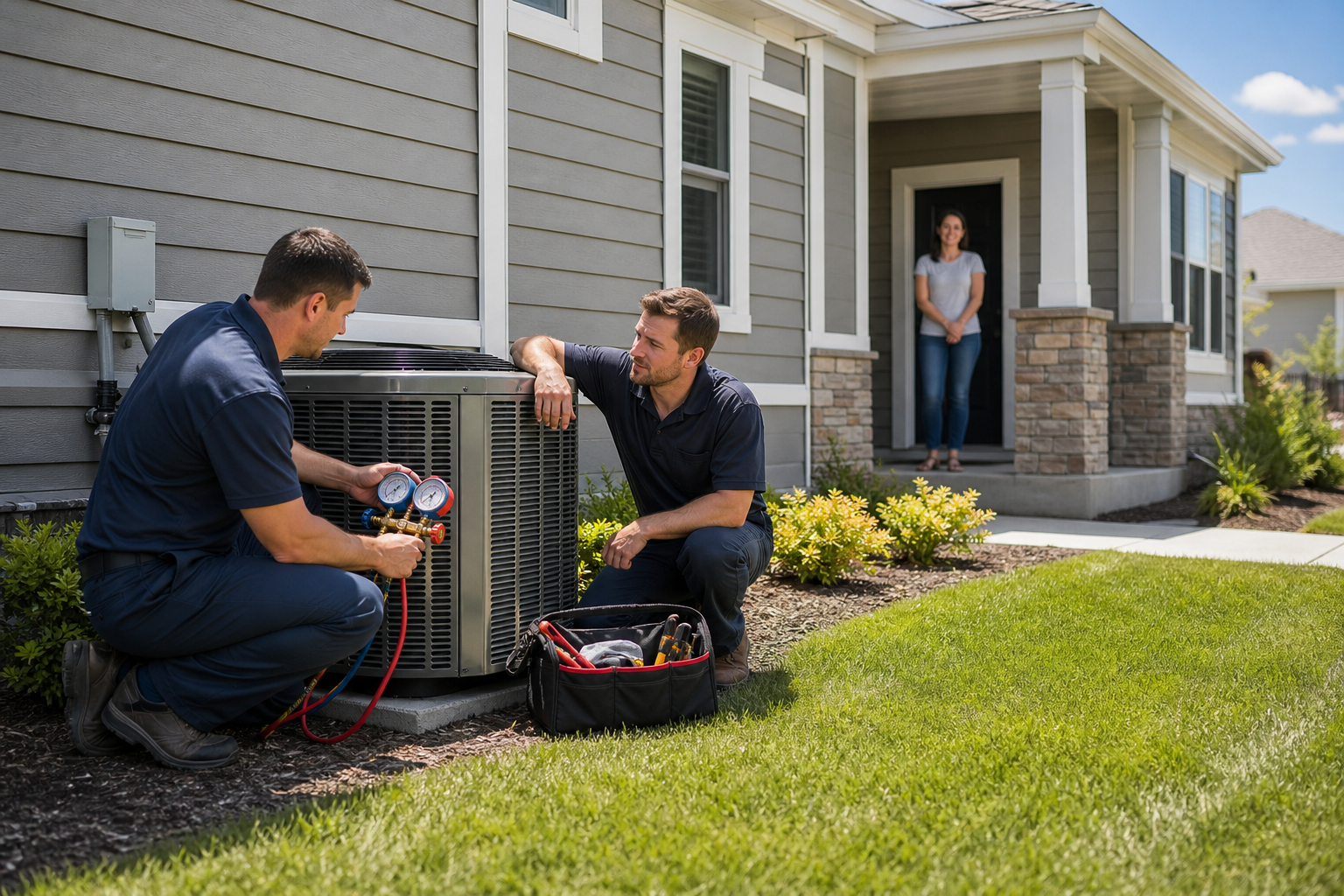
The 2026 HVAC Quote Reset: How to Sell Replacement Options Without Confusing Homeowners When a Repair Call Becomes a Replacement Decision Every HVAC company knows the moment. A homeowner calls for a repair, the price...
The 2026 HVAC Quote Reset: How to Sell Replacement Options Without Confusing Homeowners
When a Repair Call Becomes a Replacement Decision
Every HVAC company knows the moment. A homeowner calls for a repair, the price starts climbing, and the conversation quietly changes from “Can you fix it?” to “Should we replace it?”
That is where many quotes lose the sale.
Not because the equipment recommendation is wrong. Not because the price is necessarily too high. The proposal loses because it reads like an internal parts list instead of a decision a homeowner can understand and trust.
In 2026, the strongest HVAC replacement proposal is not the one with the most technical jargon or the lowest headline price. It is the one that clearly connects the homeowner’s aging-system problem to compliant equipment options, transparent scope and contingencies, and carefully verified incentive information—so the customer can make a confident decision before the job becomes an emergency.
A homeowner should be able to answer four questions quickly:
- What is wrong with my current system?
- What am I buying if I replace it?
- What is included, and what might change?
- What savings may be available, and what still needs verification?
If the proposal cannot answer those questions cleanly, the customer may delay, seek another quote, or approve the work only to feel frustrated later. Clear quoting does not just make selling easier. It makes the entire installation experience more trustworthy.
Clarity Beats Technical Noise at the Kitchen Table
The refrigerant transition and evolving equipment requirements have made replacement conversations more complicated behind the scenes. But homeowners do not need a technical lesson on every regulation, compatibility question, or efficiency standard while they are trying to decide what to do with a failed system.
They need a quote that reflects the job they are actually approving.
Instead of writing, “Install high-efficiency system,” describe the work in plain English:
Remove listed failed equipment; install matched replacement equipment; provide standard installation materials, startup, commissioning, cleanup, and documented warranty information. List electrical, duct, control, or concealed-condition work separately where applicable.
That wording tells the homeowner what they are receiving. It also protects the contractor from the familiar post-install question: “I thought that was included.”
A customer-facing proposal should feel organized before the job begins. [Flash Quote HVAC](https://apps.apple.com/us/app/flash-quote-hvac/id6774519518) helps teams create readable quote PDFs quickly, so the recommendation, scope, approval, and next step do not get scattered across handwritten notes, text messages, and separate invoices.
The goal is not to make the homeowner an HVAC expert. The goal is to make the decision easy to follow.
Separate the Base Job From the Conditions You Cannot Yet See
One of the fastest ways to create confusion is to combine the expected scope and every possible surprise into one large number.
A replacement quote should distinguish between the base project and site-dependent work that cannot be confirmed until inspection, equipment removal, or permit review. That includes electrical readiness, duct corrections, control upgrades, line-set replacement, access limitations, and concealed conditions.
A clean structure usually has three parts.
Base replacement scope
This is the work included in the quoted project price:
- Listed indoor and outdoor equipment
- Standard installation materials
- Removal of listed existing equipment
- Startup and commissioning
- Cleanup
- Manufacturer and labor warranty terms
- Permit handling, when included
Condition-dependent work
This is not a vague escape hatch. It is a visible explanation of items that depend on what the team finds:
- Electrical panel capacity or circuit requirements
- Disconnect, whip, breaker, or service upgrades
- Existing line-set condition, size, accessibility, or routing
- Duct modifications needed for proper airflow
- Code-required corrections
- Structural or access issues discovered during installation
Optional upgrades
Optional items should be genuinely optional, not quietly embedded in the price:
- Better filtration
- Surge protection
- Smart controls
- Zoning
- Higher-efficiency equipment
- Indoor air quality accessories
This structure helps the homeowner understand the difference between the work they are approving today and work that may need a separate conversation later.
Consider a heat-pump replacement where the homeowner expects a straightforward swap. The equipment may be an excellent fit, but the existing electrical panel could be full, the disconnect may need updating, and the thermostat may not support the new controls. None of those items should become a surprise after the customer has already signed.
The quote does not need to predict every possible issue. It needs to make the assumptions visible.
Make the Repair-vs.-Replace Comparison Honest
The most important replacement proposal often starts as a repair call.
Picture a 14-year-old air conditioner in late summer. A major component has failed, the repair is expensive, and the homeowner asks whether replacement is smarter. The weak approach is to quote the repair, mention replacement verbally, and force the customer to compare two disconnected conversations.
The stronger approach presents two clear paths.
Path one: Repair the existing system
State the diagnosed issue, repair price, warranty, and what the repair does not solve. If the system has age-related risks, repeated breakdowns, declining reliability, or known comfort concerns, say so plainly without turning the discussion into a scare tactic.
Path two: Replace the system
Explain why replacement is being recommended now. The reason may be system age, repair history, a failed major component, declining reliability, or the customer’s desire to avoid another outage during peak weather.
The homeowner is not choosing between a “good” option and a “bad” option. They are choosing between two types of risk: spending more on an aging system now, or investing in a replacement with a clearer long-term path.
That distinction builds credibility. A contractor does not need to pressure the homeowner when the proposal explains the decision well.
For example, a compressor repair may restore cooling today, but it does not reset the age of the rest of the system. A well-written quote can acknowledge that the repair may still be reasonable while making the replacement alternative easy to evaluate. The homeowner should feel informed, not cornered.
Use Incentives as Verified Possibilities, Not Promised Savings
Homeowners hear plenty about rebates, tax credits, utility offers, and promotional savings. Some opportunities may be real. Some depend on equipment model numbers, installation dates, utility territory, income requirements, funding availability, or program rules that change.
A proposal should never treat potential incentives as money already secured.
The safer and more credible approach is to state that the selected equipment may be eligible for federal, state, local, or utility programs, while making clear that final eligibility must be verified under current rules. Contractors can provide model numbers, specifications, itemized invoices, and installation documentation. They should not promise a tax result or guarantee a rebate they do not control.
A helpful note might read:
This equipment may qualify for available incentive programs. Eligibility, funding, equipment requirements, and customer tax treatment are determined by the applicable program and should be verified before relying on projected savings.
That language is not evasive. It is accurate.
The quickest way to lose trust is to sell a “save thousands” story that falls apart when the customer learns a program has changed or the installed configuration does not qualify. A contractor who is careful about incentives comes across as more professional than one who overpromises.
Three Quote Moments That Test Your Process
The emergency failure in peak season
A homeowner has no cooling, a major repair is needed, and the family wants an answer immediately. This is when sales teams are tempted to send a rushed equipment price with little explanation.
Instead, lead with the diagnosis, explain the repair path, and give the replacement option a clear scope. Even under time pressure, the customer deserves to know what is included, what is assumed, and how approval will move the project forward.
The heat-pump replacement with electrical unknowns
Heat-pump quotes often get complicated at the panel. The homeowner sees a system price and assumes it includes every electrical requirement. Then the team discovers a full panel, an undersized circuit, or a disconnect that needs work.
Avoid that conflict by stating the base scope and separately identifying electrical readiness as a condition-dependent item. If the site review confirms no upgrades are needed, great. If work is required, the customer has already been prepared for the conversation.
The “simple swap” with an inaccessible line set
A replacement may look simple from outside the home. Once the old equipment comes out, the team may find damaged insulation, inaccessible routing, improper sizing, or conditions that prevent safe reuse.
The proposal should explain that accessible existing line sets will be evaluated and reused only when their condition and compatibility support the installation. If the team finds damage, contamination, or inaccessible routing, corrective work should be presented for approval before the scope expands.
That is not weak language. It is honest scope management.
Build the Proposal in the Order Homeowners Think
The best replacement proposals are easy to scan because they follow the customer’s decision process.
Start with the problem. Explain why replacement is being considered: repeated repairs, system age, a major failure, comfort complaints, or declining reliability.
Then state the recommendation. Be direct about why a particular replacement path fits the situation, but avoid pretending every site condition is already known.
Offer a small number of choices. Two or three options are usually enough. A basic compliant option, a stronger efficiency or comfort option, and perhaps a premium option can create a useful comparison. Too many choices often create decision fatigue.
Next, define the included scope in plain language. Then show exclusions and contingencies clearly. Finally, make approval easy.
That last step matters. A homeowner who has to locate a separate invoice, wait for another email, and call back to schedule is more likely to stall. When the proposal is clear and the approval process is simple, the company feels prepared.
A customer-facing PDF can also include a quick Stripe payment option, allowing the homeowner to make a deposit or payment directly from the quote rather than waiting for a separate payment request. That reduces friction at the exact moment the customer is ready to move.
For more systems that help trades teams keep estimating organized, visit the [Flash Quote blog](https://flashquoteapps.com/blog). HVAC contractors can also explore the company’s dedicated [HVAC workflow resources](https://flashquoteapps.com/hvac) for tools built around faster proposals and clearer customer communication.
Simplicity Is the Competitive Advantage
Homeowners remember how a contractor made them feel during an expensive decision.
They remember whether the quote made sense on the first read or required three follow-up calls to decode. They remember whether possible extra costs were explained early or appeared as a surprise later. They remember whether the company felt organized or improvised.
That is the real HVAC quote reset.
The contractors who win replacement work are not always the ones with the flashiest sales pitch. They are the ones who reduce the homeowner’s mental load with a clear recommendation, transparent scope, honest contingencies, and carefully verified incentive information.
The best HVAC proposal does not pressure a homeowner into a decision—it gives them enough clarity to make one with confidence.