Stop Sending HVAC Quotes That Can’t Close the Job
Stop Sending HVAC Quotes That Can’t Close the Job A homeowner with no cooling on a 95-degree afternoon is not looking for a paperwork exercise. They want the problem explained clearly, the price made plain, and the next...
Stop Sending HVAC Quotes That Can’t Close the Job
A homeowner with no cooling on a 95-degree afternoon is not looking for a paperwork exercise. They want the problem explained clearly, the price made plain, and the next step made easy before the house gets any hotter.
Yet too many HVAC companies break the moment that matters most. The technician diagnoses the issue, explains the repair, and then sends the customer into a separate process for review, approval, and payment.
That gap costs jobs.
HVAC companies lose winnable work when technicians diagnose the issue but send customers into a delayed process for reviewing, signing, and paying. The better operating standard is a customer-ready quote that makes the next step easy while the service need is still urgent.
That is not a sales gimmick. It is operating discipline.
The Real Cost of “We’ll Email It Later”
HVAC companies often lose more work between diagnosis and decision than they do on price alone.
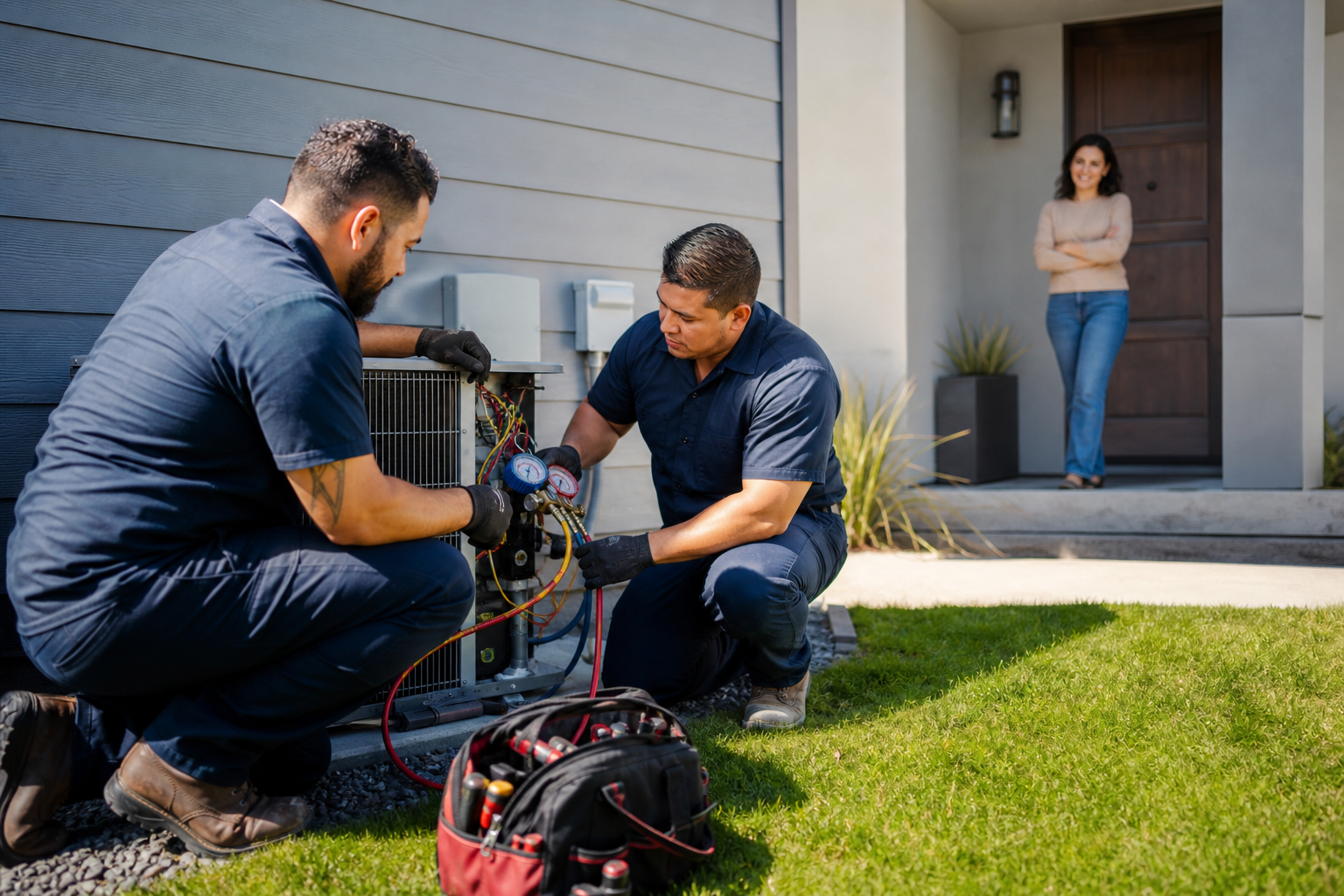
Think about the common no-cool call. A technician arrives after hours of discomfort, tests the system, and finds a failed capacitor, broken blower motor, leaking coil, or aging compressor. The homeowner now has information, urgency, and a reason to act. This should be the easiest point in the job to move forward.
Instead, the technician says the office will prepare a quote and email it later.
It sounds harmless. It is not.
Once the technician leaves, momentum drops. Questions that could have been answered in the driveway become reasons to wait. A spouse wants to look at it later. Another contractor gets called. The customer gets busy. The urgent problem is still there, but the decision has become a task on someone’s list.
That is where winnable jobs slip away—not because the technician was wrong or the price was unreasonable, but because the process introduced unnecessary distance between understanding the problem and authorizing the solution.
With [Flash Quote HVAC](https://apps.apple.com/us/app/flash-quote-hvac/id6774519518), a technician or comfort advisor can build a customer-facing proposal while the diagnosis is fresh, review it on site, and give the homeowner a direct way to approve the work. The quote becomes part of the service conversation instead of an office follow-up task.
A Customer-Ready Quote Is a Decision Tool, Not Just a Price
A good HVAC quote is more than a number at the bottom of a PDF. It helps a homeowner make a decision.
Customers are usually trying to answer a short list of practical questions:
- What is wrong with my system?
- What work is being recommended?
- What does the price include?
- What are my options?
- What happens after I approve this?
- How do I authorize the work without another call or email chain?
If the quote does not answer those questions, the customer has to do the work themselves. That is where friction enters the process.
For a repair, a clear quote may identify the failed component, the recommended repair, relevant labor, and the total price. For a replacement, it may present options in a way that lets a homeowner compare equipment, efficiency, warranties, comfort features, and investment levels without decoding model numbers.
The goal is not to create the longest proposal. It is to create the clearest one.
Most homeowners are not HVAC experts. They do not need a paragraph copied from a parts catalog. They need to know whether the repair makes sense, what a replacement would solve, and how they can move forward if they are ready.
The No-Cool Call Is Where Delay Gives Competitors an Opening
Urgency is impossible to ignore on a no-cool call.
A homeowner has spent the day in a hot house. Maybe there are young children, an older family member, pets, or a home office that has become unbearable. The technician identifies the problem, explains the fix, and gives the homeowner a price.
At that moment, the homeowner is already focused on one outcome: getting comfortable again.
If the quote is ready, the technician can present the scope, answer questions, and let the customer approve the work while everyone has the same context. If a deposit, authorization, or completed-job payment is appropriate, the customer-facing PDF can also include Stripe payment collection so the customer can pay quickly from the quote.
That does not mean pressuring anyone into a decision. It means respecting the reason they called.
A technician who has earned trust in the home should not have to hand that trust off to a delayed email thread. The fastest path is not always the best path, but a clear, accurate quote with a simple approval process is better service than making a customer chase the next step.
Replacement Quotes Need Structure, Not a Verbal Promise
Replacement opportunities reveal a different version of the same problem.
An air conditioner or furnace may still be operating, but its repair history is getting expensive. Performance has slipped. Energy bills are climbing. The system is nearing the end of its useful life. The homeowner may not be ready to approve a replacement in the moment, and that is fair.
But “not ready today” should not mean “we will send you something eventually.”
A structured proposal gives the customer something useful to consider after the conversation ends. Good, Better, Best options can make tradeoffs visible without turning the discussion into a race to the cheapest number.
One option may address the immediate need. Another may offer higher efficiency, improved humidity control, or better comfort across uneven rooms. A third may include premium equipment, controls, or a longer-term ownership case.
The exact package depends on the company. The principle does not: customers should be able to compare meaningful options from the same clear document.
That changes the conversation. Instead of asking only, “What is your lowest price?” a homeowner can ask better questions:
- What changes in comfort?
- What efficiency difference should I expect?
- How does the warranty compare?
- Which option best fits how long we plan to stay in this home?
A replacement quote should do more than display a number. It should help the homeowner make a smart decision.
Maintenance Visits Create Opportunities That Disappear Fast
Not every HVAC opportunity begins with an emergency. Some of the best opportunities come from routine maintenance.
A technician may find poor airflow, weak filtration, humidity problems, duct concerns, or an indoor-air-quality upgrade that would genuinely help the home. The issue may not require same-day action, but it is still valuable enough to deserve a clear recommendation while the technician is present.
Picture a tune-up visit where a technician finds a worn component that is likely to become a future no-cool call. Or consider a homeowner who mentions one bedroom that never seems to stay comfortable. The technician identifies a practical improvement, explains it well, and gets genuine interest.
Then the recommendation becomes a note in the service record.
By the time someone follows up, the customer may barely remember the conversation.
A customer-ready quote keeps the recommendation concrete. It gives the homeowner a clear scope, price, approval path, and next step. They can review it that evening, discuss it with a spouse, or approve it before the technician leaves.
For upgrades without the drama of a system failure, the quote is what turns “something to consider” into a real option.
The Office Should Not Rebuild Decisions Made in the Field
When field quotes cannot close the job, the hidden cost lands on the office.
Someone has to format the estimate. Someone has to send it. Someone has to confirm the customer received it. Someone has to answer a question that the technician could have handled on site. Someone has to resend the attachment when it gets buried in an inbox.
Then comes the follow-up.
Office staff spend hours chasing proposals that could have been approved at the kitchen table, beside the condenser, or in the driveway. Technicians repeat explanations. Managers lose visibility into whether a quote is truly active or simply ignored. Cash flow becomes less predictable because approval and payment depend on manual follow-up.
Some jobs genuinely need additional coordination. Financing, permits, equipment availability, installation scheduling, and major system decisions all deserve thoughtful follow-up.
Routine friction is different. It should not be mistaken for a necessary process.
When a quote offers a direct approval path and a payment option when appropriate, the office can focus on the customers who truly need more time instead of repeatedly chasing the customers who were ready three days ago.
For more practical ways to improve field quoting and customer follow-up, visit the [Flash Quote blog](https://flashquoteapps.com/blog).
A Better Field Workflow Makes the Next Step Obvious
A strong quote begins before the PDF is generated.
Technicians and comfort advisors need to explain problems in plain language. They need to distinguish between an immediate repair, a monitored issue, and an upgrade opportunity. They need confidence in the company’s pricing structure so they can present options without hesitation.
Then the quoting process should support that conversation, not interrupt it.
A reliable HVAC workflow usually follows the same sequence:
Diagnose the problem clearly
Explain what is wrong, what caused it, and why it matters now.
Present the recommended solution
Show the repair or replacement scope in language the homeowner can understand.
Review options while the context is fresh
Give the customer enough information to make a real decision, not just a mental note for later.
Make approval simple
Let the customer authorize the work electronically without starting a second process.
Collect payment when the job requires it
For deposits or completed repairs, provide a quick payment path that does not create another round of calls.
Confirm what happens next
Set expectations for same-day repair, parts ordering, installation scheduling, or follow-up.
That sequence is not complicated. Its value is that it removes unnecessary gaps between service, approval, and action.
A clear proposal does not replace technical skill or good customer communication. It makes both more useful by preserving the trust and urgency earned during the visit.
The Quote Should Finish the Conversation, Not Start a Chasing Game
HVAC companies work hard for every opportunity. They answer calls when comfort fails. They send skilled people into hot attics, cramped mechanical rooms, and long days of service stops. They diagnose problems, explain recommendations, and earn trust in a short window of time.
It makes no sense to lose that advantage after the hard part is done.
A quote should carry the customer from diagnosis to decision with as little friction as possible. It should be clear enough to understand, complete enough to approve, and connected enough to payment that the customer can act while the need is still real.
The best HVAC quote does not ask the customer to continue the process later. It gives them a way to finish it now.
“The quote that closes the job is not the one sent fastest—it is the one that lets the customer say yes before urgency leaves the room.”