Stop Quoting $1,500 Roof Repairs Like $30,000 Replacements
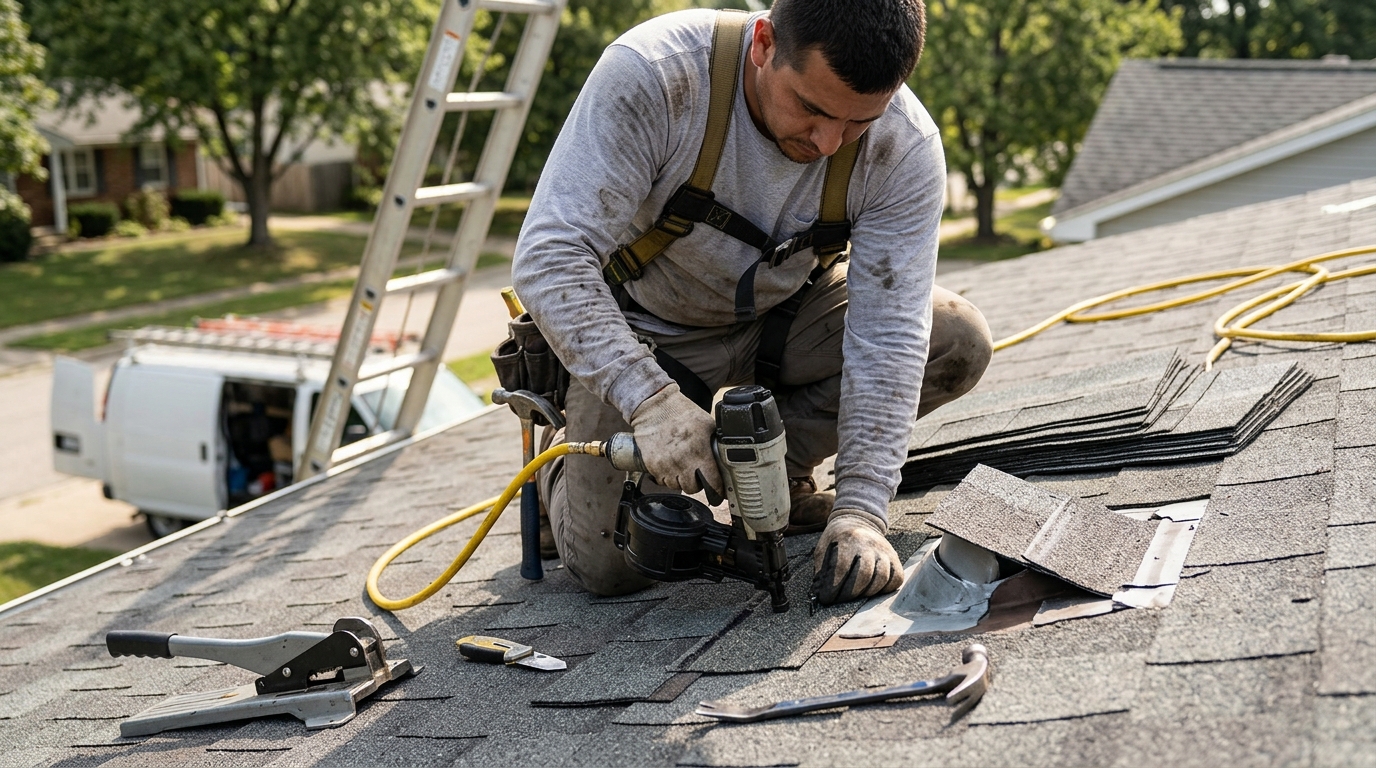
Stop Quoting $1,500 Roof Repairs Like $30,000 Replacements The roofing landscape of 2026 has fundamentally shifted under the weight of insurance tightening, rising interest rates, and homeowner budget constraints. As...
Stop Quoting $1,500 Roof Repairs Like $30,000 Replacements
The roofing landscape of 2026 has fundamentally shifted under the weight of insurance tightening, rising interest rates, and homeowner budget constraints. As industry analysts have signaled, the era of easy, massive replacement jobs is giving way to a highly lucrative, high-velocity market for targeted roof repairs. However, many contractors are completely missing out on this cash flow engine because they are stuck in their old ways. To capitalize on the 2026 shift toward high-margin roof repairs, contractors must abandon heavy, multi-step CRM workflows for small-ticket jobs and adopt a lightweight, single-session quoting and payment process that protects their margins from administrative bloat.
When a homeowner has a minor leak, they do not want a three-week sales cycle. They want their home protected today. Yet, when contractors try to service these $500 to $1,500 jobs using the same administrative machinery designed for a $30,000 full-scale replacement, they fall into a costly trap. To make repairs profitable, estimators must transition away from complex office-bound setups and leverage a streamlined [Flash Quote Roofing](https://apps.apple.com/us/app/flash-quote-roofing/id6772379864) app that allows them to build, sign, and collect payments for a job right from their truck.
---
The Macroeconomic Shift: Why 2026 Belongs to the Repair Specialist
For nearly a decade, residential roofing companies enjoyed an unprecedented run of massive capital projects. Low interest rates made home equity lines of credit cheap and accessible, while insurance carriers routinely approved full-roof replacements for minor storm damage. In that environment, a contractor could easily justify a heavy, slow-moving sales process. If a sales representative spent three days drafting a proposal, coordinating with the back office, and revising a multi-page estimate, the eventual $30,000 payout easily absorbed those administrative costs.
Today, that economic reality has evaporated. High interest rates have made homeowners deeply reluctant to take on major debt, and insurance carriers are aggressively denying full-replacement claims, opting instead to approve localized repairs. The modern homeowner is no longer asking for a brand-new roof; they are asking how they can squeeze five more years out of their existing shingles.
This shift represents a massive opportunity for agile contractors. Roof repairs carry significantly higher gross margins than full replacements—often exceeding 60% to 70% compared to the 30% to 40% typical of large-scale jobs. The catch is that these margins only exist if you can execute the work without the administrative drag of a large-scale project. If your sales and administrative overhead costs $300 per job, a $30,000 replacement easily absorbs it. On a $1,500 repair, that same $300 overhead destroys your profitability. To win in 2026, you must decouple your repair operations from your replacement workflows.
---
The Math of the "Repair Trap": How Administrative Bloat Kills Profitability
To understand why small-ticket repairs fail to generate profit for many roofing companies, we have to look at the hidden costs of administrative labor. When an enterprise-level workflow is applied to a minor repair, the back-and-forth communication, office scheduling, and multi-step draft approvals quickly erode the job's profitability. Let’s look at three real-world examples that illustrate how administrative time kills small-job margins.
Case Study 1: The $600 Pipe Boot Replacement
Consider a standard pipe boot replacement. The materials are inexpensive—a simple rubber collar and a tube of sealant—and the actual physical labor takes an experienced technician about 45 minutes on the roof. On paper, a $600 price tag should yield an incredibly high gross margin.
However, look at the traditional workflow: The estimator drives 45 minutes round-trip to inspect the roof and take photos. Instead of writing the estimate on-site, they tell the homeowner they will "email over a proposal by tonight." Back at the office, the estimator logs into a heavy enterprise CRM to build a multi-page PDF proposal. The draft sits in an approval queue for the sales manager to review. Once approved, the office admin emails the proposal to the homeowner. The homeowner doesn't see the email, prompting the estimator to follow up twice over the next four days. After the customer finally e-signs the proposal, the office admin schedules the work and, upon completion, generates and emails a separate invoice. The homeowner takes another two weeks to mail a physical check or complete a bank transfer.
By the time the transaction is fully settled, the company has invested over four hours of administrative labor across the estimator, the sales manager, and the office administrator. At a fully loaded labor rate of $45 per hour, plus the monthly software user licensing fees, the administrative overhead alone has eaten up nearly $200 of the project's value. When you factor in the technician’s labor and material costs, a high-margin 45-minute job has transformed into a razor-thin margin headache—or even a net loss.
Case Study 2: The $1,200 Wind-Damage Shingle Patch
Now, consider a wind-damage shingle patch where a recent storm has torn away a ridge cap and a few field shingles. The homeowner is anxious because rain is forecasted for the weekend. They call three different local roofing companies.
- Roofer A uses a traditional, heavy CRM. They schedule an estimator to visit the property on Tuesday. The estimator takes photos, promises a formal PDF proposal by Friday, and drives away.
- Roofer B arrives with the Flash Quote mobile app installed on their device. They inspect the roof, take three photos of the wind damage, and build a clean, professional proposal in under two minutes while standing in the homeowner's driveway. They hand their phone to the homeowner for an on-the-spot e-signature and collect a 50% deposit right then and there.
By the time Roofer A's office administrator finally emails the formal PDF proposal on Friday morning, Roofer B has already completed the repair, collected the remaining balance, and moved on to three other properties. In the high-velocity repair market, speed is not just about saving administrative costs; it is the primary factor that wins the job.
Case Study 3: The $900 Chimney Flashing Leak
Consider a third scenario involving a rusted chimney flashing that is causing a slow leak into a homeowner's upstairs hallway. The homeowner notices a water stain on the ceiling and wants an immediate fix before the next storm.
- Roofer C treats this like a major capital project. They schedule an inspection, deploy a drone to map the entire roof structure, and generate a 15-page report detailing every slope and valley. The estimator spends an hour back at the office compiling this data into a massive proposal. The homeowner is overwhelmed by the sheer volume of information and the $900 price tag buried on page 12. They decide to "think about it" and get more quotes.
- Roofer D walks the roof, takes a close-up photo of the rusted flashing, and opens a lightweight mobile app. They write a simple, two-line scope of work: "Remove damaged chimney flashing, install new ice and water shield, install custom-bent aluminum flashing, and seal with high-grade polyurethane sealant." They text the proposal directly to the homeowner’s phone. The homeowner clicks the link, signs with their thumb, and pays a 50% deposit on the spot.
Roofer D secured the job, ordered the materials, and scheduled the technician before Roofer C even finished processing the drone data. By simplifying the presentation and focusing strictly on the immediate problem, Roofer D eliminated the friction that causes homeowners to hesitate on small-ticket repairs.
---
Why Enterprise CRMs Fail the $1,500 Test
Enterprise CRMs are designed to handle complex, multi-week, $30,000 replacement projects. These platforms are packed with heavy features built for large-scale operations: geospatial AI, drone mapping integrations, complex multi-crew scheduling boards, and automated material ordering systems. For a massive commercial or residential replacement, these tools are indispensable because they manage the high risk and long timelines associated with capital-intensive projects.
However, using these heavy features for a simple shingle patch or a flashing repair is complete overkill. It forces the estimator through dozens of mandatory fields, complex navigation screens, and rigid office-approval workflows just to generate a basic quote.
This software bloat actively harms your cash flow in three ways:
1. Friction in the Field Estimators get frustrated dealing with slow, over-engineered mobile apps that require a perfect internet connection to sync with a massive database. They end up resorting to paper scratchpads, delaying the data entry until they get back to their home office. This delay stretches the sales cycle and increases the likelihood that the homeowner will find another contractor who can move faster.
2. Delayed Decision-Making Homeowners looking at a $1,500 repair do not need a twenty-page presentation detailing company history, manufacturer certifications, and drone-rendered 3D models. They want to see the price, understand what is being fixed, sign the agreement, and get on the schedule. When you present them with an overwhelming amount of information, you trigger decision paralysis.
3. Stuck Capital When a repair proposal is held up in a multi-step office workflow, the time to close increases. This delays deposit collection and slows down the overall cash conversion cycle of your business. In a high-volume repair model, you cannot afford to have thousands of dollars in outstanding quotes sitting in an administrative bottleneck.
To protect your margins on small-ticket jobs, you must decouple your repair workflows from your heavy enterprise systems. You need a streamlined tool built exclusively for speed, simplicity, and rapid proposal generation.
---
The Single-Session Blueprint: Quoting and Collecting in One Visit
To build a truly profitable, high-velocity repair division, you must implement a single-session workflow. This means the entire transaction—from the initial inspection to the signed contract and the collected deposit—happens on-site, in one continuous, frictionless interaction.
This is where modern contractor quote software becomes your secret weapon. Instead of forcing estimators to toggle between an estimating tool, an e-signature app, and a separate invoicing system, everything is consolidated into a lightweight mobile interface designed to be operated entirely from a smartphone or tablet.
By leveraging a dedicated mobile solution, the estimator can attach payment collection directly to the customer-facing proposal. The customer-facing quote PDF can include a quick payment option: Flash Quote can attach Stripe payment collection to the customer-facing PDF, allowing the homeowner to view the quote on the estimator's screen or via a direct text link, sign with their finger, and instantly pay the deposit using a credit card, debit card, or mobile wallet.
Because the payment processing is integrated directly into the proposal, the system automatically generates a professional, itemized invoice the moment the transaction goes through. The office doesn't need to chase down payments, and the estimator doesn't have to spend evening hours drafting invoices. The entire administrative workflow is compressed into a single, ten-minute interaction on the homeowner's driveway.
---
Operational Discipline: Separating Replacement and Repair Teams
To truly scale this model, successful roofing contractors in 2026 are separating their repair operations from their replacement divisions. When the same project managers and estimators handle both $30,000 replacements and $800 repairs, they naturally prioritize the larger tickets. The small repairs get neglected, scheduled late, or quoted with massive delays.
By dedicating even one technician and one light service truck exclusively to the repair division, you create a self-sustaining profit center. This team does not need access to the heavy enterprise CRM. They do not need to wait on complex office approvals. Equipped with a fast, mobile-first quoting tool, they can run four to five repair calls a day, closing deals on the spot and keeping cash flowing into the business.
This operational separation ensures that your high-margin repair jobs are treated with the speed they require, while your replacement team can continue to focus on the long-cycle, capital-intensive projects that require deep administrative oversight.
---
Speed as a Sales Strategy: Winning the 2026 Homeowner
In 2026, homeowners are more protective of their cash than ever, but they are also highly motivated by urgency. A leaking roof is an active threat to their drywall, insulation, and peace of mind. They want an immediate solution, and they will almost always award the job to the first professional contractor who can provide a clear, binding estimate and a guaranteed schedule.
By adopting a lightweight, single-session quoting process, you aren't just cutting down on administrative overhead—you are actively improving your close rate. You are meeting the homeowner at their point of highest urgency and making it incredibly easy for them to say yes.
To learn more about optimizing your estimating processes and protecting your margins, visit [Flash Quote](https://flashquoteapps.com) or explore our [contractor estimating blog](https://flashquoteapps.com/blog).
In the high-velocity market of 2026, the contractor who wins isn't the one with the heaviest software—it's the one who makes it easiest for the homeowner to say yes, sign, and pay before the first raindrop hits the roof.