Plumbing Fixture Install Estimate: A Practical Guide for Plumbing Contractors
Learn how plumbing contractors can handle plumbing fixture install estimate with clearer scopes, better pricing, stronger follow-up, and cleaner Flash Quote proposals.
Plumbing Fixture Install Estimate is not just a search phrase. For plumbing contractors, it usually points to a real moment in the field when a homeowner or property manager needs a clear number, a clear scope, and enough confidence to approve the work. The companies that win those jobs are rarely the ones with the cheapest number. They are the ones that explain what is included, why the price makes sense, and what happens next.
This draft is built around plumbing fixture install estimate because it connects directly to buyer intent. Someone looking for that topic is usually comparing contractors, trying to understand cost, or deciding whether a proposal is professional enough to trust. That makes the article useful for search visibility and useful for the contractor reading it. The goal is practical: help a plumbing contractor create better quotes, protect margin, and move from field notes to an approved plumbing quote faster.
Why Plumbing Fixture Install Estimate Matters
A weak estimate creates confusion before the job even starts. If the scope is thin, the customer fills in the blanks. If the price is vague, the customer assumes there is room to negotiate. If exclusions are missing, the contractor may end up absorbing work that was never priced. In plumbing work, those small gaps can turn into expensive callbacks, delayed approvals, and uncomfortable invoice conversations.
A strong estimate does the opposite. It slows the decision down just enough to make the value obvious. It names the problem, lists the work, explains assumptions, and gives the customer a clean path to approve. For plumbing contractors, this is especially important because field conditions can change quickly. The estimate has to be simple enough for the customer to understand and detailed enough for the office and crew to execute.
- It gives the homeowner or property manager a written scope instead of a verbal promise.
- It helps the plumbing technician understand what was sold and what was excluded.
- It protects gross margin by connecting price to actual labor, material, and risk.
- It reduces follow-up friction because the customer can review one organized document.
- It gives the company a record if the scope changes after approval.
Start With the Field Condition, Not the Price
The biggest mistake in plumbing estimating is jumping straight to the number. The customer may ask, "How much?" but the contractor still has to explain what the number is based on. Start with the condition found during the service call. What is broken, missing, undersized, unsafe, inefficient, leaking, outdated, or outside code? What evidence supports that conclusion? What will happen if the issue is ignored?
For example, a slab leak investigation, a water heater replacement, or a sewer stoppage with camera findings should not be priced from memory alone. The estimate should reflect the site condition, access, material requirements, labor difficulty, disposal or cleanup, inspection needs, and any assumptions that could affect the final scope. When those details are visible, the customer sees a professional process instead of a random number.
Build the Scope in Plain Contractor Language
Good proposals do not need complicated language, but they do need specific language. A homeowner or property manager should be able to tell what is included, where the work is happening, what materials or equipment are being used, and what the contractor is responsible for. Internal shorthand can be useful for technicians, but it often creates doubt for customers. Spell out the important parts.
A clear scope for plumbing fixture install estimate should mention the task, location, relevant materials, labor steps, cleanup, warranty basics, and exclusions. It should also separate required work from optional upgrades. If a customer can approve the base repair today and consider an upgrade later, do not bury both in one confusing lump sum.
- Describe the field condition in one or two direct sentences.
- List the work included in the proposed solution.
- Name the major materials, equipment, or parts involved: pipe, fittings, valves, fixtures, water heaters, drain equipment, access repair assumptions, permits, and disposal.
- State what is excluded or dependent on hidden conditions.
- Give the customer a clear approval step and expected timeline.
Price the Work From Cost, Risk, and Margin
Many contractors lose money because they price from habit. They remember what a similar job used to cost, adjust the number a little, and hope it works. That is risky when material prices, labor availability, insurance requirements, fuel, financing fees, and customer expectations keep changing. A better approach is to price from the real inputs that affect the job.
For water heater replacements, leak repairs, drain work, fixture installs, repipes, sewer repairs, shutoff valves, and emergency calls, the number should account for direct labor, materials, drive time, setup, cleanup, permitting, callbacks risk, supervision, and the margin the company needs to stay healthy. A quote that wins but does not pay the business is not a win. The estimate should help the contractor explain value without apologizing for a profitable price.
Margin rule: if plumbing fixture install estimate requires special access, return trips, inspection coordination, emergency scheduling, or uncertain field conditions, price that risk before the customer signs.
Use Options Without Making the Customer Work Too Hard
Options can help close jobs, but only when they are structured. A good-better-best layout works when each option has a clear reason to exist. The base option solves the immediate problem. The better option improves reliability, comfort, efficiency, appearance, or warranty. The best option may bundle related work that prevents future calls. Random add-ons feel like upselling. Relevant options feel like professional advice.
For plumbing fixture install estimate, keep the choices tight. Too many options slow the decision. Three choices are usually enough, and sometimes two are better. Each option should have a short label, a short scope, and a price. The customer should not need a second phone call just to understand the difference.
- Base: solves the immediate issue with standard materials and labor.
- Better: adds durability, comfort, efficiency, or a stronger warranty.
- Best: addresses related problems now to reduce future disruption.
- Declined option: documents what the customer chose not to do.
Follow Up With the Same Specificity
The estimate is not finished when it is sent. Many profitable jobs are won in the follow-up because the contractor answers doubts that were not obvious during the visit. A generic "checking in" message is weak. A better follow-up references the actual problem, the recommended option, the reason the timing matters, and the next step. That keeps the conversation about value instead of discounting.
A useful follow-up might say: "I wanted to make sure the scope for plumbing fixture install estimate was clear. The proposal covers the work we discussed, including the materials and labor needed to complete it correctly. If you want to move forward, I can get the job scheduled and keep the written scope attached to the work order." That is direct, helpful, and easier to approve than a vague reminder.
Protect the Crew With Better Notes
A proposal is also an operations document. If the office sells one thing and the field team sees another, the job starts with friction. The estimate should include enough notes for the plumbing technician to understand the promise made to the customer. Photos, measurements, access notes, material selections, exclusions, and customer concerns all matter. Better notes reduce callbacks and keep the crew from improvising on the jobsite.
This matters even more when the job came from a fast service call. The person writing the estimate may remember the details today, but the work may not happen until next week. The written scope is what survives. If the scope is clean, production stays cleaner.
Related Flash Quote Reading
- Plumbing Water Heater Quotes: How to Price Replacements, Code Upgrades, and Options Clearly - /blog/plumbing-water-heater-quotes-price-replacements-code-upgrades-options
- Plumbing Dispatch and Quoting Workflow: How to Turn More Service Calls Into Approved Work - /blog/plumbing-dispatch-and-quoting-workflow-turn-more-service-calls-into-approved-work
- Plumbing Estimating 101: How to Price Service Calls, Repairs & Remodels - /blog/plumbing-estimating-how-to-price-service-calls-repairs-remodels
- Roofing Change Orders: How to Protect Margin on Decking Repairs, Supplements, and Scope Changes - /blog/roofing-change-orders-protect-margin-decking-repairs-supplements
FAQ
What should be included in plumbing fixture install estimate?
Include the field condition, proposed work, materials or equipment, labor assumptions, exclusions, timeline, warranty basics, and approval instructions. The customer should understand both the price and the reason behind the recommendation.
How can plumbing contractors make estimates faster?
Use repeatable scopes, saved pricing logic, clear option structures, and field-ready notes. The goal is not to rush the customer. The goal is to stop rebuilding the same estimate from scratch after every visit.
Should every quote include multiple options?
Not every quote needs three options, but most profitable service businesses benefit from at least one clear alternative. Options help customers choose the level of work that fits their budget while keeping the contractor from competing only on the lowest number.
How does Flash Quote help?
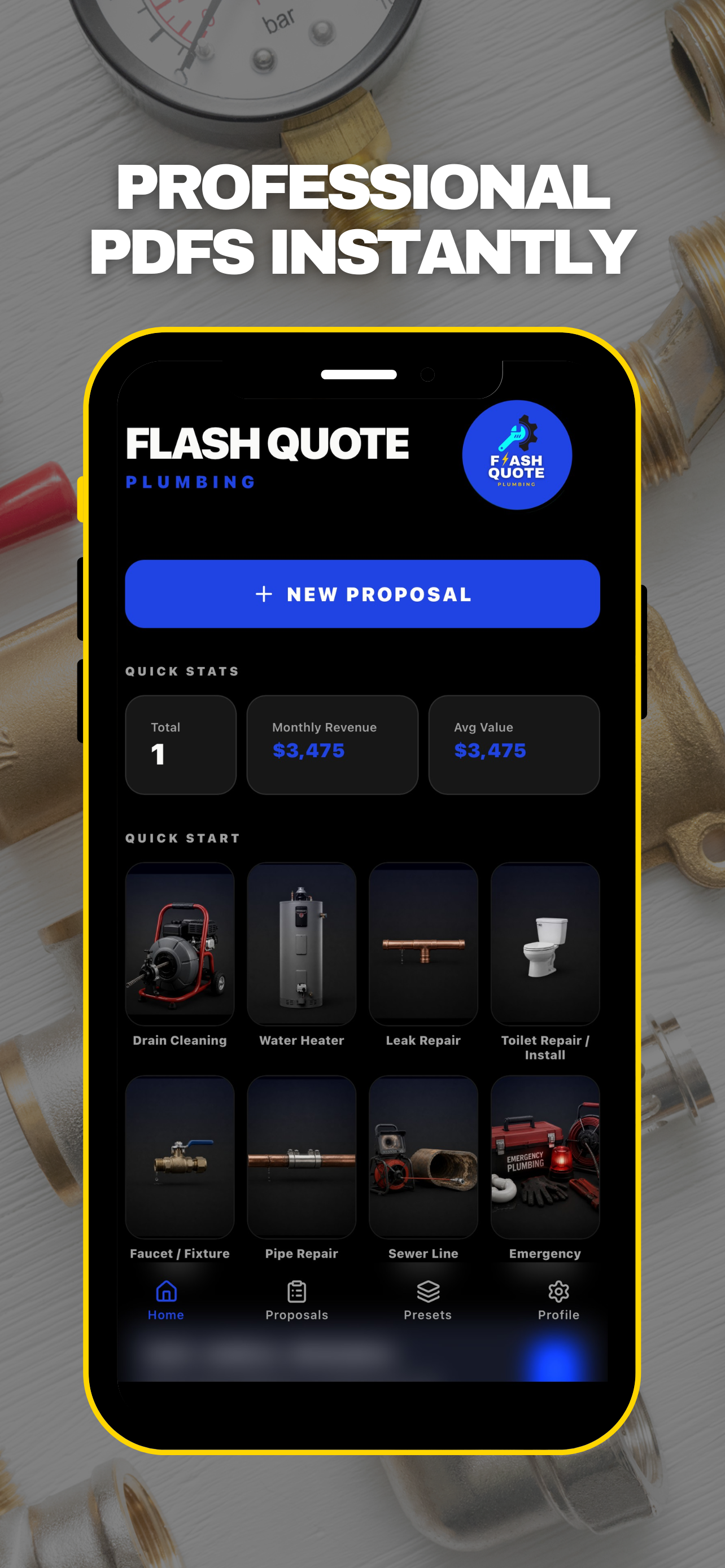
Flash Quote Plumbing helps contractors turn field details into clean, professional proposals faster. Instead of sending vague texts or rebuilding documents from scratch, contractors can create structured quotes that explain the scope, support the price, and give customers a clear next step.
For plumbing contractors, the practical lesson is consistency. The same estimating discipline should show up on small repairs, larger projects, urgent calls, and planned upgrades. When the company uses one clear process for plumbing fixture install estimate, customers get better explanations, crews get better work orders, and owners get better visibility into margin before the job is already underway.
Use Flash Quote Plumbing to create faster plumbing estimates, present cleaner options, and turn plumbing fixture install estimate searches into approved jobs without losing control of scope or margin.