Modern Masonry Estimating: How Line-Item Precision and Instant Tailgate Proposals Protect Contractor Margins in 2026
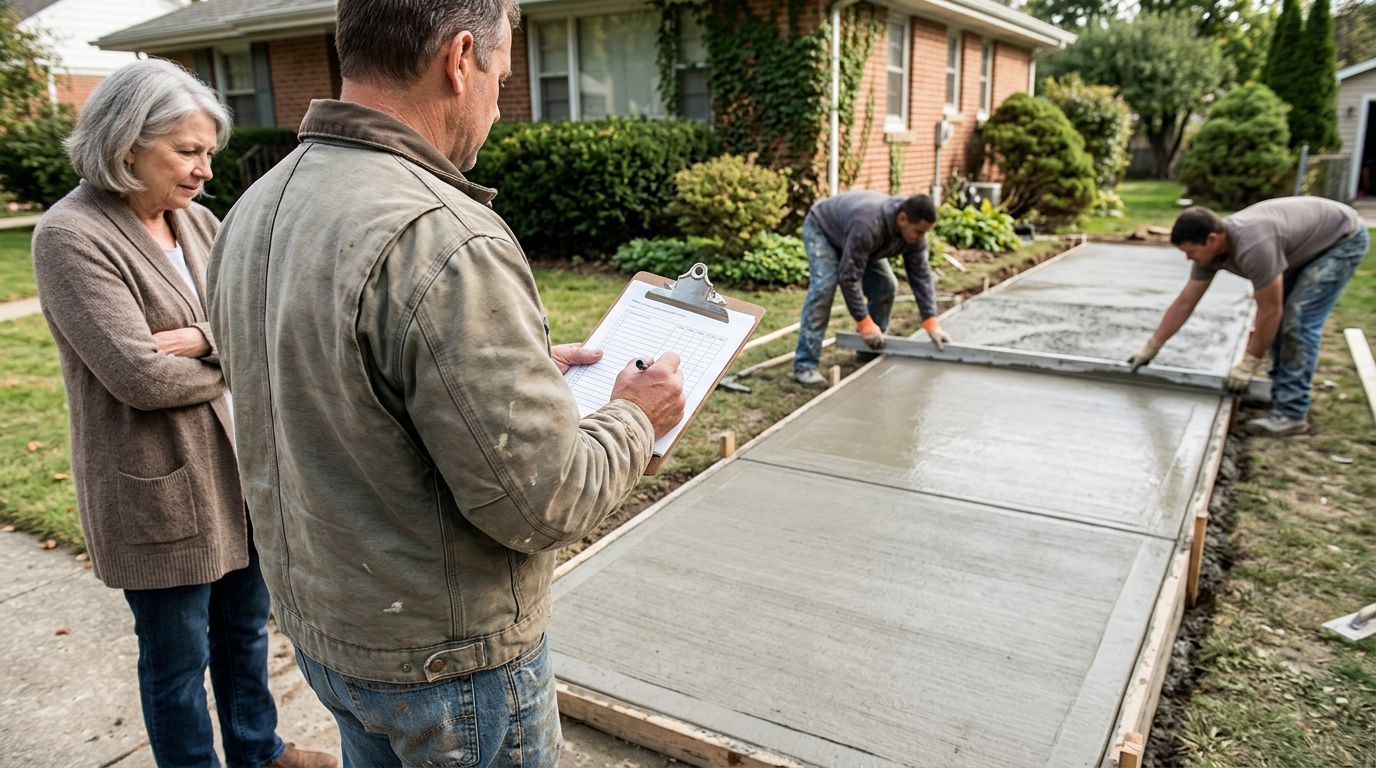
Modern Masonry Estimating: How Line-Item Precision and Instant Tailgate Proposals Protect Contractor Margins in 2026 When a homeowner or commercial property manager asks for a bid on a 150-linear-foot retaining wall, a...
Modern Masonry Estimating: How Line-Item Precision and Instant Tailgate Proposals Protect Contractor Margins in 2026
When a homeowner or commercial property manager asks for a bid on a 150-linear-foot retaining wall, a custom brick veneer façade, or a complex chimney restoration, they are not just buying materials and physical labor. They are buying structural integrity, craft skill, and speed. Yet across the trade, thousands of skilled masonry contractors continue to lose tens of thousands of dollars each year—not on the scaffold, but in the driveway.
According to the 2026 Concrete Masonry & Hardscapes Association (CMHA) Industry Production Report, roughly 49% of hardscape and masonry installation contractors generate under $1M in gross annual revenue. These small-to-midsize operations routinely struggle with compressed operating margins, persistent skilled labor shortages, and unexpected raw material price spikes. Industry cost databases show skilled mason labor rates in high-demand markets currently range from $40 per hour for entry-level masons to upwards of $100 per hour for master tradesmen. Compounded by 4% to 6% regional price surcharges on portland cement, sand, and aggregate blocks, the financial room for estimating error in 2026 has narrowed to zero.
When you estimate a job on the back of a business card, draft proposals late at night on a kitchen table, or wait three days to deliver a PDF invoice, you expose your contracting business to three severe financial leaks: labor drift, unpriced scope changes, and delayed cash flow.
To build a resilient, highly profitable masonry company today, field operations must match business workflows. Modernizing your estimating process with dedicated [contractor quote software](https://flashquoteapps.com) allows you to turn complex site measurements into fully itemized, e-signable proposals right from the tailgate of your truck. By capturing on-site signatures and collecting upfront material deposits in minutes, masons can lock in job profits before the first bag of mortar is mixed.

---
The Tailgate Reality: Why Delayed Proposals Cost Masons Money
In residential and commercial masonry, time kills deals. When a potential client invites you to inspect a failing fieldstone retaining wall or estimate a new outdoor living space, their buying intent is at its absolute peak during that initial site visit.
If you take field notes, head back to your shop, and take four to six days to calculate square footage, unit counts, mortar ratios, freight delivery, and scaffold setup, several negative things occur:
- The Client Shops Around: A competitor using a modern [brick block estimating software](https://flashquoteapps.com) delivers a structured, professional proposal within twenty minutes of inspecting the jobsite. The client signs the agreement on their smartphone and pays the deposit before you have even opened your office spreadsheet.
- Material Surcharges Eat Your Profits: Supplier prices for concrete masonry units (CMUs), natural stone, and bagged cement fluctuate frequently. A delay between estimating and contract signing can cause wholesale material costs to shift, eating directly into your net margin.
- Forgotten Scope Items: When you draft bids hours or days after walking the site, small but costly items slip through the cracks—such as dump fees for old concrete, specialized rigging, hydro-sealing, lintel replacement, or expansion joint foam.
Consider a mid-sized masonry contractor bidding a 600-square-foot split-face CMU commercial dumpster enclosure. A typical pen-and-paper estimate might lump the entire job into a single flat-rate quote of $14,000. But if soil conditions require an extra course of footings below the frost line, or if access constraints demand wheelbarrowing mortar rather than pump truck discharge, a flat estimate swallows those unexpected labor hours directly out of contractor profits.
By replacing broad, single-number estimates with rapid line-item quotes built on-site, masons can clearly separate material totals, equipment rentals, specialized labor rates, and site prep fees. Giving the client instant visibility into exact project parameters builds immediate trust and closes jobs on the spot.
---
Anatomy of a Bulletproof Masonry Estimate
A accurate masonry quote requires precise line-item clarity. Brick, stone, and block installations involve multiple interrelated layers of physical components, specialty tooling, and skilled labor hours. Lumping these elements into vague headline figures guarantees scope disputes down the road.
To ensure your projects remain consistently profitable, every proposal generated through your [masonry quote tool](https://flashquoteapps.com) should clearly delineate six essential operational pillars:
1. Structural & Facade Material Takeoffs Never list just "Brick and Mortar." Itemize specific quantities and unit specs: CMU / Brick / Stone Units: Total unit counts with a standard 5% to 10% allowance for waste, cutting, and transit breakage. Mortar & Grout Spec: Bag counts for Type N, Type S, or pre-blended grout mixes, including aggregate matrix requirements. Reinforcement & Accessories: Rebar (Grade 60 4/5 bars), ladder/trussed wall wire ties, wall anchors, weep holes, and flashing membrane square footage.
2. Site Excavation & Sub-Base Preparation For hardscapes, retaining walls, and outdoor kitchens, the work beneath the ground determines structural longevity: Aggregate base material (3/4-inch crushed stone or gravel) crushed and compacted by volume (tons or cubic yards). Geotextile fabric square footage for soil stabilization and drainage separation. Perforated drain tile installation, weep pipe routing, and gravel backfill volumes.
3. Equipment Setup, Rigging, & Scaffold Staging Staging a job safety and efficiently requires capital expense and crew hours: Frame staging, crank-up scaffolding systems, or motorized mast-climbing platforms. Specialized delivery drop fees, forklift or telehandler operational costs, and jobsite dumpsters for masonry demolition debris.
4. Skilled Labor Allocations Break down trade craft by specialized tasks and projected hours: Site prep and footing excavation labor hours. Block/brick laying trade hours (rated by daily unit lay rates per mason). Joint tooling, tuckpointing, acid washing, and surface sealing post-cure.
5. Contingencies & Subsurface Provisions Explicitly address site risks in your terms: Subsurface rock extraction or unmapped concrete footing removal rates. Severe weather delays, winter heating/tenting enclosures, or cold-weather mortar additive charges.
6. Payment Schedule & Deposit Terms Mandatory initial deposit (e.g., 30% to 50% down) to cover material purchases and schedule commitment. Mid-point progress payments tied to physical milestones (e.g., footings poured, wall to lintel height). Final payment upon completion and site walkthrough.
When clients see a beautifully branded [PDF invoice app](https://flashquoteapps.com) proposal displaying itemized line items, they don't view your estimate as expensive—they view it as comprehensive, professional, and trustworthy.
---
Managing Scope Creep in Restoration and Repair Work
While new construction hardscapes follow explicit architectural plans, masonry restoration, repointing, and repair jobs are packed with hidden structural variables. When removing historic mortar joints on a turn-of-the-century brick building, or opening up a cracked stone fireplace, contractors frequently encounter decayed substrate, missing wall ties, or corroded steel lintels that were completely invisible during the initial inspection.
Unmanaged scope creep is the single fastest way to destroy profitability in repair work. If a mason repairs three structural lintels that were not in the original agreement without getting a formal, signed change order, the cost of steel, flashing, and extra labor comes directly out of the contractor's pocket.
The Digital Change Order Workflow Modern contractors protect their bottom line by integrating real-time digital documentation into their field workflows:
- Document the Unforeseen Condition: Take photo evidence of hidden decay or structural failure immediately upon discovery.
- Generate an On-Site Scope Adjustment: Use your mobile quote software to draft a instant supplemental proposal detailing the additional material (e.g., structural angles, helical wall ties) and required trade hours.
- Secure Instant E-Signature: Send the supplemental quote directly to the client's phone or present it on your tablet. With integrated [e-signature proposals](https://flashquoteapps.com), the client approves the line-item scope change in seconds, keeping your crew moving without delay.
- Update Project Billing Automations: The additional items automatically attach to the final project invoice, eliminating end-of-job billing disputes and ensuring every hour worked is an hour paid.
---
Aligning Field Innovation with Office Operations
In recent years, the Mason Contractors Association of America (MCAA) has emphasized jobsite efficiency and safety modernization across the country. Masons have adopted advanced hydraulic scaffolding, motorized platform access, and specialized masonry saws to reduce site downtime, increase safety compliance, and double daily block-laying output.
However, many contractors who invest $50,000 in modern jobsite rigging still manage their office operations using 1990s administrative habits. They spend two hours every night typing up manual invoices, chasing down uncollected balances over the phone, or mailing paper statements that take 30 to 60 days to clear.
Modernizing your administrative workflow with [Stripe proposal software](https://flashquoteapps.com) provides the same operational leap forward in the office that hydraulic scaffolding provides on the scaffold.
When field tools and office tools speak the same language, administrative drag disappears. Proposals move straight to signed contracts, signed contracts convert automatically to material order sheets, and finished milestones trigger instant digital invoices with click-to-pay functionality.
---
Practical Case Study: Bidding a Retaining Wall & Paver Patio
To see how tailgate quoting transforms contractor profitability, let’s review a real-world operational comparison between two masonry contractors bidding the exact same residential project: a 120-square-foot segmental retaining wall and a 400-square-foot interlocking paver patio with steps.
Contractor A: The Manual Method Initial Walkthrough: Takes notes on a legal pad. Measures perimeter with a tape. Proposal Creation: Returns home after a 10-hour work day. Spends 2 hours calculating square footages, gravel tonnage, compaction sand, paver pallets, cap units, and labor. Sends a single-line PDF email three days later reading: "Retaining wall and paver patio installation: $18,500." Client Response: The homeowner finds the quote vague and asks for clarification. While waiting, they contact another contractor. Contract Signing: Contract signed 10 days later. Contractor asks for a paper check deposit, which takes another week to clear. Scope Creep Impact: During excavation, soft clay soil requires 4 inches of extra crushed stone base ($600 in materials plus 4 extra labor hours). Contractor doesn't document a formal change order and absorbs the $1,100 total cost. Net Margin Result: 11% (Significantly eroded by delayed start and unbilled site prep).
Contractor B: The Flash Quote Tailgate Method Initial Walkthrough: Measures site dimensions with laser distance tool. Opens [Flash Quote](https://flashquoteapps.com) on a phone or mobile tablet. Proposal Creation: Selects pre-saved masonry line items for retaining wall block per sq ft, aggregate sub-base per ton, paver installation per sq ft, edge restraint, step units, and polymeric sand. Adjusts local material rates and adds specific labor lines. Tailgate Delivery & E-Sign: Presents an itemized $19,200 bid to the homeowner on-site within 10 minutes. Explains every line item clearly. The homeowner e-signs on the tablet on the spot. Deposit Collection: Client receives a payment link via SMS/email and pays the 40% deposit ($7,680) via credit card powered by Stripe before Contractor B leaves the driveway. Materials are ordered that same afternoon. Scope Creep Impact: When soft clay is discovered, Contractor B opens the app, creates a $1,100 base stabilization change order line item, texts it to the homeowner, and secures approval in under three minutes. Net Margin Result: 28% (Fully protected, zero administrative overhead, zero unbilled work).
---
Cash Flow Architecture: Deposits, Payments, and Working Capital
In masonry contracting, cash flow is oxygen. Stone yards, concrete plants, and brick distributors do not extend unlimited interest-free credit. To secure early-pay discounts on materials and cover weekly trade wages, contractors need immediate access to operating capital.
Relying on traditional billing cycles where clients mail paper checks 30 days after job completion strains contractor working capital. By adopting integrated digital payment workflows, contractors create a predictable, automated cash flow engine:
1. Instant Upfront Material Deposits Before driving a single stake or dropping off a skid of CMUs, secure a binding e-signed contract and a deposit. Setting up automated credit card and ACH deposit processing guarantees that material expenses are funded directly by project cash flow, not your business credit lines.
2. Milestone Progress Invoicing For multi-week commercial brickwork or large residential builds, structure progress payments into your initial contract. Automate progress invoices upon completing structural footings, reaching top of wall plate, or completing washdown.
3. Immediate Final Invoice Delivery The second your crew completes site cleanup, washdown, and final walkthrough, issue the final PDF invoice directly to the client's phone. Providing immediate online payment via credit card or bank transfer reduces average collection time from weeks to minutes.
---
Scaling Your Trade Business Across Multiple Sectors
Whether your team specializes in brick, stone, and block, or operates a multi-discipline service business handling hardscapes, concrete, and exterior repairs, maintaining consistent proposal standards across all crews is crucial for business growth.
As your enterprise scales, applying structured line-item quoting models ensures consistent profitability across every sector of your trade business. Explore how optimized quote software streamlines related trades across our trade network:
- Roofing Operations: Streamline tear-offs, shingle square calculations, and emergency storm repair quotes using our dedicated [roofing estimate software](https://flashquoteapps.com/roofing).
- HVAC Systems: Present tiered system replacements, ductwork calculations, and maintenance contracts with clear line-item precision using our [HVAC quoting app](https://flashquoteapps.com/hvac).
- Plumbing Services: Fast-track emergency drain clearing, repiping, and commercial rough-in estimates using [plumbing estimate tools](https://flashquoteapps.com/plumbing).
- Electrical Contracting: Build clear bids for panel upgrades, EV charger installs, and full rewires with [electrical quote apps](https://flashquoteapps.com/electrical).
- Freelance & Creative Services: Manage client proposals, milestone billing, and contract signatures effortlessly through [freelance proposal tools](https://flashquoteapps.com/freelance).
For additional industry guides, business growth strategies, and contractor workflow insights, explore our full library of resources on the [Flash Quote Blog](https://flashquoteapps.com/blog).
---
Master Your Estimating to Lock in Every Job's Margin
In the modern masonry industry, physical craftsmanship is only half the battle. You can lay 1,000 brick a day with clean mortar joints and perfect plumb lines, but if your estimating is slow, your change orders are unbilled, and your payment collection takes weeks, your margins will continuously erode.
Protecting your profits against fluctuating material prices and rising labor rates requires total precision at the point of sale. By generating detailed line-item quotes, securing mobile e-signatures, and collecting instant deposits right at the tailgate, you take complete control of your jobsite profitability.
To eliminate paperwork drag, eliminate unbilled scope creep, and start securing faster project deposits, put [Flash Quote](https://flashquoteapps.com) to work on your tailgate today.
To build a resilient masonry business in 2026, contractors must replace slow paper estimates with instant line-item proposals and mandatory on-site digital deposits before leaving the tailgate.