Margin Insurance for Plumbers: Turning Same-Day Diagnostic Calls Into Signed, Deposited Jobs
Margin Insurance for Plumbers: Turning Same-Day Diagnostic Calls Into Signed, Deposited Jobs In an era of escalating labor burden and volatile supply costs, plumbing contractors who build line-item quotes, capture...
Margin Insurance for Plumbers: Turning Same-Day Diagnostic Calls Into Signed, Deposited Jobs
In an era of escalating labor burden and volatile supply costs, plumbing contractors who build line-item quotes, capture digital signatures, and collect upfront Stripe deposits on-site directly from their phones eliminate bid decay, lock in project profitability, and achieve dramatically higher close rates than competitors reliant on back-office paper proposals. Every hour that elapses between an initial diagnostic site visit and a formal proposal delivery erodes project margin, exposes quotes to supply house price swings, and invites price-shopping homeowners or property managers to seek cheaper alternatives. Converting field assessments into legally binding, funded work orders before leaving the driveway is no longer an operational luxury—it is essential financial margin insurance for modern plumbing enterprises.
---
The Invisible Hemorrhage: Why Delayed Estimating Destroys Net Margin
Uncompensated Administrative Overhead and Bid Decay
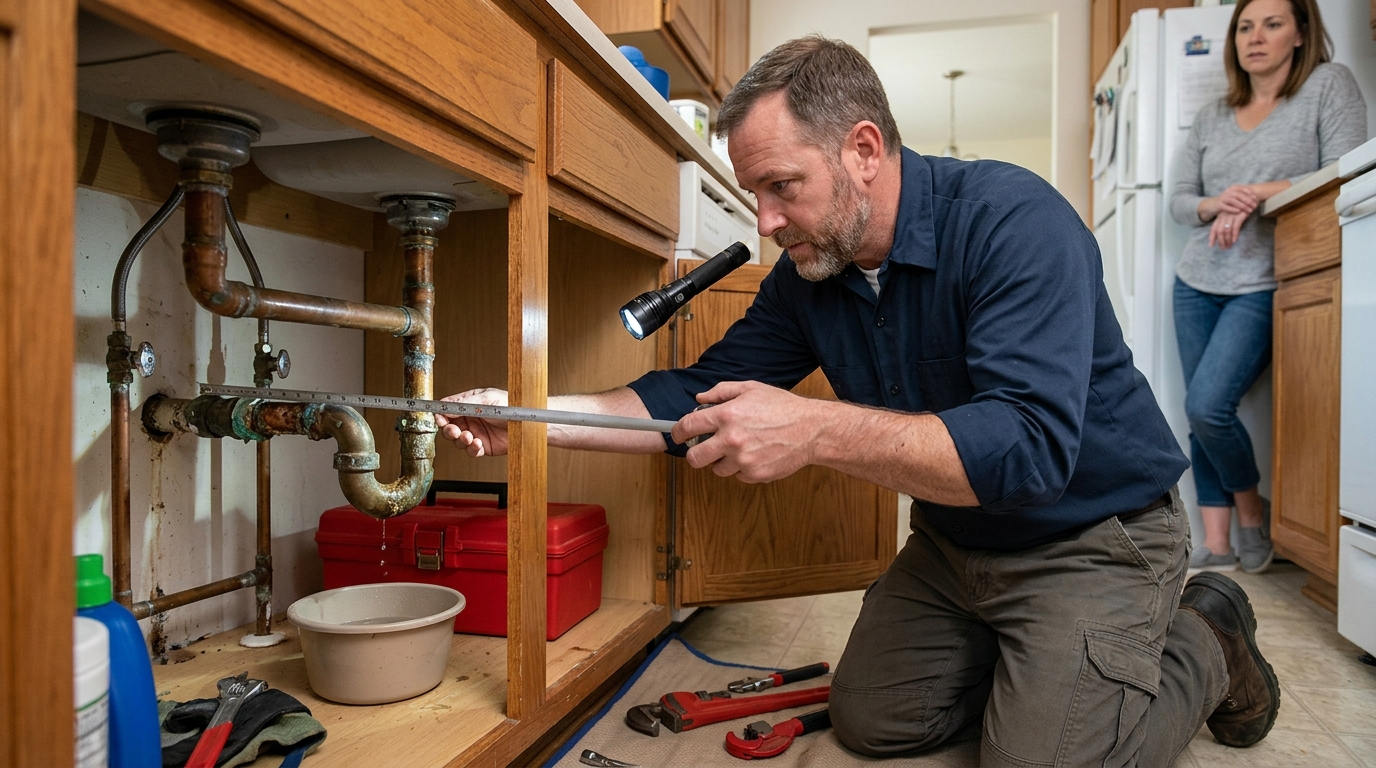
For decades, service plumbing companies operated under a high-friction administrative cadence: a field technician drives to a commercial building or single-family residence, diagnoses a failing boiler or collapsed drain line, writes brief handwritten notes on a carbon-copy pad, and promises that the office will email a formal quote tomorrow.
That overnight lag is where project profitability goes to die. In modern field service, administrative delays trigger severe operational drag. First, there is the immediate loss of billable focus. Service managers or master plumbers spend unpaid evening hours translating grease-stained field notes into formal office documents. Second, drive time spent running diagnostic calls without securing financial commitment represents unrecoverable overhead. When a client receives an emailed proposal 48 hours after the initial visit, the psychological urgency that existed during the active leak or property shutdown has evaporated. The property owner has either called a rival contractor who provided an immediate answer or decided to postpone non-emergency work altogether.
This dynamic creates severe bid decay. Close rates plummet when estimates are delayed past the same-day mark. Worse still, in a high-inflation trade environment, a proposal delayed by two days risks price slippage before work even begins. If copper pipe fittings, backflow assembly valves, or commercial water heater units jump 5% to 10% at the supply house distributor overnight, an uncommitted paper quote swallows that price difference directly out of the contractor’s net margin.
- On-Site Diagnostic: High urgency, prime buyer intent, maximum close rate.
- 24-Hour Delay: Urgency fades, competitor called, price shopping begins.
- 48-Hour Follow-Up: Cold lead, margin slippage, severely dropped close rate.
Calculating Real Labor Burden and Material Price Escalation
Protecting project margins requires precise cost accounting. A contractor’s real cost for field work is never just the base hourly rate paid to a journeyman or master plumber. Calculating fully burdened labor—which incorporates payroll taxes, workers’ compensation insurance, service van fuel, equipment depreciation, tool allowances, and administrative backing—reveals a true labor burden ranging from $85 to $109 per hour for modern mechanical and plumbing technicians.
Sample Fully Burdened Labor Rate Breakdown (Per Journeyman Hour): Base Hourly Wage: $42.00 Payroll Taxes & Benefits (32%): $13.44 Workers' Compensation Insurance (Plumbing/Mechanical): $8.50 Vehicle Operating Cost, Maintenance & Fuel: $12.00 Tool Depreciation, Shop Overhead & Licensing: $11.06 True Burdened Cost per Field Hour: $87.00
When field technicians calculate estimates using static flat-rate pricing sheets or back-of-the-napkin guesses, they frequently undercount labor burden on complex diagnostic installations. Furthermore, supplier price hikes on specialized materials—such as lead-free brass fittings, Type L copper coils, and high-efficiency tankless retrofits—make static pricing sheets obsolete almost immediately.
To safeguard profit, estimating must happen dynamically in the field. Plumbing contractors must build exact labor-hour calculations and material markups into itemized quotes right on site. By establishing real-time pricing visibility on [Flash Quote](https://flashquoteapps.com) before work commences, service plumbing companies lock in target net margins regardless of external market volatility.
---
The Mobile Quoting Workflow: From Assessment to Signed Deposit in 10 Minutes
On-Site Line-Item Assembly with Pre-Set Trade Templates
To execute same-day conversions consistently, field service technicians need a mobile workflow optimized for job-site realities. Building a detailed estimate on a smartphone or tablet should take minutes, not hours. The process begins during or immediately after the physical inspection of the plumbing system.
Instead of hunting through bulky paper binders or waiting for back-office dispatchers to construct custom spreadsheets, field technicians open pre-configured trade templates directly on their mobile devices. Using [Flash Quote Plumbing](https://apps.apple.com/us/app/flash-quote-plumbing/id6775365155), field plumbers can quickly assemble clear, professional line-item quotes that itemize scope components—such as fixture removal, piping runs, code-required venting upgrades, permit fees, and disposal charges—in front of the customer.
Line-item transparency transforms the client dynamic. When clients see a clear, itemized breakdown detailing exact labor, specialized equipment, and material components, trust increases dramatically. They no longer view the estimate as an arbitrary total figure, but rather as a precise scope of work backed by professional diagnostic standards.
The 10-Minute Mobile Quoting Workflow: 1. Field Diagnostic: Inspect system and select pre-set trade template on mobile. 2. Line-Item Build: Adjust labor burden hours and material markups dynamically. 3. PDF Delivery: Present clear digital scope directly to the property owner. 4. E-Signature: Capture legally binding sign-off on glass in real time. 5. Stripe Collection: Process upfront deposit instantly and issue digital receipt.
Embedded E-Signatures and Integrated Stripe Payments
The true bridge between presenting an estimate and locking in a profitable job lies in closing the transaction on site. Traditional quoting workflows treat proposal creation and billing as separate, disconnected events separated by days or weeks. Modern mobile quoting unites them into a single, seamless interaction. Flash Quote can attach Stripe payment collection directly to the customer-facing PDF so customers can review, sign, and pay quickly from the quote interface.
When the line-item proposal is assembled on the mobile screen, the technician presents the digital quote to the client. The software instantly compiles the quote into a crisp, professional PDF document. Embedded within the PDF is a secure signature portal alongside integrated credit card and ACH payment collection powered by Stripe.
The technician does not leave the proposal open for endless email back-and-forth. Instead, they walk the client through the scope on glass. Once the client approves the line items, they apply a digital signature directly on the phone or tablet screen. Immediately following signature capture, the system prompts for the required deposit—typically 20% to 50% depending on capital material requirements. The customer taps their card or enters bank details directly into the interface.
This instant payment feature fundamentally alters project risk. Collecting an upfront deposit converts an uncommitted estimate into funded, scheduled working capital before the technician turns the ignition key in the service truck.
---
Jobsite Case Studies: Protecting Profitability Across Modern Mechanical Scenarios
To understand how on-site quote assembly and deposit capture defend profit margins, examine three common field scenarios encountered by residential and commercial plumbing operations.
Scenario 1: Commercial Tankless Water Heater Upgrade
A mechanical service manager receives an urgent call from a local restaurant experiencing complete hot water failure during morning prep. The diagnostic reveals two atmospheric tank units with rusted heat exchangers beyond repair. The recommended solution is a twin-unit commercial tankless retrofit requiring stainless steel concentric venting and a gas line upsizing.
- Scope Total: $6,850.00
- Traditional Approach Risk: The technician measures the job, drives back to the shop to calculate venting lengths and gas load requirements, and emails a proposal late that evening. In the interim, the restaurant owner calls a commercial competitor who offers an immediate verbal price. The original shop loses the job, absorbing $200 in unbilled diagnostic labor and fuel.
- Mobile Quoting Execution: Using pre-set commercial tankless templates, the technician inputs material components (two high-output tankless units, isolation valves, venting kits, gas pipe fittings) and sets required labor hours (16 burdened hours at $95/hr). The software generates an itemized proposal totaling $6,850 on the technician's mobile device.
- Outcome: The restaurant owner reviews the transparent line items, signs the screen, and submits a 30% Stripe deposit ($2,055.00) directly on site. The technician instantly orders the specialized units from the supply house, locking in material pricing before an announced distributor price increase takes effect the following morning.
Scenario 2: Residential Main Sewer Line Repair and Cleanout
A residential service plumber is dispatched for a severe main drain backup. A sewer camera inspection reveals localized root intrusion and structural collapse in the clay pipe outside the foundation wall, requiring spot excavation and installation of a dual-sweep cleanout.
- Scope Total: Option A (Spot Repair & Cleanout) at $4,200.00; Option B (Full Trenchless Pipe Bursting) at $9,500.00.
- Traditional Approach Risk: The homeowner is overwhelmed by the unexpected financial burden. The plumber hands over a scribbled estimate card and leaves. Anxious, the homeowner shops the quote online, calling low-cost drain clearing services that promise temporary fixes, leaving the contractor with zero revenue for two hours of camera inspection.
- Mobile Quoting Execution: The plumber builds a multi-option proposal directly on their phone, clearly presenting Option A alongside Option B. They walk the homeowner through the camera footage while referencing the clear line-item descriptions in the mobile quote.
- Outcome: Seeing the explicit breakdown of permit fees, excavator equipment costs, bedding gravel, and pipe materials builds confidence. The homeowner selects Option A, signs the digital contract on the phone screen, and pays a $1,260.00 deposit via Stripe. The job is scheduled for the next morning, securing a high-margin job on the spot.
Scenario 3: Commercial Backflow Preventer Replacement
A certified backflow assembly tester identifies a failed 3-inch double-check valve assembly during routine annual testing at a multi-tenant office park. Municipal code requires repair or replacement within 10 business days to avoid water shutoff enforcement.
- Scope Total: $2,450.00
- Traditional Approach Risk: The tester files the failed inspection report and sends notes to the property management firm's corporate accounting office. The proposal gets lost in corporate accounts payable, exceeding the compliance window and creating administrative friction between the property manager and the plumbing shop.
- Mobile Quoting Execution: The technician builds an immediate compliance replacement quote directly on site, adding the assembly valve, flange kits, city filing fees, and four hours of burdened labor. The PDF quote is generated instantly on the mobile device and emailed directly to the property manager with an embedded Stripe deposit button.
- Outcome: The property manager approves the proposal digitally from their desktop and submits payment immediately through the quote link. The plumbing company receives funded work approval within 45 minutes of completing the initial inspection, avoiding administrative delays and securing immediate compliance for the facility.
---
Re-Engineering the Service Technician: From Wrench Turner to Trusted Advisor
Elevating Technicians Through Standardized Quoting Frameworks
A common reservation held by plumbing business owners when adopting mobile quoting software is the belief that service technicians are skilled tradespeople, not polished salespeople. Owners fear that requiring plumbers to present prices on site will result in awkward high-pressure selling or inaccurate quotes.
This objection stems from a fundamental misunderstanding of what mobile quoting software actually does. On-site quoting software is not a sales tool designed to push unnecessary upgrades—it is a diagnostic presentation framework.
High-Pressure Sales Pitch vs. Diagnostic Presentation Framework: High-Pressure Sales: Vague bundled pricing, verbal pressure tactics, opaque material costs, high customer skepticism. Diagnostic Framework: Itemized scope transparency, visual digital PDF proof, standardized shop margins, high professional trust.
When a technician presents a clear, standardized line-item proposal on a mobile device, they are not negotiating; they are explaining a technical diagnosis. The software acts as an objective third party, enforcing company-wide labor rates and material markups established by the owner or service manager. The plumber does not have to invent pricing on the spot or feel self-conscious about charging full freight for specialized labor.
By standardizing scope descriptions, permit requirements, and warranty terms within mobile templates, contracting management ensures that every field call delivers consistent gross margins. Technicians are empowered to answer questions with authority, walk customers through options, and collect signatures with confidence. For additional practical estimating insights and trade workflows, explore the [contractor estimating blog](https://flashquoteapps.com/blog).
---
Securing Future Net Margins in Service Plumbing
As mechanical components become more sophisticated and customer expectations for rapid service rise, plumbing businesses cannot survive on outdated estimating models. Paper carbon books, hand-written promises, and delayed office proposals dilute field momentum, create administrative strain, and leave profits vulnerable to supplier inflation and client attrition.
Implementing a mobile-first quoting workflow bridges the gap between field diagnostics and financial execution. By assembling itemized proposals in minutes, capturing digital signatures on site, and securing immediate Stripe deposits, progressive plumbing contractors reclaim unbilled administrative hours and guard their margins against inflation.
In modern service plumbing, profitability is not determined by how well you turn a wrench—it is locked in the moment a diagnostic call becomes a signed contract and a secured deposit before the van leaves the driveway.