How Masonry Contractors Protect Margins and Win Bids in 2026: A Blueprint for Instant Estimating and On-Site Signatures
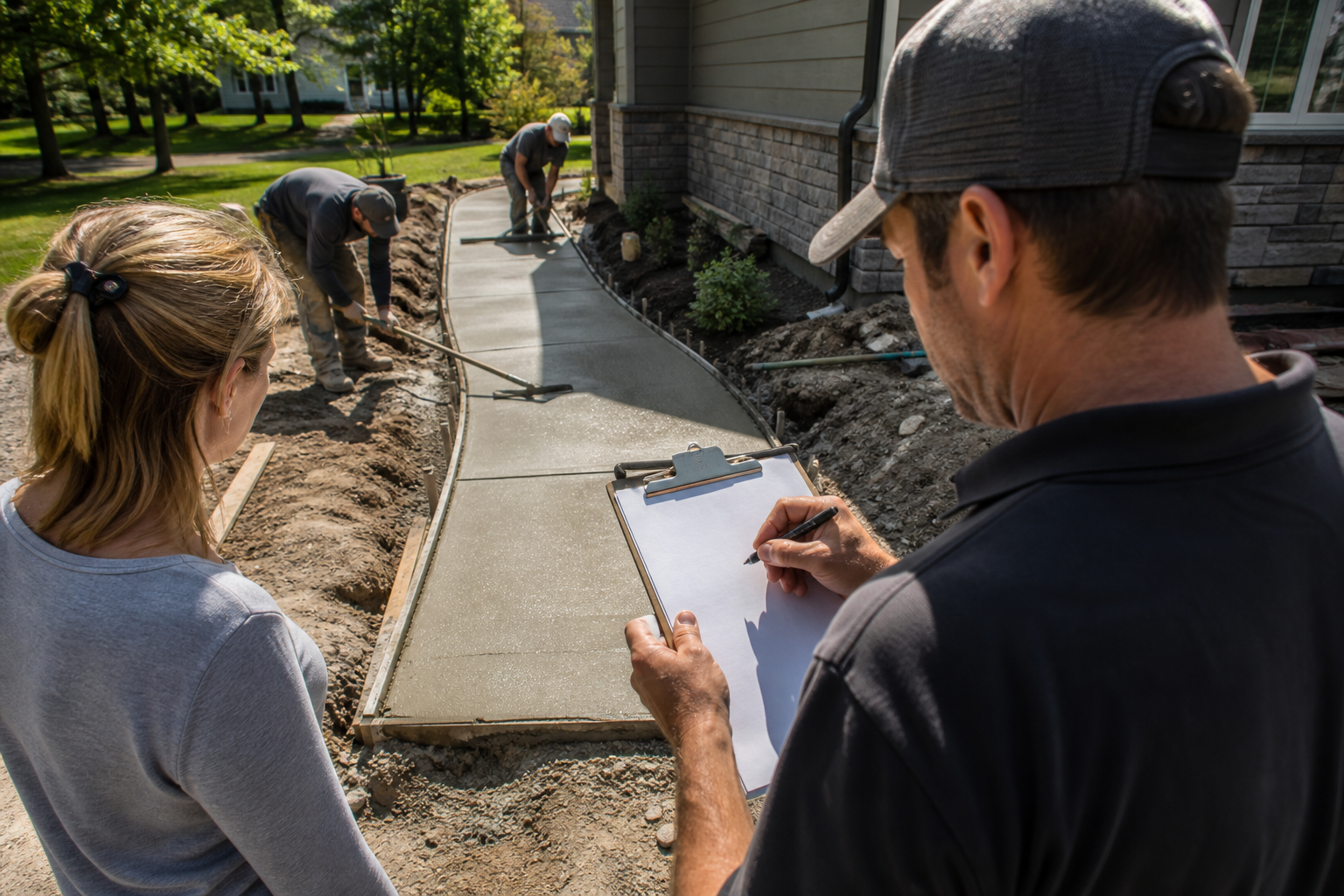
How Masonry Contractors Protect Margins and Win Bids in 2026: A Blueprint for Instant Estimating and On-Site Signatures Masonry has always been defined by weight, skill, and precision. Whether laying standard concrete...
How Masonry Contractors Protect Margins and Win Bids in 2026: A Blueprint for Instant Estimating and On-Site Signatures
Masonry has always been defined by weight, skill, and precision. Whether laying standard concrete masonry units (CMUs) for a structural retention wall, setting modular brick for a residential facade, or executing complex tuckpointing on a historic restoration, wet-trade contractors carry some of the highest operational risks in construction. In 2026, those risks have intensified under the weight of two converging pressures: persistent material price increases and climbing labor costs.
When material suppliers adjust prices quarterly and high-skilled masonry labor commands top-dollar hourly rates, traditional bidding habits become a liability. Taking three to four days to return home, compute takeoffs on a spreadsheet, assemble a PDF proposal, and email it to a prospective home or building owner is no longer just slow—it directly threatens your profit margins. A bid delivered days late allows material price changes to eat into your bottom line or gives a competitor the opportunity to close the deal while standing on the driveway.
To protect profit margins and maintain a steady pipeline of signed projects, modern masons are shifting toward mobile, on-site estimation workflows. By deploying fast contractor quote software, trade professionals can calculate exact material and labor costs from their truck, generate a polished proposal, capture an e-signature, and secure a deposit via integrated payments before leaving the job site.
---
The 2026 Masonry Cost Landscape: Inflation, Material Volatility, and Labor Burdens
Estimating masonry work accurately requires a detailed understanding of direct material costs, waste factors, and fully burdened labor rates. In Q3 2026, data from RSMeans by Gordian showed that concrete block prices rose again by 1.23% over Q2, marking the eighth consecutive quarter of year-over-year price growth (up 2.50% overall YoY). Meanwhile, ready-mix concrete has experienced a 6.5% surge over the same multi-quarter span.
These incremental increases compound rapidly across a mid-sized job. The Staxen Masonry Price Guide for 2026 highlights the exact supply-house baselines masons face before applying labor or profit markups:
- Standard 8x8x16 CMU (Concrete Masonry Unit): $2.30 to $3.60 per block.
- Modular Face Brick: $0.63 to $0.98 per unit.
- Mortar Mix (80 lb. Bag): $8.25 to $13.00 per bag.
- Raw Brick Wall Assemblies: $4.50 to $6.50 per square foot for raw materials alone (excluding sand, ties, rebar, lintels, and labor).
On the labor side, recent cost insights from CountBricks show that masonry repair and installation labor ranges from $40 to $100 per hour, depending on experience and trade specialization:
- Entry-Level Masons / Helpers: $40 to $50 per hour.
- Mid-Level Masons: $50 to $75 per hour.
- Experienced Journeymen / Master Masons: $75 to $100+ per hour.
- Urban & High-Cost Regions (CA, NY, Metro Hubs): Exceeding $100 to $120 per hour for specialized restoration or structural masonry.
When labor represents up to 60% of a job's total expense and block prices rise every quarter, a generic quote calculated using last year's square-foot estimates can erase profit margins before the first mixer is started.
---
The Danger of Delayed Bidding: Why Speed to Proposal Matters
In the service trades, speed is often the deciding factor in winning business. Homeowners and commercial site managers want quick answers, clear breakdowns, and simple payment processes.
Consider two contrasting operational approaches on a $12,000 stone veneer and patio retaining wall project:
Contractor A: The Traditional Workflow 1. Visits the property, writes dimensions in a paper notebook, and promises to "get back by the weekend." 2. Spends Thursday evening manually calculating square footage, mortar bag counts, wall ties, and equipment rental fees. 3. Builds an invoice draft in an offline desktop tool, converts it to a standard file, and emails it late Friday night. 4. Waits three days for the client to review, request adjustments, print, physically sign, and scan the document back. 5. In the interim, supplier pricing on high-grade mortar shifts, and the client receives a quicker quote from another local contractor.
Contractor B: The Flash Quote Workflow 1. Walks the perimeter with the client, measuring linear feet and heights on a mobile device. 2. Selects pre-saved trade templates for CMU backup, face stone, Type S mortar, rebar reinforcement, and crew labor hours. 3. Uses Flash Quote as their contractor quote software to instantly generate an itemized bid with clear terms, scope notes, and payment milestones. 4. Presents the proposal on a tablet or emails a clean mobile link directly to the client while sitting in the truck. 5. Collects an instant digital sign-off with built-in e-signature proposals and processes a 30% material deposit through secure Stripe proposal software.
Contractor B secures the job, locks in material orders at current supply-house rates, and schedules the crew before Contractor A even finishes their spreadsheet.
---
Anatomical Precision: Building a Volatility-Proof Masonry Bid
To protect your margins, an estimate must clearly define scope, line items, material escalation protections, and payment schedules. Vague estimates lead to scope creep, unpaid extra work, and client disputes over clean-up or site preparation.
A complete, high-converting masonry proposal must contain four essential components:
1. Material Line Items with Pre-Set Templates Rather than typing out raw numbers for every estimate, set up pre-calculated item libraries. For instance, a standard CMU retention wall template can pre-calculate: Total 8x8x16 CMUs required (including a standard 5% to 8% block waste factor). Bags of Type M or Type S mortar required per 100 blocks. Rebar (e.g., 4 rebar every 24 inches on center) and core-fill concrete volume. Flashing, weep holes, and expansion joint materials.
By storing these unit costs in your pricing system, you can enter job dimensions and let the application populate material costs automatically.
2. Fully Burdened Labor Costs When master masons command $75 to $100+ per hour, labor cannot be an afterthought. Your pricing must account for direct hourly wages alongside taxes, worker's compensation insurance for high-risk wet-trade work, tool wear, and staging equipment (scaffolding, mixers, diamond blade saws).
Explicitly separating skilled labor from basic material costs helps clients understand the value of professional trade work, preventing requests for unreasonable price reductions.
3. Clear Scope Boundaries and Escalation Clauses Masonry jobs frequently encounter hidden job site variables, such as poor soil bearing capacity, hidden water intrusion, or buried debris during excavation. Your scope notes should clearly outline what is included and what will require a formal change order:
"Proposal includes site excavation up to 18 inches depth, 4-inch gravel base, poured concrete footing with 4 rebar, and placement of 8x8x16 structural CMU block. Unforeseen subterranean obstructions (rock ledges, buried concrete, root systems requiring heavy equipment) or site access restrictions will be billed as additional work upon signed approval."
Adding a standard material price protection clause (e.g., "Prices valid for 14 days from estimate date due to material market fluctuations") protects your business against mid-project supplier rate changes.
4. Integrated Payment Terms A proposal should make taking the next step effortless. Utilizing Stripe proposal software allows you to attach required deposit structures directly to the digital document: Deposit: 30% upon signing to secure materials and scheduling. Mid-Point Payment: 40% upon completion of footing pour and block staging. Final Payment: 30% upon final joint tooling, wash-down, and site sign-off.
---
Expanding Beyond Masonry: Cross-Trade Integration
While masonry has distinct workflow demands, trade service businesses across all sectors face similar challenges regarding speed, bidding accuracy, and payment processing.
Contractors operating multi-trade operations or collaborating with subcontractors on larger residential and commercial builds require consistent, fast workflows across all divisions:
- Roofing Operations: Quick tear-off calculations, square coverage estimates, and material delivery deposits. Learn how specialized roofers streamline their workflows through [Flash Quote Roofing Solutions](https://flashquoteapps.com/roofing).
- HVAC Systems: Equipment unit pricing, ductwork line items, and multi-option repair vs. replacement packages. Explore trade estimation methods at [Flash Quote HVAC Solutions](https://flashquoteapps.com/hvac).
- Plumbing Services: Rough-in labor rates, fixture markups, and rapid emergency dispatch estimates. Discover modern estimation tools at [Flash Quote Plumbing Solutions](https://flashquoteapps.com/plumbing).
- Electrical Work: Subpanel upgrades, rough wiring runs, and device trim-out packages. Review tailored workflows at [Flash Quote Electrical Solutions](https://flashquoteapps.com/electrical).
- Creative & Independent Trades: Modern bidding and invoicing software is equally crucial for creative service providers, agency owners, and independent professionals managing milestone billing. Examine customizable tools at [Flash Quote Freelance Solutions](https://flashquoteapps.com/freelance).
By centralizing all estimate and invoice creation inside a single unified system, growing businesses eliminate administrative overhead across every division.
---
Modernizing Your Bidding Workflow: From Estimate to Paid Invoice
Transitioning to a mobile-first estimation process doesn't mean changing how you build; it means streamlining how you document, communicate, and collect payment for your work.
Step 1: Measure and Input Job Parameters While inspecting the job site, open your mobile tool and select the appropriate project type—whether it's a structural CMU wall, brick veneer restoration, or stone step repair. Input wall dimensions, linear footage, height, and site preparation details.
Step 2: Apply Itemized Unit Costs and Labor Rates Select pre-stored material rates reflecting your supplier's current pricing (e.g., CMU block at $3.10/unit, mortar at $11.50/bag). Apply your crew labor rate ($75/hr for master mason, $45/hr for tender) to calculate exact labor burdens.
Step 3: Present, Review, and Sign Hand your mobile device to the client or text them a secure digital link. The client can review itemized lines, clear job conditions, and payment terms. With integrated e-signature proposals, they sign directly on the screen or via their smartphone browser.
Step 4: Process Deposits and Generate Invoices Once signed, the platform prompts the client for the required initial deposit using integrated credit card or ACH options. Upon project completion, convert the signed proposal into a clean statement using a dedicated PDF invoice app to collect the remaining balance without retyping line items or administrative delays.
---
Practical Checklist for Masonry Contractor Bidding
To verify your estimating system is built to protect profit margins and accelerate cash flow, review your process against this trade checklist:
- [ ] Are material price updates applied regularly? Update standard unit items quarterly to match current block, brick, and mortar prices from local supply houses.
- [ ] Is labor accurately calculated? Ensure hourly rates reflect total burdened overhead (base wage, taxes, workers' compensation, tool allowance) rather than net wage alone.
- [ ] Are waste factors included in line items? Build in standard waste allowances (5%–8% for CMU, 10% for custom cut brick and natural stone) within pre-set templates.
- [ ] Can proposals be generated on-site? Equip field estimators with mobile tools capable of producing complete, itemized bids before leaving the job site.
- [ ] Is digital signature and payment built-in? Eliminate paper delays by using tools that combine proposal creation, e-signatures, and instant credit card/ACH deposit processing.
To learn more about modernizing trade estimation processes, explore additional industry guides and practical tools on the [Flash Quote Blog](https://flashquoteapps.com/blog).
---
Securing Margin Control in Every Estimate
In a volatile market where material costs continuously drift upward and skilled trade labor commands a premium, fast, accurate, and professional proposal delivery is your best defense against margin erosion. Masons who rely on slow, paper-based estimates risk losing jobs to faster competitors or seeing uncaptured cost increases eat away their profits.
By using contractor quote software like Flash Quote to create precise unit-level estimates, capture immediate e-signature proposals, and process deposits via integrated payment tools on-site, you insulate your business from pricing fluctuations, eliminate tedious evening paperwork, and win more profitable jobs.
In modern masonry, profit margins are protected by estimating with precision and closing without delay.