Don’t Let Your HVAC Estimate Become the Lowest-Bidder Game
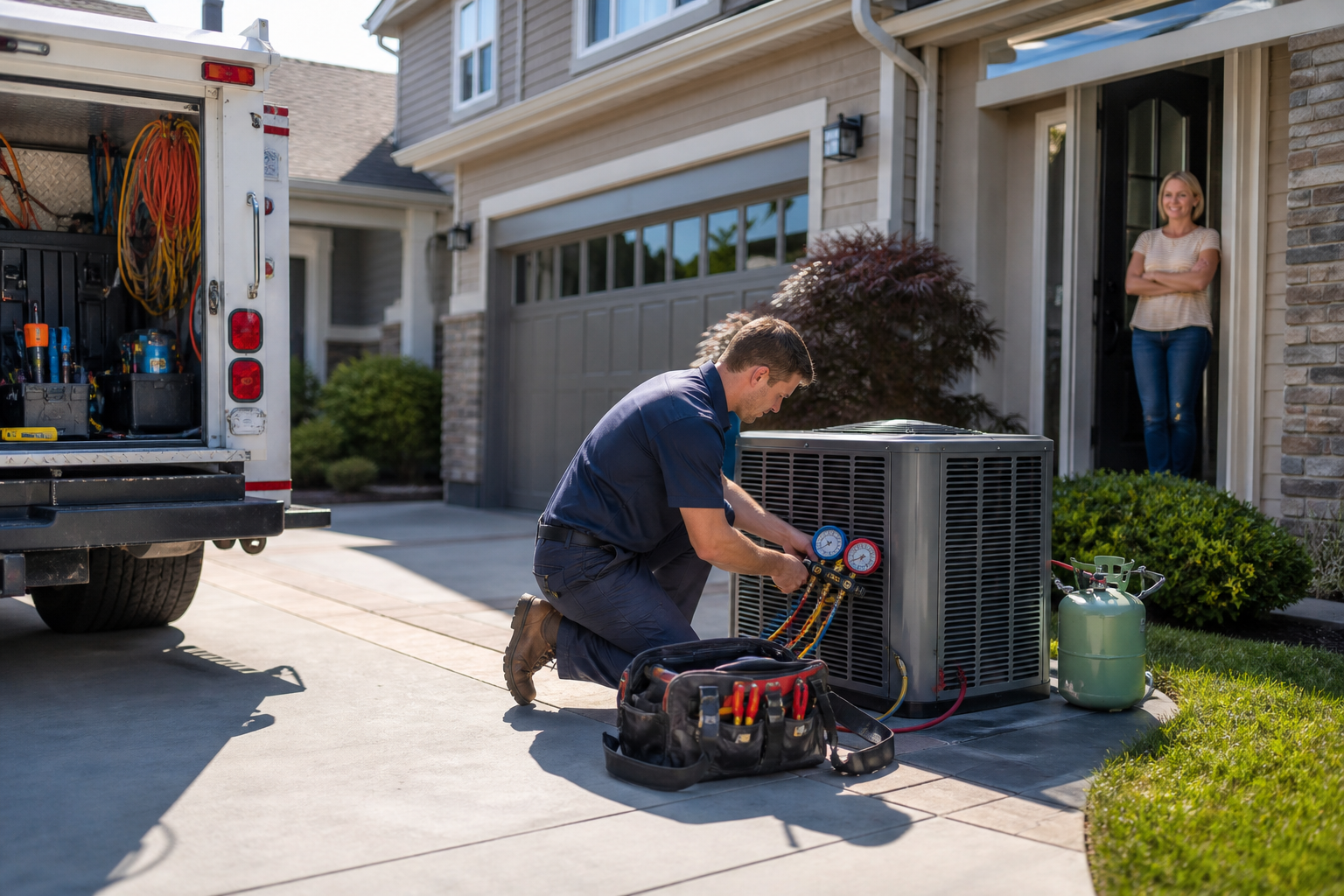
Don’t Let Your HVAC Estimate Become the Lowest-Bidder Game Homeowners are more cost-sensitive and more willing to compare bids, but HVAC contractors should not answer that pressure by cutting prices first. The better...
Don’t Let Your HVAC Estimate Become the Lowest-Bidder Game
Homeowners are more cost-sensitive and more willing to compare bids, but HVAC contractors should not answer that pressure by cutting prices first. The better move is to make the estimate clearer, faster, and easier to approve: defined scope, professional presentation, e-signature, and a simple deposit path through Stripe when the customer is ready. When the homeowner understands what the price includes, the job is less likely to become a race to the bottom.
A lower bid can still win. But many HVAC companies lose control of the sale before another contractor ever names a number. They diagnose the problem in person, answer the homeowner’s questions, then leave with a promise to “email something over tonight.” By the time that estimate arrives, the customer has had hours to search for alternatives—and may have already called two of them.
The problem is not always the number on the quote. Sometimes it is everything that happened before the customer saw it.
“I’ll Email You Tonight” Is a Sales Leak
An HVAC replacement is a major household expense, often considered under uncomfortable circumstances. The cooling has stopped during a heat wave. The furnace is unreliable in January. A repair bill has forced the homeowner to ask whether it still makes sense to keep spending money on an aging system.
That customer has every reason to compare options and watch the budget.
Contractors sometimes treat that caution as proof that price is the only thing that matters. It is not. A homeowner also wants to know what will happen in the house, what the quoted price includes, what might cost extra, how soon the work can happen, and what they must do to move forward. If those answers are missing, shopping around becomes the safest way to get them.
Picture the familiar end of a service visit. The technician has explained the failed compressor well. The homeowner seems receptive. Then comes a hurried number on a notepad, a rough verbal range, or a promise that the office will prepare the “real estimate” later.
That delay creates a vacuum.
The homeowner now has a problem, a possible solution, and no written offer they can confidently discuss with a spouse or compare against another contractor. So they search. They call. They send pictures to another company. They ask a neighbor who replaced a system last year. By the time the first contractor’s email arrives, the decision has become crowded.
A vague estimate also invites a damaging comparison: two totals placed side by side as though they buy identical work. One price may include removal, disposal, permit fees, a new pad, electrical whip, thermostat, startup, and cleanup. The other may not. Unless the scope is visible, the more complete proposal can simply look expensive.
That is proposal friction. The contractor had the customer’s attention, earned trust in person, and had an opportunity to explain the work. Then the written offer arrived too late or said too little.
Reducing that friction does not mean pressuring someone into a rushed decision. It means giving them enough information to make a sound decision while the conversation is still fresh.
A Same-Visit Proposal Makes the Price Legible
The strongest moment to explain an HVAC proposal is often the moment the contractor finishes discussing the job. The homeowner can point to the equipment, ask what will be removed, and clarify why one option costs more than another. A clean proposal on a phone or tablet gives that discussion a written record the customer can revisit after the visit.
The goal is not a polished PDF for its own sake. The goal is legibility.
What is included? Which items are optional? What is excluded or subject to separate approval? When is the deposit due? What does the customer need to sign? A homeowner who can answer those questions has more to judge than a bottom-line price.
With [Flash Quote HVAC](https://apps.apple.com/us/app/flash-quote-hvac/id6774519518), an HVAC contractor can create a customer-facing proposal and PDF while still on-site, then attach the practical approval steps that help the job move forward. That speed does not replace a careful sales conversation. It gives the conversation a professional document to stand on.
Presentation matters because homeowners are buying work they cannot fully inspect in advance. They can, however, see whether the contractor has described the job carefully. A proposal that separates the core replacement from optional improvements, spells out included work, and shows the price plainly suggests that the company has thought through what it is selling.
Speed supports that impression when it is paired with accuracy. “I can show you the scope before I go” is stronger than “I’ll get you a number as soon as I can” because the customer does not have to reconstruct the visit from memory when an email arrives later.
They can ask about a line item while the contractor is still standing there.
That does not mean presenting every possible upgrade or demanding an immediate signature. Too many choices can create a different kind of friction. A useful proposal gives the homeowner a manageable decision: the work required to address the problem, a clearly distinguished alternative where appropriate, and straightforward terms for approving either one.
The contractor remains free to hold a fair price because the customer can see what that price buys.
The No-Cool Call Where Two Prices Aren’t the Same Offer
Consider a July no-cool call. The homeowner is frustrated, the indoor temperature is climbing, and a condenser replacement is on the table.
Contractor A explains the situation competently, gives a rough price, and says a formal quote will follow. Contractor B finishes the discussion with a proposal the homeowner can read before the visit ends.
Contractor B’s proposal offers a straightforward replacement and, separately, a higher-efficiency option. Each has its own price and scope. The document states whether the electrical whip, equipment pad, permit fees, removal of the old condenser, refrigerant recovery, and disposal are included. If any part of the job remains uncertain, that uncertainty is stated rather than buried.
Now the homeowner can ask a useful question: “Does the other price include the pad and disposal?”
That is a better question than “Can you beat their number?” It does not guarantee Contractor B the job. It prevents an incomplete offer from enjoying an automatic advantage simply because its total is lower.
This distinction matters most when the customer is under pressure. Urgency can make a homeowner eager to decide, but it can also make them wary of agreeing to a poorly explained expense. A clear proposal respects both realities. It gives them something concrete to review without forcing them to choose between a verbal promise and an unfamiliar number.
The same principle applies to small commercial work. A café with a rooftop unit down during lunch service does not just need a price. The owner needs to know whether the quote includes crane coordination, curb adapter work, thermostat replacement, after-hours labor, and startup. If those details are missing, the cheaper bid may simply be the less complete bid.
Clear scope protects the contractor from being treated like a commodity.
Optional Add-Ons Should Not Make the Core Job Look Padded
A furnace replacement creates a different sales problem. During the visit, the contractor notices an opportunity to discuss a media air cleaner, UV light, humidifier, smart thermostat, or limited ductwork improvement. Each may be worth considering. Presented as an unexplained increase to the replacement price, though, those additions can make the entire estimate look padded.
The proposal should distinguish the furnace work from the optional work.
The base scope might include the furnace replacement, venting modifications, removal of the old equipment, startup, and cleanup. Below that, the proposal can show indoor air quality improvements as separate options with their own reasons to exist.
That structure changes the tone of the conversation. Instead of hearing, “Your furnace replacement is more expensive than expected,” the homeowner hears, “Here is what solves the immediate problem, and here are the upgrades you may want to consider if they fit your goals and budget.”
Giving the customer permission to say no often makes it easier for them to say yes to the main job.
This is especially important for contractors who care about long-term relationships. A homeowner who feels cornered may sign once and never call again. A homeowner who feels informed may approve the replacement now, add the media cabinet later, and recommend the company to a neighbor.
A clear proposal turns the contractor from a salesperson into a guide.
Deposits and Signatures Should Not Create New Friction
Even a strong proposal can stall if the final step is clumsy.
If the customer has to print a document, sign it by hand, scan it back, wait for an invoice, call the office, read a card number over the phone, or mail a check, the contractor has added friction at the most dangerous moment: right after the customer has decided the work makes sense.
Every extra step gives the homeowner more time to second-guess the decision or forward the quote to another company.
A smoother close does not have to be complicated. The proposal should make approval obvious. The customer should be able to review the scope, sign electronically, and, when appropriate, pay a deposit through a quick payment option attached to the customer-facing PDF. Stripe collection fits naturally here because it connects the quote to the first financial commitment without turning the conversation into an awkward payment chase.
This is not just convenience. It is operational control.
A signed proposal and collected deposit help the contractor schedule equipment, assign labor, and protect calendar space. They also help the customer feel that the project is moving. The decision becomes real, documented, and organized.
That matters because HVAC sales are not won only by the best technical recommendation. They are won by the company that turns a stressful household problem into a clear next step.
A Better Proposal Defends Margin Without Apologizing for It
Many contractors underprice themselves because they do not trust their own presentation. They know their work is better, their installers are more careful, their office communicates more reliably, and their scope is more complete. But when the estimate is vague, all of that value becomes invisible.
Then price carries the whole burden.
A professional proposal gives the contractor a way to defend margin without sounding defensive. It shows the homeowner what is included, why it matters, and how the job will proceed. It also gives the customer a fair way to compare competing bids.
If another contractor is genuinely offering the same equipment, same scope, same permit handling, same cleanup, same warranty support, and same schedule at a lower price, the homeowner may choose that bid. But if the other offer is missing half the scope, the customer deserves to know that before making a decision.
That is the difference between discounting and clarifying.
Discounting says, “Maybe our price is too high.” Clarifying says, “Here is exactly what this price includes, and here is why it matters.”
For more estimating and proposal ideas across the trades, contractors can browse the [Flash Quote blog](https://flashquoteapps.com/blog) or visit [Flash Quote](https://flashquoteapps.com) for related tools and resources. The larger principle is the same in every service business: when the proposal is slow, vague, or difficult to approve, the customer fills in the gaps with doubt.
HVAC contractors do not need to win every job by being the cheapest company in the driveway. They need to make their offer clear enough that the homeowner understands the difference.
The lowest-bidder game starts when every estimate looks the same; the contractor who shows the scope clearly changes the game before price gets the final word.