Close More Storm Jobs: How Roofers Can Send Instant Estimates from the Jobsite
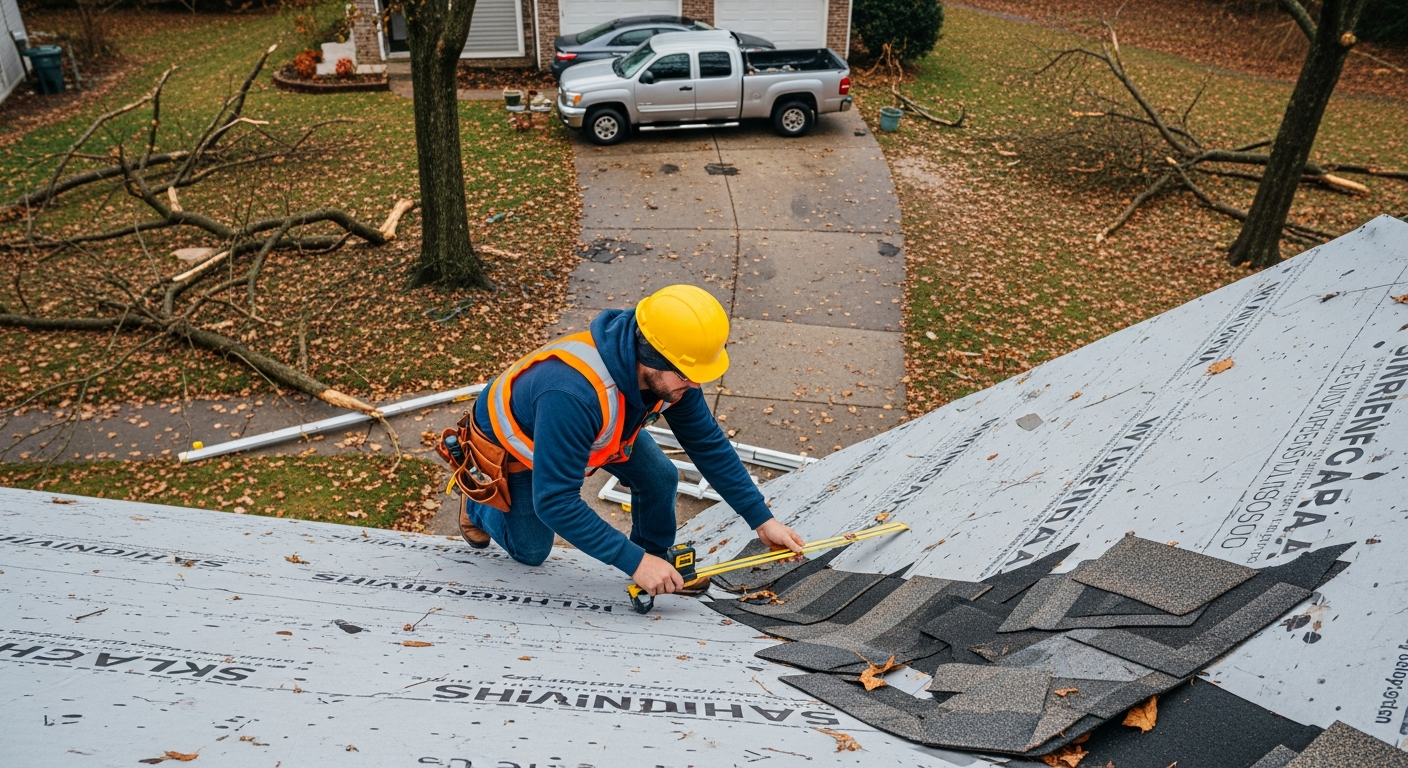
Close More Storm Jobs: How Roofers Can Send Instant Estimates from the Jobsite When severe weather rolls through a neighborhood, the aftermath is chaotic. Homeowners are anxious, phone lines are jammed, and roofing...
Close More Storm Jobs: How Roofers Can Send Instant Estimates from the Jobsite
When severe weather rolls through a neighborhood, the aftermath is chaotic. Homeowners are anxious, phone lines are jammed, and roofing contractors are pushed to their absolute limits. During the chaos of storm season, the roofing contractor who delivers the first professional estimate wins the job; by using Flash Quote to turn jobsite photos into instant proposals, roofers can eliminate office bottlenecks and close deals right in the driveway.
Here is how modern roofing professionals are ditching the legal pads, skipping the late-night data entry, and using mobile technology to dominate the post-storm surge.
1. The Storm Hits: A Race Against Time for Roofers
For a homeowner staring at water stains on their ceiling or shingles scattered across their lawn, a damaged roof is an immediate crisis. They want reassurance, they want a price, and they want their home secured before the next rainband hits.
For the roofing contractor, a storm means a sudden, overwhelming surge in demand. Your phone rings off the hook, and your schedule is instantly double-booked. In this environment, speed isn't just a convenience—it is the ultimate closing tool. The first contractor who can confidently hand that anxious homeowner a clear, professional price is almost always the one who gets the signature.
2. The Bottleneck : Why Traditional Estimating Fails During Storm Season
Despite the urgency of storm calls, many roofing companies are still handcuffed by outdated estimating workflows.
The traditional process is a massive bottleneck: You climb the ladder, measure the roof, sketch the layout, and jot down notes about hail hits or wind damage on a clipboard. Then, you have to drive back to the office, decipher your own handwriting, manually calculate material and labor costs, and build a quote in a word processor or spreadsheet.
By the time you email that estimate to the homeowner hours—or sometimes days—later, a faster competitor has already been to the house, presented a quote, and collected a deposit. Every hour spent on administrative tasks at a desk is a lost opportunity out in the field.
3. the app : Your Secret Weapon for Instant Storm Damage Estimates
To scale your sales process without working 20-hour days, the estimating bottleneck has to be broken. https://flashquoteapps.com empowers roofers to move the entire estimating process out of the office and directly onto the jobsite.
By combining mobile-first speed with professional presentation, the app allows contractors to deliver comprehensive, branded proposals faster than the competition. More importantly, it turns the visual reality of the damaged roof into instant trust with the homeowner.
4. The the app Workflow: From Damage to Deal in Minutes
The true power of the app during a storm surge is how it transforms a standard roof inspection into a highly visual, instant sales presentation. Here is what the workflow looks like in the field.
4.1. On-Site Inspection & Damage Capture with the app
The process begins the moment you step onto the roof. Instead of reaching for a notepad, you pull out your mobile device. Using the app's jobsite image prompts, you can immediately start documenting the reality of the storm damage.
As you walk the roof, you snap high-resolution photos of specific damage points. You capture close-ups of bruised, hail-battered architectural shingles, wide shots of wind-torn sections exposing the underlayment, and detailed images of compromised chimney flashing. These photos are immediately uploaded and tagged within the the app app.
The app's workflow also prompts you to capture collateral damage. Did the hail dent the aluminum gutters? Did flying debris tear a window screen or crack the siding? Snap the photos, tag them to the project, and input your quick measurements directly into the app.
4.2. Instant Estimate Generation from Visuals
Once the inspection is complete, the app goes to work. Using your pre-set pricing, material costs, and labor rates, the app automatically calculates the estimate based on your inputs. But the real magic happens in the presentation.
The jobsite photos you just captured are automatically embedded directly next to the relevant repair or replacement line items in the proposal. When the homeowner looks at the estimate, they don't just see a line item for "Replace 50ft of 5-inch K-Style Gutter." They see that line item right next to the high-resolution photo you just took of their dented, ruined gutter.
This provides irrefutable visual evidence. It creates a powerful "before and after" context that justifies the cost and proves your thoroughness, making it incredibly difficult for the homeowner to argue with the scope of work.
4.3. Presenting and Closing in the Driveway
With the proposal generated in minutes, you climb down the ladder and meet the homeowner in the driveway. You hand them your tablet or phone and walk them through the clean, branded digital proposal.
Because the visual proof is built right into the quote, the conversation shifts from "Why does this cost so much?" to "How quickly can you start?" If the homeowner wants to upgrade their shingle class or add a line item, you can make instant revisions on the fly. Once they are ready to move forward, you can secure the deal immediately with electronic signatures and even process their deposit on-site to lock in the job.
5. Beyond Storm Season: Year-Round Benefits for Roofing Contractors
While the speed of the app is a lifesaver during a post-storm surge, the benefits extend long after the weather clears.
Using image-driven, instant proposals ensures consistent professionalism across all your estimates, whether it's an emergency repair or a routine roof replacement. By eliminating the office bottleneck, you reduce administrative overhead, freeing up your evenings and allowing your sales team to run more appointments per day. The clear, visual communication builds immense trust with customers, leading to higher close rates and better reviews year-round.
6. Don't Let the Next Storm Wash Away Your Profits
When the skies clear and homeowners start making calls, speed, professionalism, and visual proof are what win the job. Relying on paper notes and delayed office quotes will only leave money on the table.
Equip your team with the tools to be the first, the fastest, and the most professional contractor on the block. By leveraging the app to turn jobsite damage photos into instant, signable proposals, you can stop doing data entry at midnight and start closing more storm jobs right in the driveway.
For contractors, the real pressure is not abstract growth. It is the moment after a walkthrough when the customer is still engaged, the scope is still clear, and another company may be only one phone call away. A faster estimate can turn that moment into a signed job because it removes the delay between inspection and decision. That is why practical systems matter: they help a contractor respond while the homeowner still remembers the problem, the urgency, and the professionalism of the visit.
The best sales process for a trade business usually feels simple from the outside. The contractor listens, documents the job, explains the work, and sends a clear price without making the customer wait. Behind that simplicity is discipline. Crews need repeatable notes, consistent line items, clean follow-up, and a way to avoid rebuilding the same estimate from scratch every night. When those pieces work together, speed does not come at the cost of trust.
That is where the article's lesson becomes practical for small service businesses. A contractor does not need more busywork after a long day in the field. They need a quoting process that helps them stay present with the customer, protect margin, and move the opportunity forward before attention disappears. The companies that build that habit are easier to buy from, easier to recommend, and harder to replace.
For contractors, the real pressure is not abstract growth. It is the moment after a walkthrough when the customer is still engaged, the scope is still clear, and another company may be only one phone call away. A faster estimate can turn that moment into a signed job because it removes the delay between inspection and decision. That is why practical systems matter: they help a contractor respond while the homeowner still remembers the problem, the urgency, and the professionalism of the visit.
The best sales process for a trade business usually feels simple from the outside. The contractor listens, documents the job, explains the work, and sends a clear price without making the customer wait. Behind that simplicity is discipline. Crews need repeatable notes, consistent line items, clean follow-up, and a way to avoid rebuilding the same estimate from scratch every night. When those pieces work together, speed does not come at the cost of trust.
That is where the article's lesson becomes practical for small service businesses. A contractor does not need more busywork after a long day in the field. They need a quoting process that helps them stay present with the customer, protect margin, and move the opportunity forward before attention disappears. The companies that build that habit are easier to buy from, easier to recommend, and harder to replace.